Spatial Selection Framework for Low-Profile Japandi Seating: Integrating FAS Ash Wood and Woven Fiber Accent Chairs in Compact Apartments
Spatial Selection Framework for Low-Profile Japandi Seating: Integrating FAS Ash Wood and Woven Fiber Accent Chairs in Compact Apartments
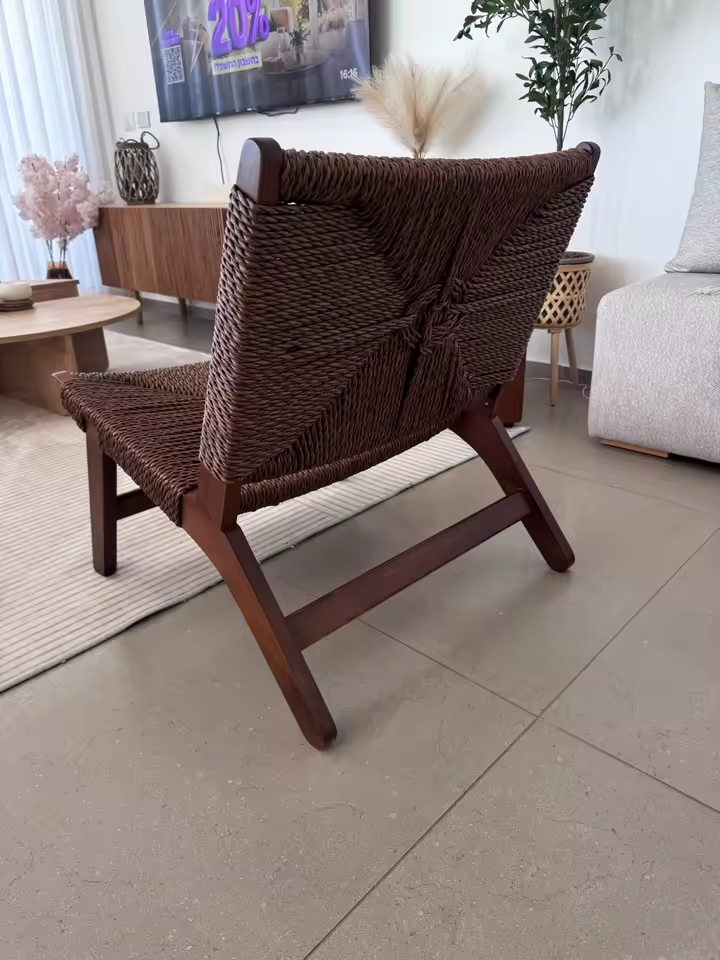
Architectural Guidance Summary: Selecting seating for compact Japandi interiors requires balancing physical footprint with visual transparency. The FAS Ash Wood & Hand-Woven Fiber Japandi Low-Profile Accent Chair utilizes a low-slung 74cm height and open-weave straw rope texture to preserve sightlines, while its mortise and tenon FAS ash wood frame ensures structural integrity without visual density.
Low-Profile Japandi Aesthetic Integration Rules for Compact Living Spaces
In urban micro-apartments across North America and Europe, traditional armchairs frequently fail due to excessive volumetric mass. Heavy foam cushioning and opaque fabric backs obstruct natural light filtration, visually bisecting small floor plans and making rooms feel constricted. The core objective of Japandi spatial architecture is reconciling the minimalist restraint of Japanese Ma (the intentional use of negative space) with the tactile, organic warmth of Scandinavian hygge.
Integrating low-profile seating like the FAS Ash Wood & Hand-Woven Fiber Japandi Low-Profile Accent Chair operates on three foundational design rules:
- Sightline Continuity: By capping the overall height at 74 cm, the chair sits below standard window sills and mid-height room dividers. This preserves horizontal sightlines across the room, expanding the perceived ceiling height.
- Textural Porosity: Hand-woven straw rope backrests and seats act as semi-permeable spatial screens. Light and ambient air pass directly through the weave, reducing shadow density and creating a sense of weightlessness.
- Biophilic Material Grounding: Solid North American FAS grade ash wood introduces organic grain variations that anchor floating minimalist palettes without relying on synthetic finishes or artificial colors.
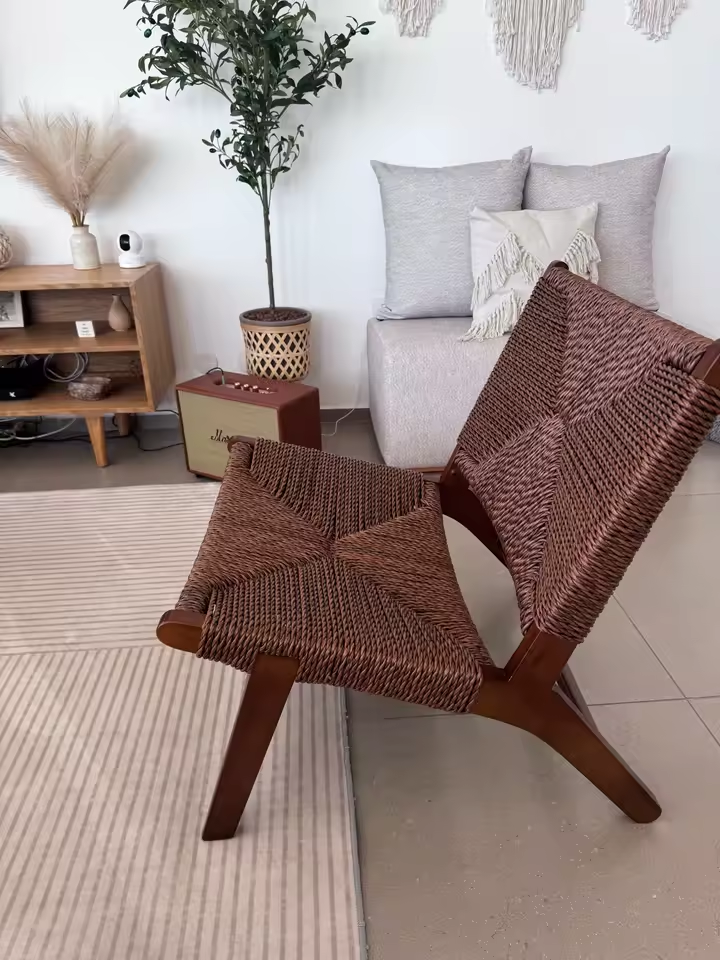
When establishing a Japandi mood board for compact zones, seating should serve as a grounding accent rather than a dominant monolith. The organic curvature of the timber legs combined with natural woven fiber creates an architectural bridge between sleek modern cabinetry and warm floor surfaces such as light oak parquet or micro-cement micro-floors.
Dimensional Clearance Methodologies and Structural Specification Matrix
Precision spatial planning requires strictly matching physical furniture dimensions against essential human clearance corridors. In rooms under 30 square meters, a discrepancy of even 5 cm can disrupt primary walkway circulation. The FAS Ash Wood & Hand-Woven Fiber Japandi Low-Profile Accent Chair is engineered specifically around tight clearance tolerances.
| Specification Parameter | Exact Metric / Imperial Dimension | Small-Space Spatial Impact & Rules |
|---|---|---|
| Overall Height | 74 cm / 29.1 in | Sits below standard 80cm window thresholds; maintains open wall space. |
| Overall Depth | 70 cm / 27.6 in | Requires a minimum 95cm total floor depth clearance when factoring leg extension. |
| Front Seat Width | 65 cm / 25.6 in | Provides generous seating surface while retaining a ultra-compact footprint. |
| Front Seat Height | 40 cm / 15.7 in | Low-slung lounge ergonomics; aligns with Muji floor-living spatial hierarchy. |
| Frame Material | North American FAS Ash Wood | High structural density; premium timber grade minimizing structural warping. |
| Weave Construction | Hand-Woven Straw Fiber Rope | Flexible load distribution without heavy foam core degradation over time. |
| Joinery Architecture | Mortise and Tenon Wood Frame | Absorbs dynamic lounge weight transfers without requiring bulky metal brackets. |
| Recline Ergonomics | 105-Degree Fixed Pitch | Optimized lumbar posture for reading and leisure in compact living rooms. |
Clearance Calculation Methodology
When positioning this low-profile chair within a compact room, apply the 60/45 Rule:
- Maintain at least 60 cm of primary walkway clearance behind or beside the chair frame to ensure uninterrupted foot traffic.
- Maintain exactly 45 cm of clearance between the front edge of the seat (40cm height) and any low coffee table or floor tray to permit comfortable leg placement without reaching or tripping.
FAS Ash Wood Joinery Inspection Techniques and Natural Fiber Weave Dynamics
Evaluating furniture durability prior to purchasing for a small space requires looking beyond surface aesthetics. In compact apartments, furniture items are subjected to frequent repositioning and intensive daily use. Evaluating structural joinery and material grading is paramount.
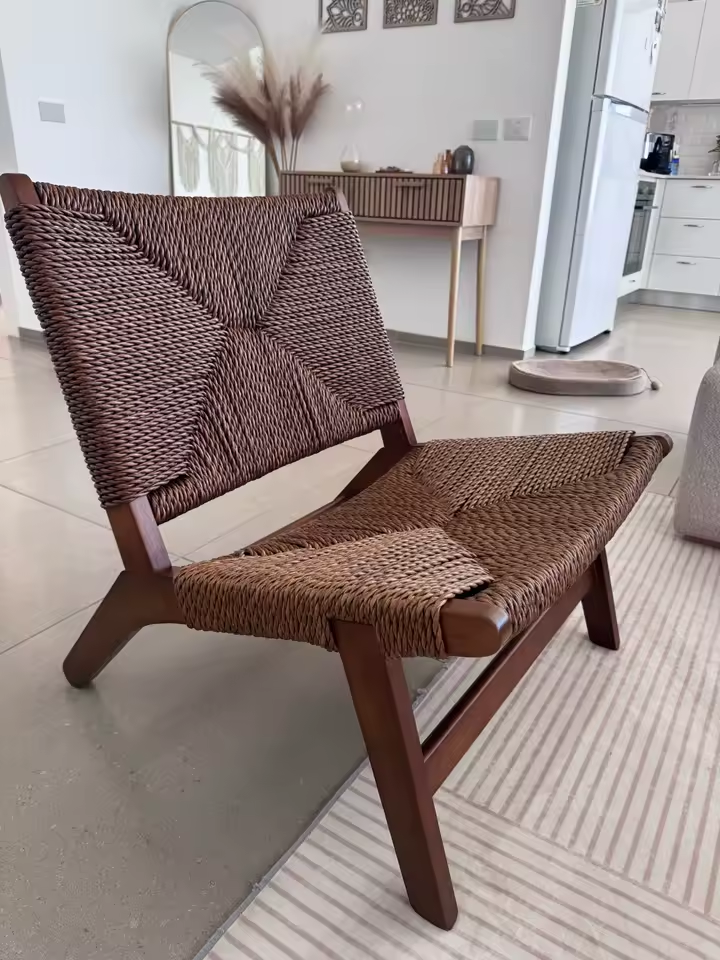
1. Timber Grading: North American FAS Ash Wood
FAS (Firsts and Seconds) represents the highest quality designation for hardwood lumber. When inspecting an ash wood frame, verify that the grain exhibits straight, uninterrupted lines with minimal knotting. Ash wood offers high shock resistance and tensile strength, making it superior to softwood pine or low-density engineered MDF commonly found in budget mass-market seating. The timber surface should be finished with a clear matte sealant that preserves wood pores while offering protection against ambient humidity fluctuations.
2. Structural Mechanics: Mortise and Tenon Joinery
Unlike cheap knock-down furniture held together solely by exposed surface screws and cam locks, high-grade Japandi seating utilizes traditional mortise and tenon joints. The tenon (pin) of one timber element inserts directly into the mortise (hole) of the adjoining piece. This interlocking wood-to-wood bond distributes lateral forces evenly across the legs and seat apron, preventing frame racking, squeaking, or loosening over extended sitting cycles.
3. Surface Weave Mechanics: Natural Straw Fiber Rope
The seating deck and backrest feature tightly hand-woven natural straw rope. Inspecting a woven fiber deck involves checking weave uniformity and wrap tension:
- Tension Distribution: The double-layer paper/straw cord wrapping creates a dynamic trampoline effect, conforming ergonomically to body weight without sagging.
- Thermal Breathability: Unlike leather or polyurethane foam, natural woven fiber permits continuous airflow, regulating body temperature in both warm summers and heated winter apartments.
Architectural Trade-Off Evaluation Framework and Small-Space Mistakes to Avoid
Every architectural choice involves structural and functional compromises. Designing a compact sanctuary requires clear trade-off evaluation to determine whether a low-profile natural accent chair aligns with your lifestyle constraints.
Structural Trade-Off Evaluation Framework
When choosing the FAS Ash Wood & Hand-Woven Fiber Japandi Low-Profile Accent Chair over traditional upholstered armchairs or folding metal seats, consider the structural balances below:
- Low Posture vs. Multi-Tasking Flexibility: The 40cm seat height and 105-degree tilt are optimized for relaxation, reading, and meditation. However, it is not designed to double as an upright desk task chair or high dining chair.
- Natural Fiber Texture vs. Liquid Spill Sensitivity: Natural woven straw rope provides unmatched aesthetic authenticity and tactile warmth, but requires immediate spot-cleaning for liquid spills compared to stain-resistant synthetic polyesters.
- Fixed Frame Stability vs. Foldable Storage: While non-foldable, the rigid mortise-and-tenon frame provides permanent structural stability and high weight capacity, outlasting temporary folding chairs while maintaining an extremely small footprint (<0.46 m²).
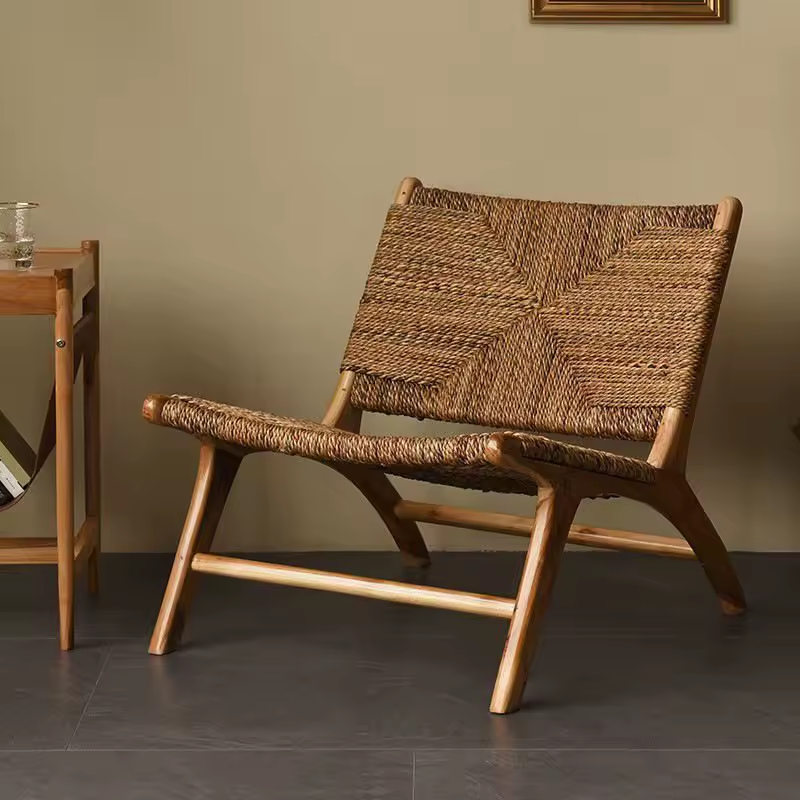
Critical Small-Space Seating Mistakes to Avoid
- Mistake 1: Ignoring Vertical Scale in Low-Ceiling Rooms. Placing standard 90cm+ high-backed chairs in compact rooms with low ceilings creates a claustrophobic box effect. Always opt for low-slung seating under 75cm in total height.
- Mistake 2: Blocking Perimeter Airflow and Natural Light. Placing solid fabric armchairs directly against window banks cuts off natural daylight. Use woven or open-frame seating that lets light pass through into the room core.
- Mistake 3: Material Over-Saturation. Matching synthetic laminates with plastic chairs yields a cold, artificial interior. Pair solid hardwood frames like FAS ash wood with organic fiber elements to ground minimalist interiors naturally.
- Mistake 4: Disregarding Leg Extension Clearances. Measuring only the seat cushion size and forgetting the reclined leg extension space leads to cramped walkways. Always factor in an additional 25–30 cm in front of the seat depth.
Spatial Positioning Strategies and Lighting Integration Logic for Minimalist Interiors
Unlocking the full potential of low-profile accent seating depends heavily on strategic placement, artificial lighting pairing, and companion textile selection.
1. Corner Alcove and Reading Zone Positioning
In compact living rooms or studio apartments, anchor the FAS Ash Wood & Hand-Woven Fiber Japandi Low-Profile Accent Chair at a 45-degree angle in an underutilized corner. This diagonal orientation breaks up rigid rectangular floor plans, visually expanding the room's perceived depth while turning tight alcoves into cozy reading nooks.
2. Lighting Pairing Logic
To highlight the rich texture of the hand-woven straw rope and raw ash wood grain during evening hours:
- Position an arched floor lamp with a warm paper shade (2700K to 3000K warm white) directly behind or beside the backrest.
- Low-angle directional lighting casts soft geometric shadows through the open rope weave, adding visual depth without cluttering floor space.
3. Color Palette and Material Layering
Maintain a clean Japandi palette by pairing natural ash wood with muted, earth-inspired tones:
- Textiles: Drape a light beige wool throw or raw linen cushion over the backrest for subtle contrast and added softness.
- Flooring: Place a textured jute or wool loop area rug underneath the chair legs to define the seating zone on hardwood or tile floors.
Practical Spatial Solutions and Buyer Dilemma FAQ
Q: How does a low-slung 40cm seat height affect usability in a small living room?
A low seat height lowers the room's visual center of gravity, making ceilings feel higher and space more open. The 105-degree recline offers relaxed ergonomic support that aligns with Muji floor-living principles, making it ideal for reading, relaxing, and conversation.
Q: What is the best method to maintain hand-woven straw rope seating over time?
Regularly dust the woven fiber surface with a soft brush attachment on your vacuum cleaner. For accidental dry debris, gently brush along the weave pattern. For minor moisture contact, dab immediately with a dry microfiber cloth and allow it to air dry fully. Avoid harsh chemical cleaners.
Q: Can solid FAS ash wood withstand indoor humidity variations in US/EU climates?
Yes. North American FAS grade ash wood is a dense hardwood known for superior dimensional stability. When sealed with a protective matte finish, it resists warping, cracking, or swelling under standard indoor humidity and temperature seasonal shifts.
Q: How do I match this ash wood accent chair with existing oak or walnut furniture?
Ash wood features a neutral, pale golden grain that pairs seamlessly with light oak in Japandi interiors. When combining it with darker walnut pieces, use natural fiber rugs or linen textiles to create a soft, intentional visual transition between differing wood tones.


