Japandi Foldable Compact Floor Lounge Chair Architectural Buying Guide: Zero-Footprint Tatami Seating for Micro-Apartments
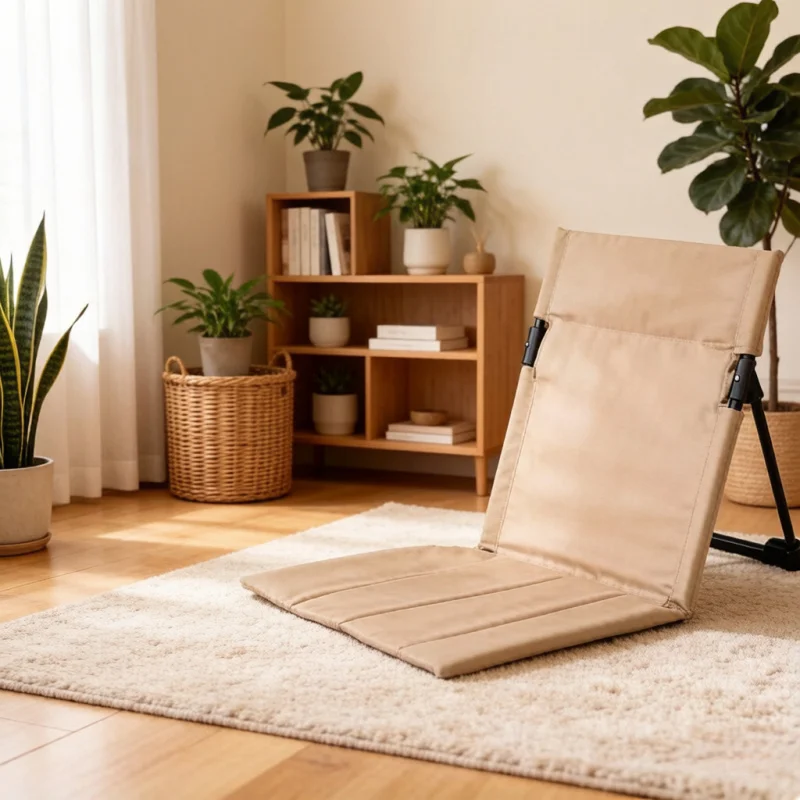
Architectural Spatial Vision: Minimalist Tatami Living and Low-Profile Ergonomics
Modern urban living environments demand architectural flexibility. As living room square footage decreases in metro areas across the US and Europe, bulky traditional furniture creates physical and visual friction. The Japandi Foldable Compact Floor Lounge Chair directly addresses spatial scarcity by leveraging the traditional Japanese concept of Yuka-za (floor-level seating) combined with Scandinavian functional minimalism.
By lowering the seated eye level closer to the floor plane, this chair dramatically expands the perceived vertical volume of small rooms. High-profile sofas and heavy armchairs obstruct natural light propagation and truncate room depth. Conversely, low-slung, legless loungers maintain open sightlines, allowing natural light from balcony doors or floor-to-ceiling windows to pass freely across the space. This visual continuity makes a 350-square-foot micro-apartment feel open, airy, and grounded.
Multi-functionality is central to the Japandi design philosophy. The lounger converts seamlessly between spatial modes:
- Daily Low-Impact Lounging: Serves as a primary reading chair, floor-working station, or meditation pad in compact living rooms.
- Balcony and Outdoor Transition: Easily moves outdoors to narrow balconies or patios due to its weather-resistant canvas fabric and rust-inhibited frame construction.
- Zero-Trace Storage: Collapses into a completely flat panel equipped with an integrated shoulder carry strap, sliding neatly under a platform bed, behind a wardrobe, or into a compact utility closet when floor space must be cleared for exercise or entertainment.
Technical Specification & Structural Parameters Matrix
Precision dimensions and load ratings determine whether a compact piece of furniture successfully integrates into tight floor plans. Below is the verified specification breakdown extracted directly from product load testing and architectural measurement parameters.
| Specification Parameter | Architectural & Material Data | Small Space Utility Impact |
|---|---|---|
| Maximum Load Capacity | 220 LBS (100 KG) verified load-bearing rating | Supports diverse body types with stable structural recline support. |
| Frame Construction | Tubular steel alloy with black anti-corrosion coating | Provides rigid back support without flexing or structural twisting. |
| Textile & Padding | High-density Oxford canvas weave + integrated foam cushion | Resists friction, tearing, moisture, and daily wear in high-traffic zones. |
| Folding Mechanism | Flat-fold tension bracket system with integrated shoulder strap | Allows 5-second folding and stowing under beds or inside narrow gaps. |
| Colorway Palette | Cream-coloured (Natural Beige), Olive Green, Charcoal Black | Complements neutral Muji palettes, dark minimalist, and biophilic interiors. |
| Spatial Profile | Legless, direct-to-floor footprint with backrest support angle | Preserves vertical clearance; ideal for low ceilings and attic rooms. |
Engineering, Material Authenticity, and Structural Frame Durability
Selecting seating for small spaces requires evaluating structural integrity under concentrated pressure. Unlike soft beanbags or unreinforced cushions that collapse after prolonged sitting, the Japandi Foldable Compact Floor Lounge Chair utilizes an engineered rear-triangulated support frame that anchors the backrest firmly against the floor plane.
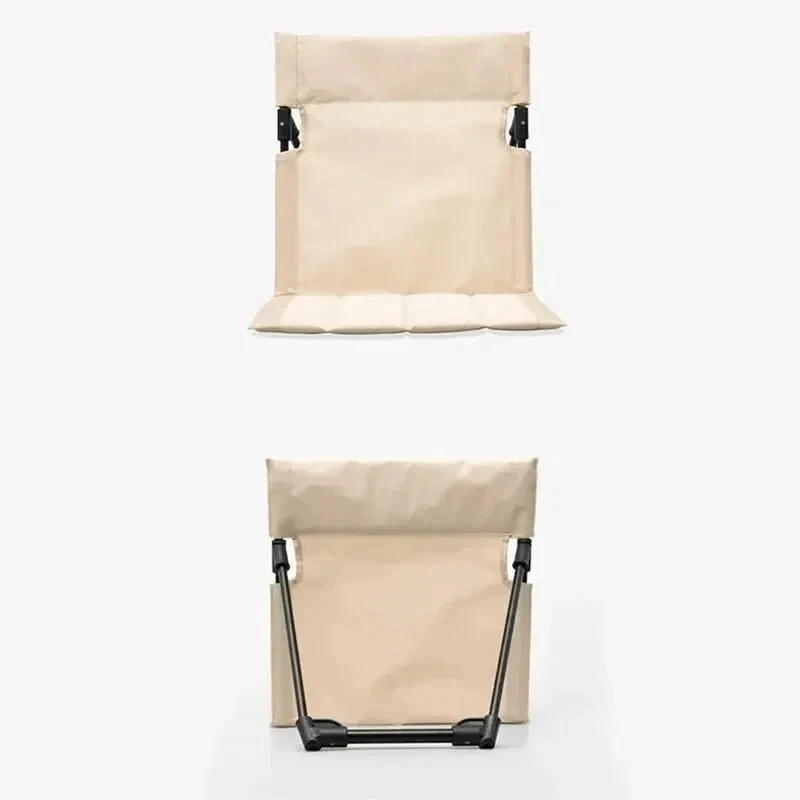
Key structural components that define its longevity and tactile quality include:
- High-Tensile Tubular Alloy Framework: The outer skeleton is constructed from high-tensile steel tubing treated with a matte black powder coat. This matte finish prevents light reflection and guards against moisture oxidation when used outdoors or on humid balconies.
- Reinforced Heavy-Duty Canvas: The main body uses tightly woven Oxford canvas that resists stretching over time. Double-stitched stress points along the frame sleeves ensure that concentrated body weight does not compromise seam integrity.
- Integrated Lumbar & Back Cushioning: A padded cushion layer line covers the seating surface and lower back zone, dampening pressure points while maintaining firm posture support for floor reading, laptop working, or casual relaxing.
- Articulating Fold-Tension Connectors: Heavy-duty polymer joints facilitate effortless folding while maintaining firm locked angles during active sitting, eliminating wobbles or structural slips under load.
Performance-Driven Buying Logic: Value Evaluation and Micro-Space Pitfalls
To make an informed architectural purchasing decision, buyers must weigh functional trade-offs and evaluate how floor seating integrates into their specific daily routines.
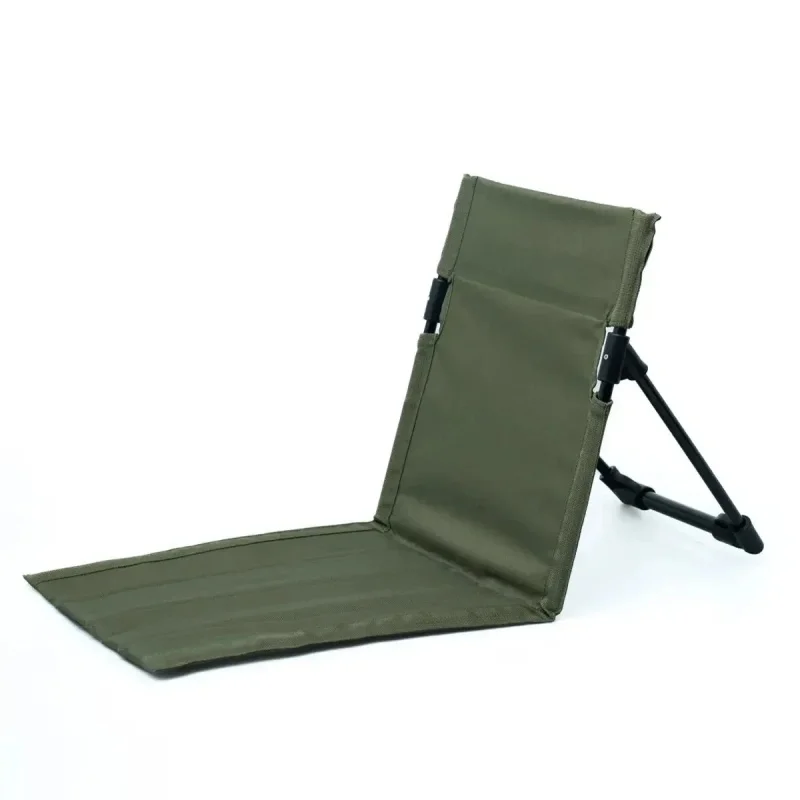
Architectural Pros & Trade-Offs
- PRO: Exceptional Spatial Efficiency. Reclaims valuable floor area in small apartments by providing instant seating when needed and folding away flat in seconds when not in use.
- PRO: Rigid 220 LBS Structural Back Support. Offers true back support compared to standard floor pillows, reducing spinal strain during extended sitting sessions.
- PRO: Indoor/Outdoor Versatility. Transition effortlessly from a Muji-inspired indoor living room setup to a compact city balcony or park outing.
- CON: Direct Floor Elevation. Users with severe knee mobility restrictions or who dislike sitting at floor level may find low-profile seating less accessible than standard height chairs.
- CON: Firm Ergonomic Tuning. Designed for supportive posture rather than deep sink-in plushness; users seeking ultra-soft cloud-like lounge seating may require an additional accent throw blanket.
5 Critical Mistakes to Avoid When Purchasing Small-Space Floor Seating
- 1. Neglecting Backrest Load Capacity: Unreinforced floor cushions often lack internal steel framing, leading to rapid slouching and back fatigue. Always confirm a verified weight rating (such as 220 lbs) before buying.
- 2. Overlooking Storage Clearance Dimensions: Measure under-bed clearance, closet gaps, and furniture side clearances to ensure your folded chair fits easily out of sight.
- 3. Selecting High-Maintenance Fabric in Micro-Spaces: In small apartments where furniture serves multiple functions, delicate velvet or un-treated fabrics stain easily. High-density canvas is significantly more durable and easier to wipe clean.
- 4. Mismatched Table Heights: Ensure your coffee tables, floor desks, or tatami tea tables feature low surface heights (30 cm to 42 cm off the floor) to pair comfortably with low-profile seating.
- 5. Ignoring Visual Weight and Color Harmony: Dark, heavy furniture can visually overcrowd small rooms. Neutral tones like Cream-coloured or muted Olive Green maintain a calm, harmonious aesthetic.
Real-World Micro-Apartment Integration, Lighting Pairings, and Spatial Clearance
Integrating floor seating into a Japandi or Muji micro-living space requires intentional spatial planning. Because floor loungers establish a low visual horizon, surrounding decor and lighting must be scaled down accordingly.
Follow these architectural styling guidelines for maximum spatial impact:
- Floor Covering and Tactile Layering: Position the chair over a natural jute, woven hemp, or low-pile wool area rug, or place it directly onto authentic woven tatami mats. This provides soft tactile warmth underfoot and protects hard floors.
- Low-Level Architectural Lighting: Avoid harsh overhead lighting that creates dark shadows around low seating. Pair the chair with floor-level paper lanterns (such as Noguchi-style lamps) or warm-spectrum (2700K) LED floor lamps with indirect frosted diffusers.
- Spatial Clearance Margins: Maintain a minimum perimeter clearance of 60 cm (24 inches) around the chair to allow comfortable standing and seating transitions without knocking into nearby coffee tables or wall shelves.
- Color Harmony & Organic Textures: Pair the Cream-coloured option with light natural oak furniture, linen window drapes, and ceramic accent vessels to achieve a calm, curated Japandi sanctuary feel.
Frequently Asked Questions & Maintenance Protocols
Below are clear, factual answers to common questions regarding daily use, structural durability, and maintenance for this compact floor chair.
1. What is the verified load capacity of the backrest structure?
The chair features a reinforced tubular steel rear support framework designed and tested to support static loads up to 220 LBS (100 KG). The frame distributes pressure evenly across the base to prevent tipping or sliding when leaning back.
2. Is this chair suitable for outdoor balcony use?
Yes. The heavy-duty Oxford canvas shell resists moisture and surface abrasions, while the tubular steel frame features an anti-corrosion coating. While it is suitable for temporary balcony or patio use, we recommend folding and stowing it indoors during heavy rain to extend its lifespan.
3. How does the chair store flat, and what are its space requirements?
The frame folds down into a completely flat rectangular profile in under 5 seconds. In its folded state, it slides under low bed frames (requiring approximately 5–8 cm of vertical clearance) or can be hung inside a closet using its built-in carry strap.
4. How should the canvas cushion surface be cleaned?
For daily maintenance, wipe down the canvas surface using a microfiber cloth dampened with mild soapy water. For deeper spot cleaning, soft-bristle brush scrubbing with diluted textile detergent is recommended. Allow the chair to air dry completely before folding it away for storage.
Spatial Ergonomics Analysis By: Maya Lin-Vance, Senior Micro-Space Ergonomist & Japandi Architectural Specialist | 12+ years optimizing urban residential floor plans, compact furniture ergonomics, and biophilic interior spaces.


