The Micro-Apartment Spatial Guide: Selecting Wide Armless Swivel Seating for Japandi Home Offices

The Micro-Space Dilemma: Why Armless Cross-Legged Seating Works in Japandi Layouts
Designing for small spaces requires a meticulous approach to volume, visual weight, and multi-functional flow. In micro-apartments and Muji-inspired urban interiors, traditional task seating introduces significant spatial friction. Fixed or protruding armrests frequently collide with desk aprons, preventing chairs from sliding fully beneath workstations. This structural incompatibility wastes up to 4 to 6 square feet of valuable circulation space when the desk is not in use.
The Kenso Wide-Seat Armless Swivel Task Chair addresses this architectural challenge through intentional reductionism. By eliminating vertical armrest barriers, the silhouette achieves visual lightness, allowing the eye to travel continuously across the room—a core tenet of Japandi design principles. This armless profile transforms a rigid office implement into an adaptable lounge element that serves equally well as vanity seating, a reading chair, or supplemental living room accommodation.
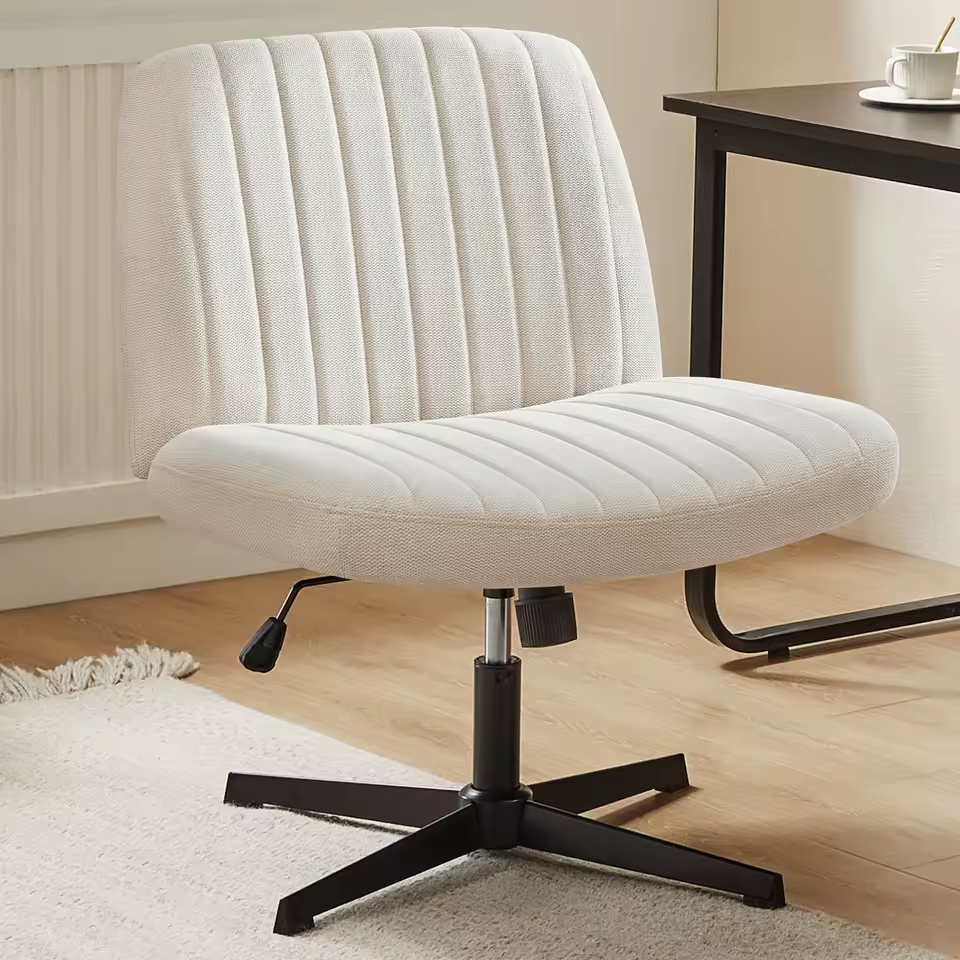
Furthermore, standard compact task chairs restrict lower-body movement, forcing occupants into static, linear postures that cause fatigue over long remote-work sessions. An expansive horizontal seat plane enables natural posture variation, including cross-legged sitting, without requiring the expansive physical footprint of an oversized executive chair. When selecting seating for multifunctional living zones, balancing human postural freedom against floor-plate economy is the primary architectural objective.
Spatial Footprint & Dimensional Verification: Clearance Rules for Compact Desks
Proper integration of multi-purpose seating within micro-apartments demands rigorous verification of physical dimensions against existing architectural envelopes. A common planning error in compact home offices is ignoring the turning radius and vertical clearance thresholds required for fluid daily operation. Below is the verified dimensional and specification matrix for the Kenso Wide-Seat Armless Swivel Task Chair, structured for precise spatial verification.
| Architectural Parameter | Verified Specification | Small-Space Spatial Impact & Clearance Rule |
|---|---|---|
| Seat Width (Horizontal Plane) | 25.5 inches (64.8 cm) | Requires a minimum 28-inch desk opening between drawers or legs for unobstructed docking. |
| Seat Depth | 20.0 inches (50.8 cm) | Accommodates cross-legged postures while maintaining a compact forward protrusion when tucked. |
| Seat Height Adjustment | 15.7 to 19.7 inches (40 - 50 cm) | Compatible with standard 28-to-30-inch desk surfaces and low-profile Japandi dining tables. |
| Base Spread (Diameter) | 25.2 inches (64.0 cm) | Dictates the absolute minimum floor turning radius; ensure 30 inches of clear floor width. |
| Structural Load Capacity | 300 lbs (136 kg) | Supported by an engineered steel sub-frame and Class-3 pneumatic lifting cylinder. |
| Base Mechanism | 360° Swivel with 15° Rocking Tilt | Enables dynamic reach across L-shaped workstations without scraping adjacent walls. |
When specifying this chair for micro-apartments, measure the exact internal width of your desk knee-well. Because the seat plane extends 25.5 inches laterally, any under-desk storage pedestals or CPU holders must be positioned outside a 28-inch central clearance zone. The absence of arms ensures zero vertical obstruction, allowing the backrest to rest flush against the desk edge when pushed in, saving critical walkway space in narrow studios.
Structural Integrity & Joinery Evaluation: Evaluating Steel Frames and Linen Upholstery
In minimalist interiors, where fewer items are displayed, every functional piece must withstand rigorous daily utilization without rapid visual or structural degradation. The Kenso Wide-Seat Armless Swivel Task Chair relies on a multi-layered material architecture designed to balance tactile warmth with industrial durability.
- Engineered Sub-Frame Architecture: Beneath the tailored upholstery lies a reinforced steel perimeter frame paired with high-density multi-layer engineered wood. This composite construction prevents seat pan sagging over extended usage cycles, ensuring the 25.5-inch platform remains structurally true even when weight is concentrated on the lateral edges during cross-legged sitting.
- High-Resilience Dual-Layer Foam: The seat cushion utilizes a dual-density polyurethane foam core. A firm lower layer provides bottoming-out resistance against the steel base, while a softer, highly responsive top layer distributes pressure points across the sit-bones and ankles. This engineering is critical for preventing lower-extremity numbness during extended periods of cross-legged posture.
- Tactile Linen-Weave Upholstery: Covered in a breathable, tightly woven poly-linen textile, the surface resists pilling and friction wear while offering the organic matte texture essential to Muji and Japandi aesthetics. Unlike synthetic leathers that trap body heat or velvet fabrics that show compression tracking, this textile maintains a uniform, clean appearance under daily friction.
- Heavy-Duty Flangeless Steel Base: The five-star base is crafted from stamped alloy steel with a powder-coated matte finish. Rather than relying on fragile plastic caster sockets, the fixed-glide or low-profile caster insertions are integrated directly into the structural steel arms, distributing lateral loads evenly across flooring surfaces.
Spatial Suitability, Trade-Offs, and 5 Red Flags Before Buying
Objective architectural specification requires acknowledging operational boundaries. While an armless, wide-seat swivel chair solves distinct spatial challenges in micro-apartments, it presents specific biomechanical and structural trade-offs that must align with your physical requirements and room layout.
Key Structural Trade-Offs: The primary trade-off of armless task seating is the absence of upper-extremity support during deep typing or intense mouse tasks. Users who rely heavily on armrests to offload shoulder and neck tension must ensure their desk surface is sufficiently deep to support their forearms directly. Additionally, while the 15-degree rocking tilt mechanism offers postural relief, it lacks the independent multi-angle lumbar locking systems found in high-end ergonomic task chairs, prioritizing clean silhouette and posture flexibility over rigid medical-grade support.
5 Critical Red Flags to Watch Before Buying:
- 1. Incompatible Desk Knee-Well Width: If your desk opening is narrower than 27 inches, the 25.5-inch seat cushion will scrape against internal table legs or storage pedestals during docking, causing upholstery tearing over time.
- 2. Deep Plush Carpeting Without Floor Mats: The wide stance and heavy-duty steel base generate concentrated point loads. Placing this chair directly on deep-pile carpeting without a rigid polycarbonate or bamboo chair mat will restrict 360-degree swivel smoothness and strain the pneumatic cylinder.
- 3. Requirement for Strict Ergonomic Upper-Body Support: If you suffer from chronic cervical spine or rotator cuff pathology that necessitates height-adjustable, articulating armrests to support your elbows at an exact 90-degree angle, an armless design is functionally contraindicated for all-day primary use.
- 4. Extremely Narrow Micro-Balcony or Alcove Workspace: While the chair slides easily under tables, the 25.2-inch star base requires an absolute minimum turning diameter of 28 inches. Installing this in a hallway alcove narrower than 30 inches will prevent safe ingress and egress.
- 5. High-Stain Pet Environments Without Protective Spays: While durable, the textured woven poly-linen upholstery can trap pet hair and liquid spills more readily than impermeable vinyl or treated top-grain leather. In high-shedding household environments, immediate application of a fabric protectant is required.
Japandi Layout Integration: Lighting Pairings & Final Selection Framework
In small-space living, furniture must harmonize with the visual and sensory ecosystem of the room. The Kenso Wide-Seat Armless Swivel Task Chair acts as an anchoring architectural element that bridges functional work requirements with restorative domestic atmosphere.
Spatial Placement & Visual Flow: To maximize perceived square footage in a studio apartment, position the workspace perpendicular to the primary natural light source. When tucked completely beneath a floating ash or oak desk, the chair's low profile prevents visual fragmentation of the room’s horizontal sightlines. Pair the neutral linen upholstery with natural tactile materials such as jute area rugs, slatted wood room dividers, and matte ceramic planters to reinforce the calming, clutter-free ethos of Muji interiors.
Lighting Pairings for Compact Zones: Avoid harsh, overhead directional task lighting that casts heavy shadows across small work niches. Instead, pair this seating solution with an adjustable warm-dimming LED desk lamp (2700K–3000K) featuring a diffused shade, or install low-glare architectural linear strip lighting beneath floating shelves. Soft, indirect illumination highlights the organic weave of the seat fabric while maintaining an intimate, serene evening ambiance when the desk transitions back into living space.
Specify the Kenso Wide-Seat Armless Swivel Task Chair if your primary design objective is eliminating visual clutter in a multi-use living/working space, your posture habits favor fluid movement and cross-legged sitting over rigid linear support, and your desk knee-well provides at least 28 inches of clear horizontal width. Do not specify this model if your daily workflow demands dedicated upper-arm support structures or if your workspace width is tightly restricted by structural walls or permanent cabinetry.
People Also Ask: Spatial & Ergonomic FAQs for Micro-Living
Can the Kenso Wide-Seat Chair fit comfortably under a standard 28-inch height desk?
Yes. With the pneumatic cylinder lowered to its minimum seat height of 15.7 inches, the chair slides entirely beneath standard 28-inch to 30-inch desks. Because it lacks armrests, there is zero risk of structural collision with the desk apron or keyboard tray, ensuring 100% tuck-away clearance.
Is the 25.5-inch seat wide enough for adult cross-legged sitting without edge compression?
For the vast majority of users, the 25.5-inch lateral span accommodates full cross-legged postures comfortably. The interior steel perimeter frame prevents the outer foam edges from collapsing downward under concentrated leg weight, maintaining a level, supportive sitting platform.
How does the woven fabric perform against daily friction and cleaning in small apartments?
The tightly woven poly-linen textile is engineered for high abrasion resistance and minimal pilling. For daily maintenance, vacuuming with an upholstery attachment removes particulate dust. Surface marks or spills should be spot-cleaned immediately using a mild water-free solvent or specialized foam upholstery cleaner to prevent moisture saturation of the dual-layer foam core.
Does the 360-degree swivel mechanism require a large floor clearance footprint?
The five-star steel base measures 25.2 inches in diameter. To rotate freely without scraping baseboards, adjacent furniture, or desk legs, plan for a minimum clear physical turning footprint of 28 to 30 inches on your floor plan.
Spatial Guide Authored by: Elena Rostova, Senior Small Space Ergonomics Architect | 14 Years Experience specializing in minimalist Japandi spatial planning and modular residential design.


