Compact Wall Cabinet Selection Guide: Japandi Vertical Storage & Small Space Optimization Methods
Architectural Guidance Summary:
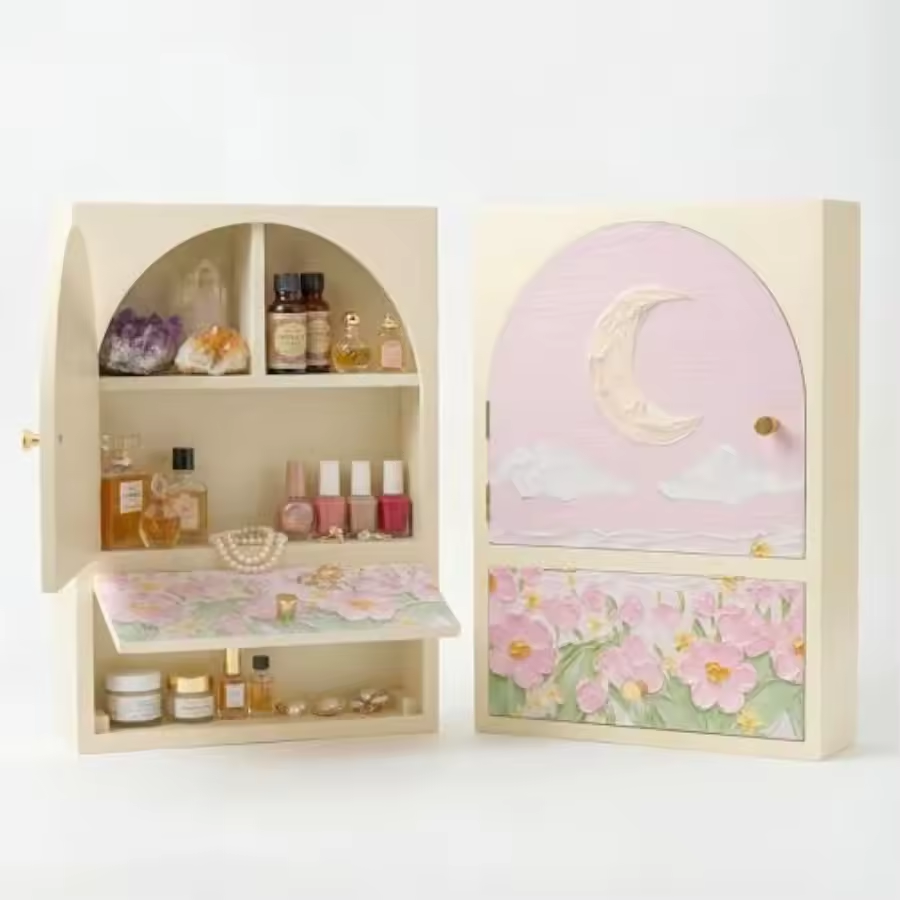
Optimizing micro-apartments requires vertical spatial utilization and dual-function mounting strategies. This guide evaluates the **Japandi Arched Wooden Display Cabinet** as a primary case study for integrating compact vertical storage, balancing tactile warmth with strict geometric footprint efficiency in limited square footage.
1. Spatial Principles & Wall-Mounted Storage Selection Techniques
In high-density urban residences, floor area commands a premium. Modern **Japandi small space storage** techniques prioritize vertical planes to free up movement paths while maintaining low visual noise. Incorporating soft architectural arches alongside natural wood textures allows functional cabinets to serve as grounded focal points rather than intrusive storage boxes.
When selecting vertical shelving, balance open display compartments with enclosed drop-down drop-leaf doors. This hybrid layout maintains an uncluttered environment by hiding high-density personal items while highlighting intentional decor pieces like crystals, essential oils, or ceramics.
2. Dimensional Clearance Calculation & Architectural Spec Matrix
Accurate clearance planning prevents spatial conflicts in compact entryways, vanity zones, or study nooks. Ensure the cabinet swing radius and drop-down leaf clearance do not obstruct primary walking paths or adjacent fixtures.
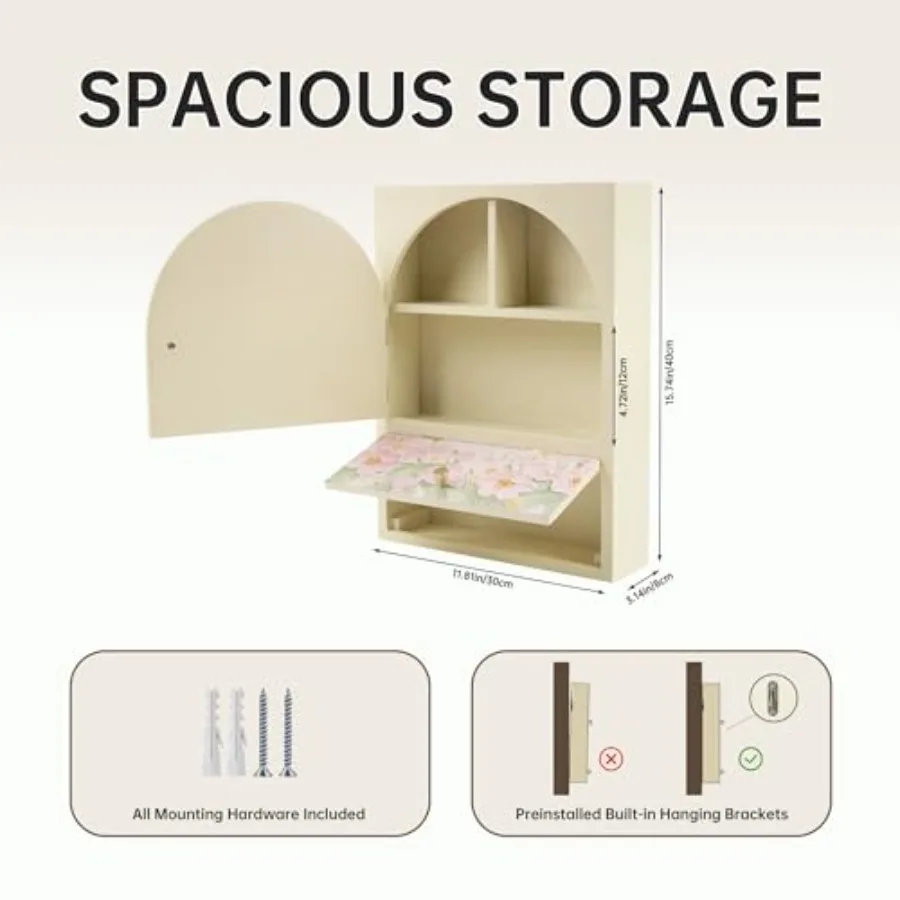
| Specification Parameter | Architectural Measurement | Small Space Living Fit Evaluation |
|---|---|---|
| Overall Height | 15.75 inches (~40 cm) | Optimal vertical clearance for vanity walls and desktop surfaces. |
| Width Footprint | 11.00 inches (~28 cm) | Ultra-narrow profile suitable for tight wall piers and micro-nooks. |
| Depth Profile | 4.70 inches (~12 cm) | Low-profile depth minimizes horizontal protrusion into circulation paths. |
| Core Construction | Natural Wood / Fiberboard Mix | Lightweight structure reduces strain on dry-wall anchor points. |
| Mounting Mechanics | Pre-installed Built-in Brackets | Flush-mount engineering guarantees seamless integration against flat walls. |
3. Structural Joinery Mechanics & Material Inspection Rules
Assessing joinery mechanics is critical when specifying lightweight hanging furniture. Examine the structural components before installation using these physical inspection guidelines:
- Hinge Stability: Ensure side-hinged arched doors swing smoothly without binding against the outer frame edge.
- Drop-Leaf Hardware: Verify that the bottom fold-down compartment features continuous piano hinges or dual side-tension supports to maintain horizontal alignment under minor loads.
- Backpanel Integrity: Inspect the rear mounting panel to confirm that built-in hanging brackets are anchored securely into the main frame timber, preventing pull-away failure under weight.
- Surface Finish Uniformity: Check tactile grain consistency across painted pastel surfaces to ensure resistance against daily handling and moisture exposure.
4. Trade-Off Evaluation Frameworks & Compact Layout Guidelines
Selecting compact multi-compartment cabinets requires evaluating functional compromises against spatial gains.
Structural Trade-off Evaluation
- Shallow Depth vs. Item Capacity: A 4.7-inch depth prevents spatial intrusion but restricts storage to small cosmetics, perfume bottles, and small trinkets.
- Dual Mounting vs. Load Capacity: Convertible wall/desktop positioning offers flexibility, but limits total weight tolerances compared to deep stud-anchored cabinetry.
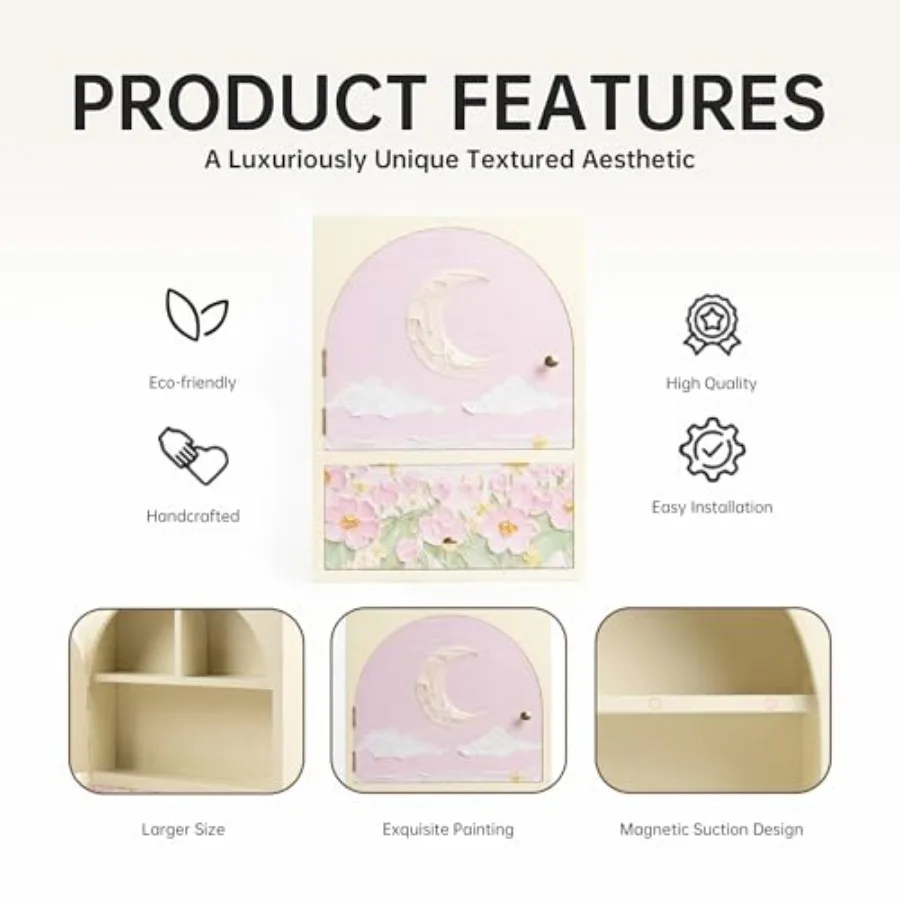
- Decorative Carvings vs. Minimalist Cleaning: Raised relief patterns add Muji-inspired warmth but require regular soft-brush dusting compared to flat laminate surfaces.
Critical Mistakes to Avoid in Compact Layouts
- Ignoring Door Clearance: Mounting the unit too close to adjacent corners prevents the arched door from opening to a full 90-degree angle.
- Overloading Non-Stud Drywall: Hanging the cabinet using standard plastic anchors without verifying total loaded weight can cause wall sagging over time.
- Misjudging Drop-Leaf Arc: Placing items directly below the unit blocks the lower compartment from dropping fully horizontal.
5. Vertical Layout Positioning & Ambient Lighting Integration
To maximize visual harmony, align the bottom edge of the cabinet 48 to 52 inches above the finished floor when mounting over vanity surfaces. This positioning aligns the central compartment with natural eye level while leaving adequate desktop clearance beneath for secondary tray organizers.
Pair natural wood finishes with 2700K warm ambient lighting. Side-mounted LED strip channels or adjacent warm lamps eliminate harsh downward shadows inside the upper arched shelf niches, highlighting displayed glass bottles and crystals effectively.
6. Expert Practical Solutions for Small Space Dilemmas (PAA)
How do you secure a lightweight wooden cabinet to drywall safely?
Use heavy-duty zinc screw-in drywall anchors or toggle bolts if wall studs are unavailable at your desired installation spot. Always check that the anchor rating exceeds the combined weight of the cabinet and stored items.
Can this unit be used on a vanity desktop without wall mounting?
Yes, the flat bottom base allows direct placement on desks or dressing tables. Ensure the underlying surface is level to prevent wobble when opening upper doors.
How do you maintain natural painted wood surfaces in humid spaces like bathrooms?
Maintain adequate room ventilation using exhaust fans and apply a clear water-resistant matte wood sealer if placing the unit in high-humidity zones to prevent wood expansion.
Spatial Guide Authored by:
Elena Rostova, Senior Small Space Ergonomics Specialist & Japandi Spatial Architect.
Complementary Spatial Reading:
Explore Japandi FRP Oval Low Coffee Table Layout Integration Methods


