Compact Vertical Bookcase Selection Guide: 5 Space-Saving Storage Solutions for Japandi & Muji Interiors

Architectural Recommendation Summary:
Selecting vertical storage for Japandi and Muji micro-apartments requires maintaining a depth footprint below 25 cm to preserve a minimum 75 cm primary walking path. Prioritize high-density engineered wood or steel frames with integrated wall anti-tip brackets to maximize vertical cubic volume without crowding small rooms.
1. Small-Space Layout Mistakes & Trade-Off Frameworks
Furnishing a 35-square-meter apartment is a game of millimeters. The most frequent layout failure occurs when placing standard 30cm-deep commercial shelving into narrow corridors. "According to Neufert Architectural Data, primary circulation paths in residential interiors demand a clear width of at least 75 cm to allow unimpeded movement." When a bookcase protrudes past 25 cm, people end up brushing their shoulders against shelf edges or stubbing toes against bottom corners.

Another common mistake is neglecting baseboard trim offsets. Standard residential baseboards extend 12 mm to 15 mm from the drywall. A flat-backed bookcase without a baseboard cutout will sit tilted or leave an unsightly gap that traps dust. This gap reduces structural contact against the wall, increasing tip-over hazards during accidental impact.
| Layout Mistake | Physical Friction Point | Architectural Fix | Spatial Trade-Off |
|---|---|---|---|
| Excessive Shelf Depth | Walkway narrowed under 60 cm; shoulder bumps | Select ultra-shallow units (20 cm to 23 cm depth) | Cannot fit oversized art books horizontally |
| Ignoring Baseboards | Unit sits 15 mm off wall, wobbling under load | Anchor top rail with rigid wall-mounting brackets | Requires permanent wall drilling |
| Unanchored Height | Tipping risk when pulling heavy items from top tier | Install anti-tip iron hardware into wall studs | Fixed location; harder to move furniture later |
| Visual Blocking | Solid side panels block natural window light | Opt for open-frame or skeleton uprights | Stored items remain visible from all angles |
2. Everyday Ergonomics & Legroom Clearance Rules
Spatial planning in Japandi interiors relies on maintaining visual breathability. When a tall vertical shelf sits next to a doorway or seating area, strict dimensional clearances prevent the room from feeling claustrophobic.

Keep these clear spatial limits in mind when measuring your floor plan:
- Primary Passage Clearances: Ensure at least 75 cm of uninterrupted walking space between the front edge of a bookcase and adjacent sofas or coffee tables so you won't bump your shins.
- Door Arc Margins: Maintain a 60 cm clear clearance buffer from swing doors to prevent door handles from slamming into outer shelf uprights.
- Low-Profile Visual Sightlines: Keep tall 200 cm towers positioned in room corners rather than directly beside entryways. This keeps sightlines open and makes small rooms feel wider.
- Vertical Reach Zones: Place everyday items between 60 cm and 150 cm from the floor. Reserve shelves above 160 cm for light display objects to keep heavy items within easy reach.
3. Structural Joinery Mechanics & Load Reliability
A slim footprint means high structural stress. When a bookcase reaches 160 cm to 200 cm in height while measuring under 35 cm in width, internal load distribution determines whether it stands firm or wobbles when you lean on it.

Evaluate these structural benchmarks before choosing your storage frame:
- Mortise-and-Tenon Interlocking Joints: H-pattern wood joinery uses interlocking tabs that distribute downward weight evenly across side panels, handling total loads up to 80 kg without frame distortion.
- Steel Framework Rigidity: Powder-coated steel side uprights (15 mm x 15 mm tube thickness) prevent lateral swaying when loaded with 18 kg per shelf.
- Rotational Bearing Wear: Revolving 360-degree bases need steel ball-bearing rings to prevent jamming when loaded to their 144 kg maximum rating.
- Anti-Tip Wall Anchorage: Top-mounted iron brackets anchored into drywall studs withstand up to 35 kg of forward pull force, preventing tip-overs.
4. Material Tactility & Acoustic Physics
Material choices affect both visual warmth and room acoustics. Medium-density fiberboard (MDF) with a density of 680 kg/m³ provides solid mass that dampens ambient sound better than thin plastic. Open-shelf book displays break up sound waves, reducing echo in rooms with hardwood floors.

Synthetic PVC boards offer waterproof performance for damp spaces, though they lack the rich surface grain of real wood veneer. High-grade particle boards with sealed laminate edges resist swelling from daily moisture in humid climates.
"Material selection in compact living isn't just visual—it's tactile and acoustic. Dense wood composites eliminate hollow vibrations, grounding the room."
For routine maintenance, wipe sealed wood and steel surfaces with a soft, damp microfiber cloth. Avoid harsh chemical sprays that degrade protective matte topcoats.
5. Curated Top Product Recommendations
Below is a comparative breakdown of five top storage units tailored for compact Japandi and Muji spatial layouts.
| Product Name | Dimensions | Primary Material | Load Limit | Best Spatial Fit |
|---|---|---|---|---|
| Muji-Inspired Mortise-and-Tenon Vertical Storage Tower | 60.5 x 23.3 x 160 cm | MDF Density Board | 15 kg / shelf | Narrow Hallways & Alcoves |
| Japandi Industrial Narrow Corner Shelf Unit | 34 x 34 x 200 cm | Steel Frame & Particle Board | 18.1 kg / shelf | Unused Room Corners |
| Dual-Orientation Modular Asymmetric Cube Storage Console | 49.5 x 22.8 x 106.7 cm | Engineered Wood / MDF | 79.8 kg total | Under-Window Spaces |
| Compact 360-Degree Revolving Tower Shelf | 0.165 m² footprint | High-Density PVC Board | 144 kg total | Bedside & Desk Clearance |
| Japandi Tree-Branch Accent Shelf with Concealed Fabric Storage | 56.9 x 22.1 cm footprint | Metal & Particle Board | 10 kg / branch | Reading Nooks & Studios |
Muji-Inspired Mortise-and-Tenon Vertical Storage Tower
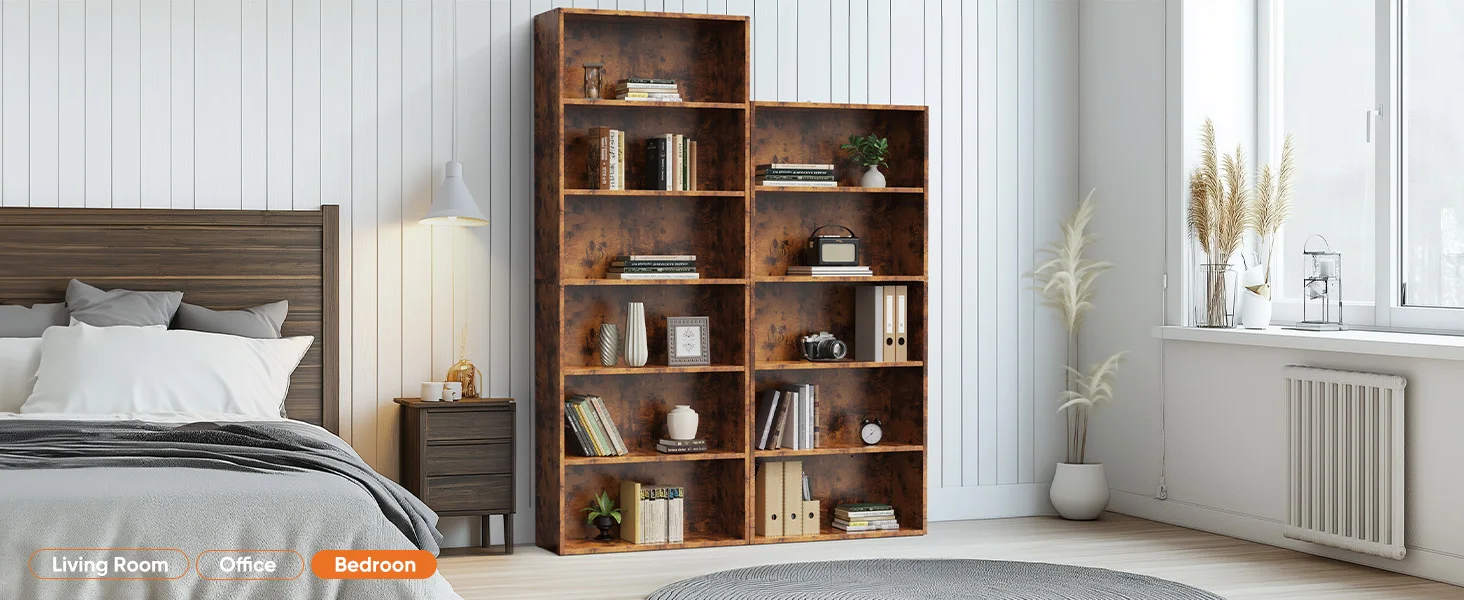
This 63-inch (160 cm) tall floor-standing unit uses an H-shape mortise-and-tenon joinery method reinforced with triangular rear corner brackets. Measuring 23.8 inches (60.5 cm) wide by 9.2 inches (23.3 cm) deep, its ultra-shallow profile keeps walkways open in tight floor plans.

Spatial Trade-Off Analysis: The shallow 23.3 cm depth preserves primary walking clearance in narrow rooms, but it requires wall drilling for the top iron anti-tip bracket to guarantee forward stability when fully loaded.
Japandi Industrial Narrow Corner Shelf Unit
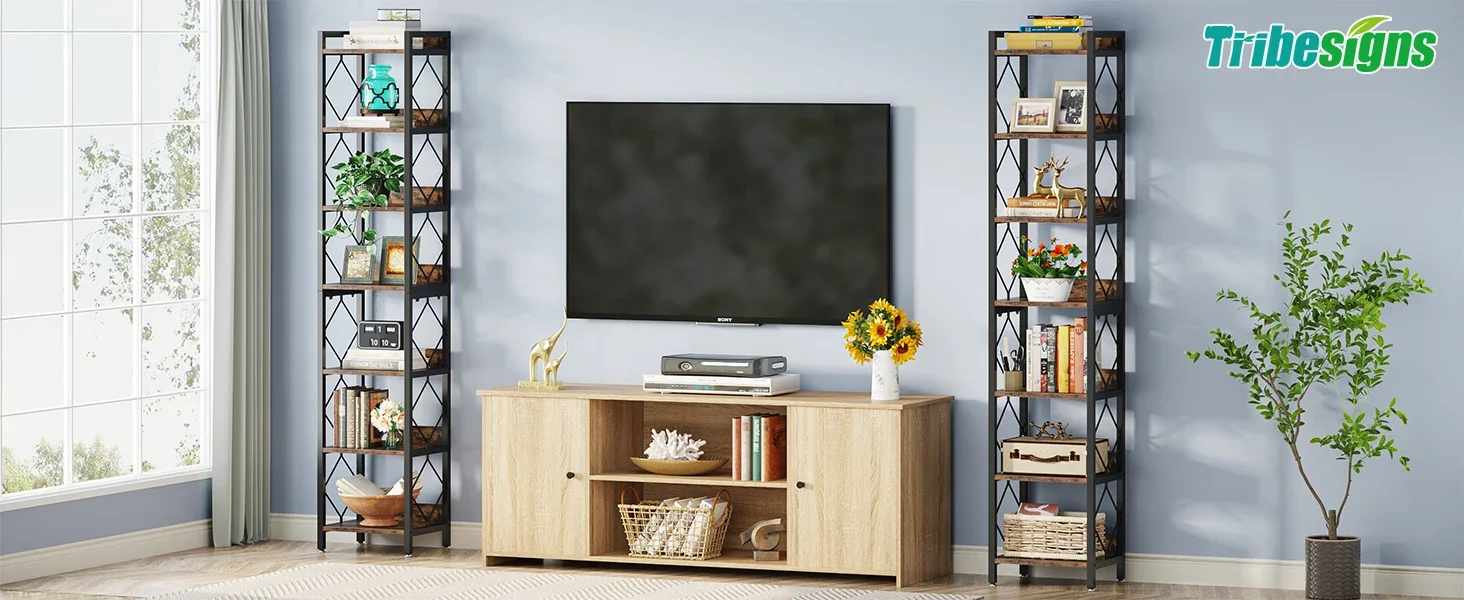
Reaching a full height of 78.74 inches (200 cm), this 7-tier skinny bookshelf occupies a small floor square of 13.39 inches x 13.39 inches (34 cm x 34 cm). Built with a rigid steel frame and particle board, each tier handles up to 40 lbs (18.1 kg). Diamond-patterned side baffles keep stored books from slipping sideways.
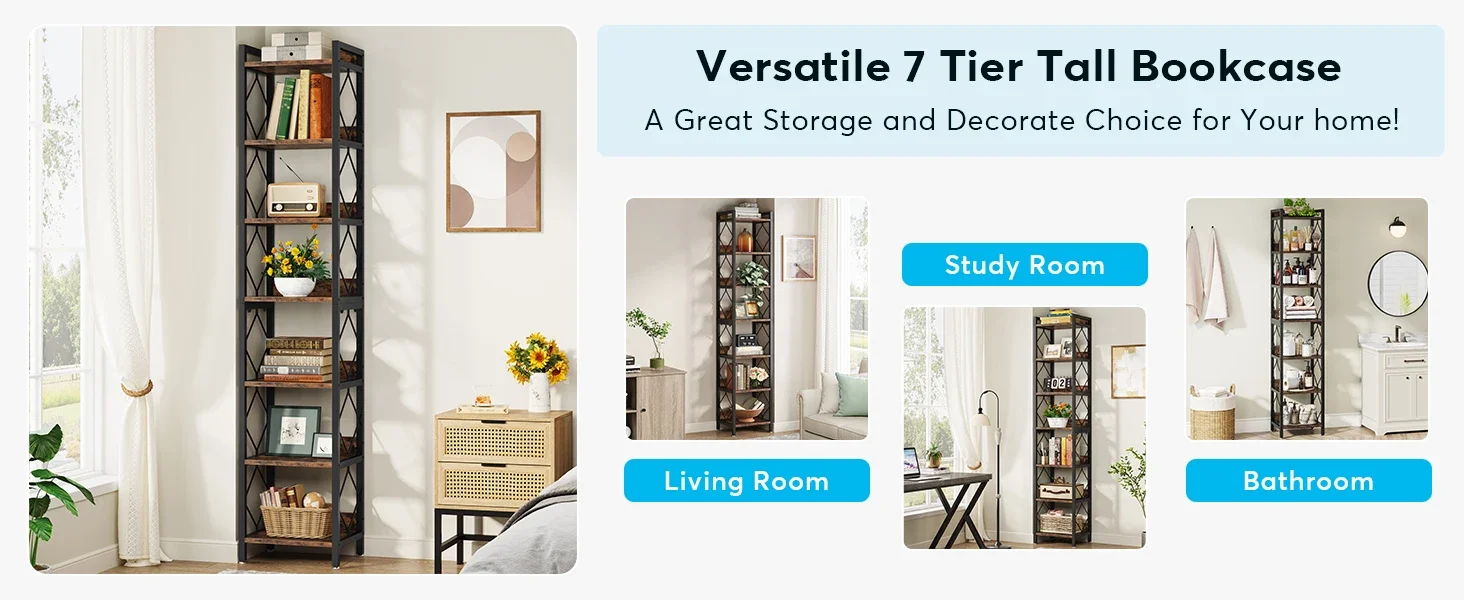
Spatial Trade-Off Analysis: Takes advantage of empty room corners with minimal floor impact, but its 200 cm height requires adjusting the bottom leveling feet on uneven floors to eliminate top sway.
Dual-Orientation Modular Asymmetric Cube Storage Console
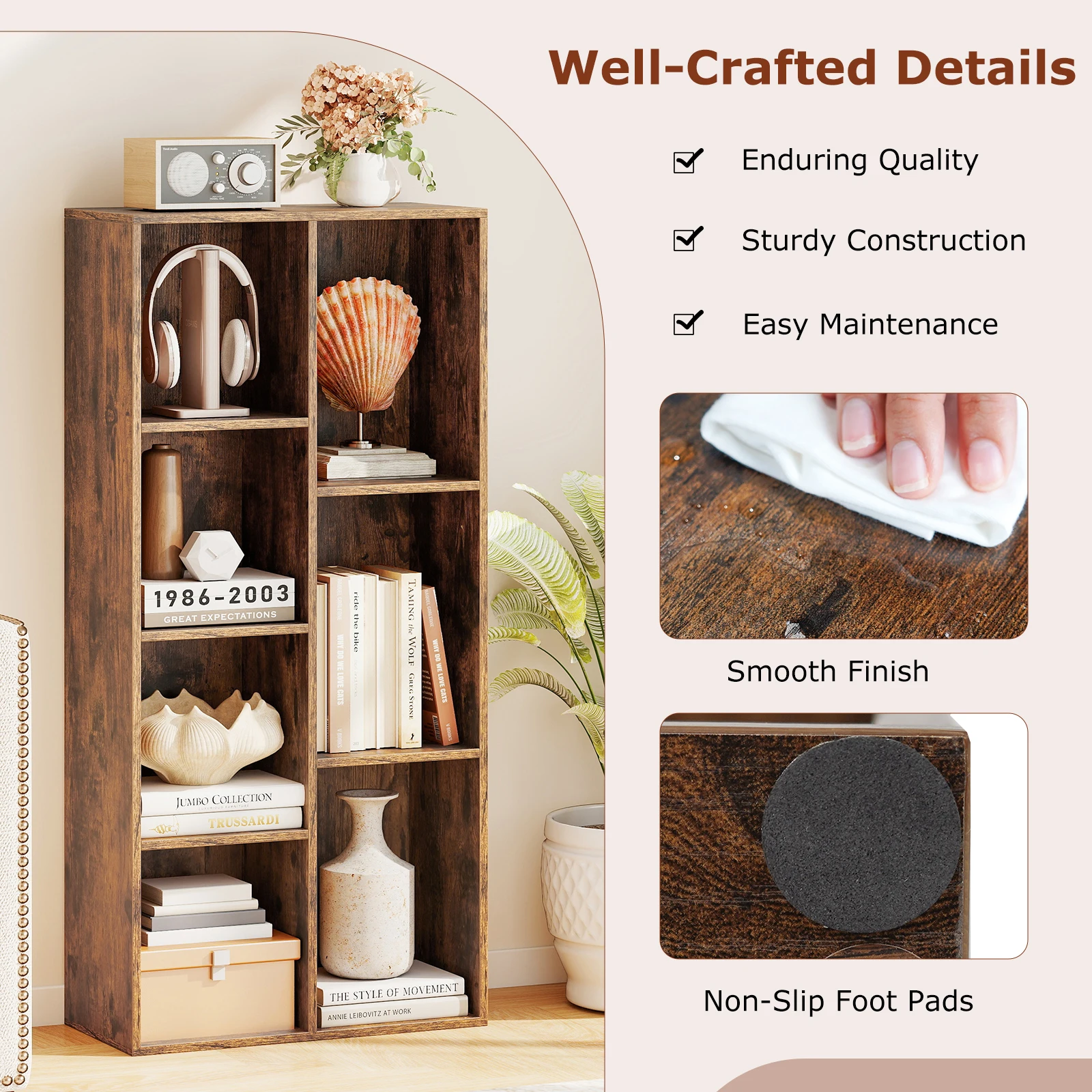
Featuring seven open compartments of varying proportions, this engineered wood unit measures 19.5" L x 9" W x 42" H (49.5 x 22.8 x 106.7 cm). It supports 176 lbs (79.8 kg) total load and can be positioned vertically or horizontally beneath windows.
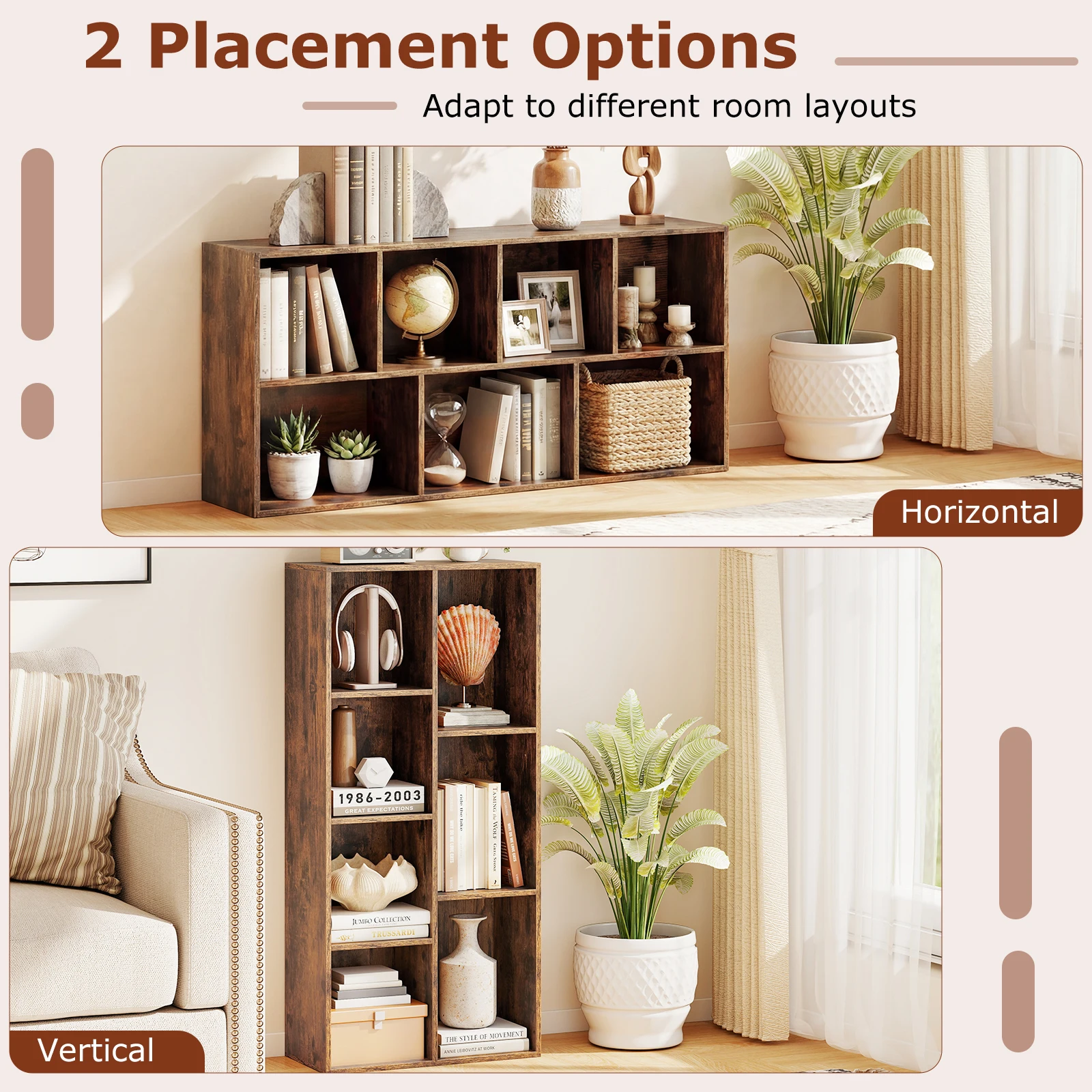
Spatial Trade-Off Analysis: Dual-orientation flexibility allows setup under windows, though horizontal orientation consumes 106.7 cm of lateral wall space.
Compact 360-Degree Revolving Tower Shelf
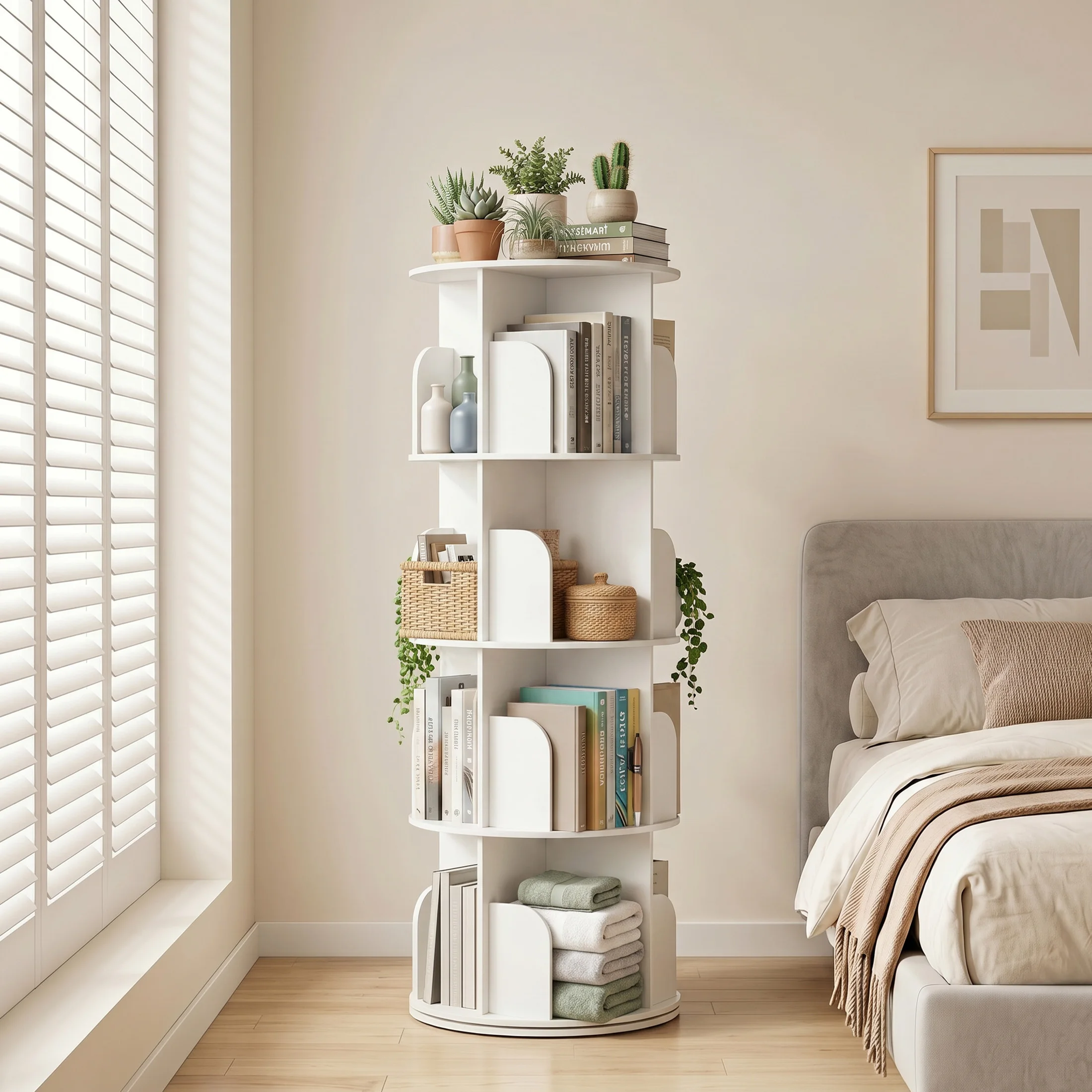
Occupying just 1.78 sq.ft (0.165 m²) of floor space, this 4-tier revolving unit rotates 360 degrees smoothly on a steel ball-bearing base. Constructed from waterproof PVC, each level supports 79.37 lbs (36 kg), for a total capacity of 317.47 lbs (144 kg).
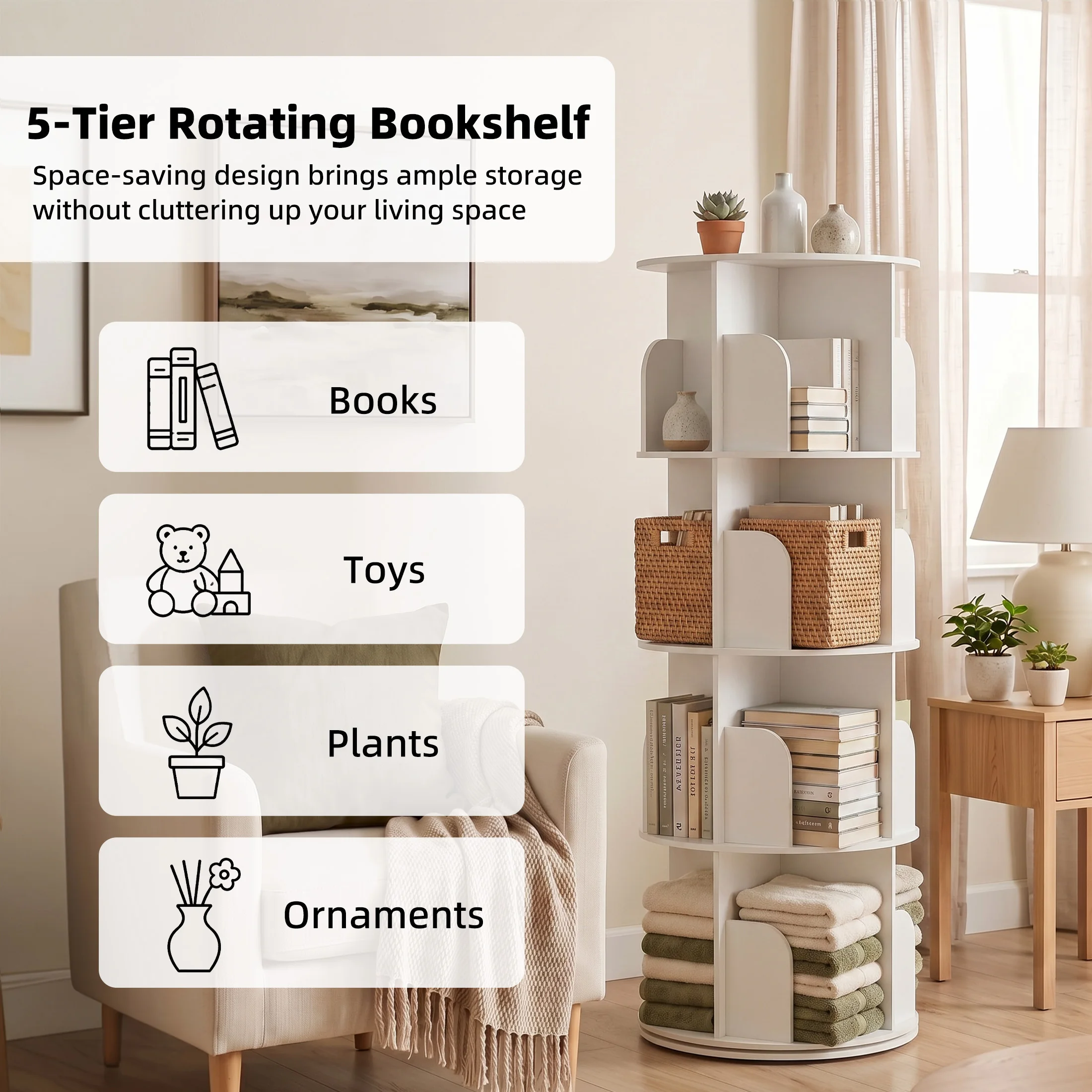
Spatial Trade-Off Analysis: Eliminates wall-width requirements by storing books on four sides, but needs a 10 cm clearance buffer around its rotational path so books don't hit nearby walls.
Japandi Tree-Branch Accent Shelf with Concealed Fabric Storage
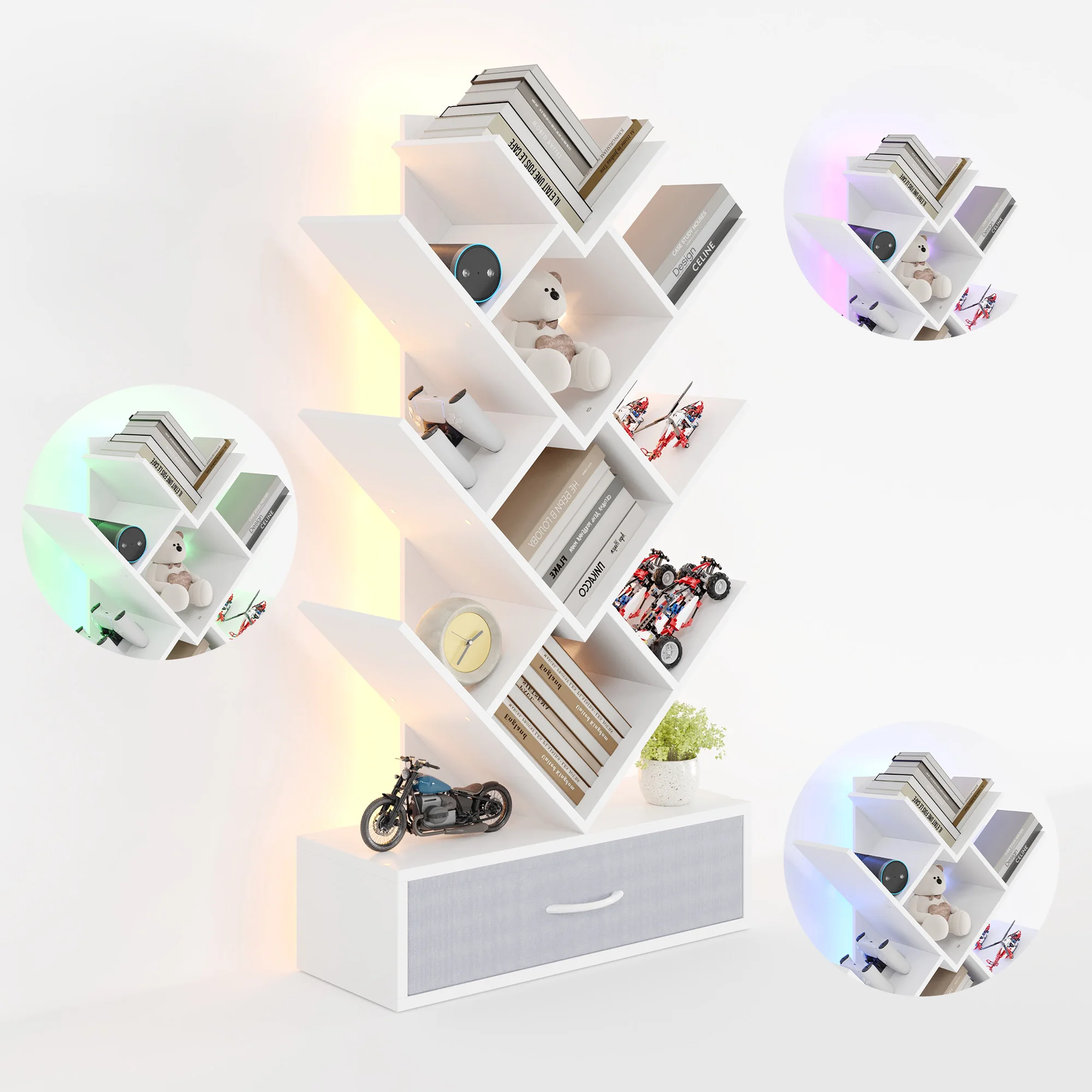
Designed with an angled branch layout, this 7-tier shelf uses a compact 22.4" L x 8.7" W (56.9 x 22.1 cm) footprint. It features an integrated LED strip for indirect accent lighting and a foldable fabric bin at the base for hidden storage.
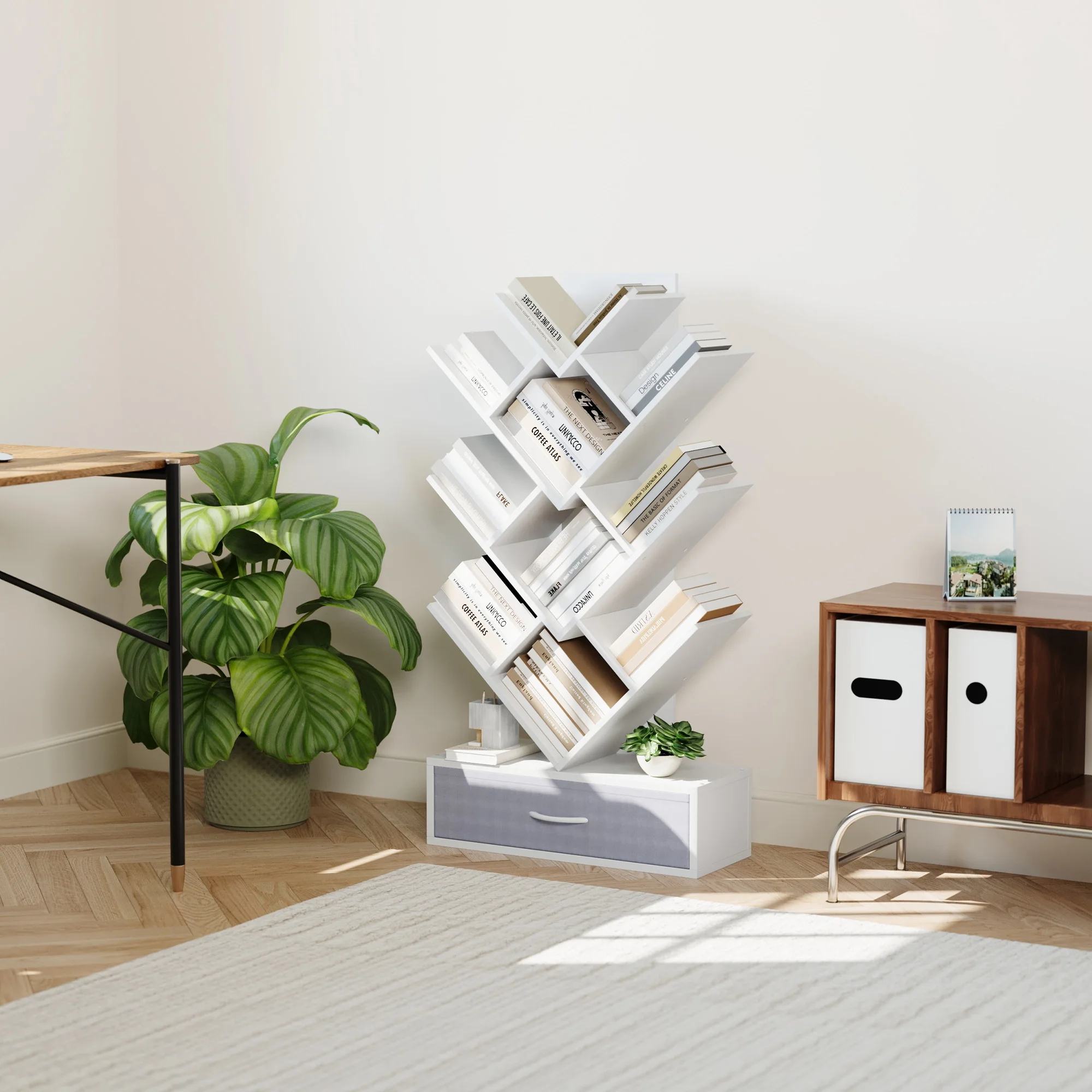
Spatial Trade-Off Analysis: Adds indirect ambient lighting and hidden storage to cozy reading nooks, though angled branch shelves restrict book placement to items under 20 cm in width.
6. Frequently Asked Questions
How deep should a bookshelf be for a small apartment hallway?
Select a shelf depth between 20 cm and 24 cm. Standard paperbacks require 15 cm of depth, so deeper shelves waste valuable floor space in narrow passages.
Are tall, narrow bookcases safe without wall anchoring?
No. Any bookshelf over 140 cm tall with a depth under 30 cm should be secured with an anti-tip wall bracket to prevent accidents.
What materials fit best in Muji and Japandi interior aesthetics?
Look for natural light woods like oak, beech, or birch, along with matte-coated steel frames and clean white surfaces that reflect natural light softly.
Spatial Selection Guide Authored by Truff:
Truff is a Senior Interior Architect specializing in compact Japandi and Muji spatial layouts. With over twelve years of experience optimizing small-footprint residential floor plans, Truff translates structural joinery, material physics, and clearance guidelines into simple, practical furniture advice.
Looking to combine biophilic greenery with vertical storage? Explore our architectural buying guide on vertical plant display architecture for Japandi interiors.


