Minimalist Japandi Armoire Buying Guide: Top 5 Compact Wardrobe Storage Solutions for Small Spaces

Must-Have Recommendation Summary:
Selecting the right compact armoire for micro-apartments requires balancing hanger depth clearance (minimum 48 cm) with vertical footprint efficiency. For ultimate spatial optimization, choose pieces with integrated drawers, soft-close hardware, and natural breathable surfaces like woven rattan or FSC-certified engineered wood.
1. Spatial Micro-Zoning & Vertical Wall Plane Utilization
According to Neufert Architectural Data, standard adult outerwear requires a minimum internal hanging clearance depth of 48 cm to avoid garment crushing against cabinet doors. In compact urban apartments under 35 sqm, floor area comes at a premium. Utilizing full vertical wall planes up to 180–200 cm captures dead air space above eye level without encroaching on primary circulation paths.

| Architectural Zone | Height Boundary | Primary Functional Utility | Spatial Efficiency Gain |
|---|---|---|---|
| Lower Tier (Drawers) | 0 – 50 cm | Heavy textiles, folded denim, extra bedding | +22% floor area savings |
| Mid Tier (Hanging Rod) | 50 – 150 cm | Full-length coats, dresses, pressed shirts | Eliminates ironing frequency |
| Upper Tier (Shelving) | 150 – 200 cm | Seasonal storage, hats, organizational boxes | +15% vertical capacity |
2. Visual Weight Reduction Strategies for Compact Rooms
Small rooms feel cramped when bulky solid furniture blocks light penetration. Japandi design counters this through intentional light reflection, natural textures, and low-profile silhouettes. Clearance matters.

- Full-Length Mirror Fronts: Reflecting natural window illumination doubles perceived spatial depth while serving a daily functional role.
- Perforated Rattan Mesh Panels: Provides physical dust protection while allowing micro-air exchange and softening visual solid mass.
- Fluted Architectural Wave Profiles: Vertical surface grooves create subtle shadow play that draws the eye upward, accentuating ceiling height.
- Integrated Handleless Cutouts: Eliminates protruding hardware knobs that snag clothing in tight 60 cm walkway corridors.
3. Maintenance Protocols & Daily Wear-and-Tear Realities
High-traffic bedroom storage encounters continuous friction. Maintaining material integrity requires understanding surface wear under ambient humidity fluctuations.

- Dust Care for Rattan Weaves: Vacuum woven doors every quarter using a soft brush attachment to prevent particulate buildup inside micro-openings.
- Hinge Tension Recalibration: Adjust internal 3-way cabinet door hinges every six months using a standard Phillips driver to prevent door sagging.
- Surface Wipe-Down Protocol: Clean engineered wood surfaces with a microfiber cloth dampened with mild soapy water; dry immediately to avoid edge seam swelling.
- Baseboard Clearance Adjustments: Verify anti-tip wall brackets maintain a 2 mm clearance against 10 mm drywall baseboards for absolute vertical alignment.
4. Structural Joinery Mechanics & Load Physics
Engineered wood density determines long-term structural integrity. P2-grade engineered board with a density rating of 600 kg/m³ provides necessary structural resistance against lateral sway under full hanging loads. When loaded with 25 kg of winter coats, low-density panels flex, resulting in drawer bind and misaligned doors. Mortise-and-tenon structural framing paired with steel cam-lock fasteners distributes vertical load evenly down to the base plinth.

Why You Need This Architectural Upgrade
Unstable armoires wobble when you lean against them while pulling heavy drawers. Premium engineered wood construction with reinforced back panels eliminates structural flex. Investing in high-density frames prevents joint separation, keeping drawers gliding smoothly for decades.
5. Architectural Specification Matrix
Compare spatial dimensions, material compositions, and storage configurations across our top Japandi and Muji selections.
| Architectural Model Name | Footprint Dimensions (D x W x H) | Core Material Composition | Hanging & Drawer Capacity | Key Feature Highlight |
|---|---|---|---|---|
| Kuro Rattan & Black Oak Armoire | 21"D x 40"W x 70.9"H | FSC Engineered Wood, Rattan Mesh | 1 Rod, 2 Drawers (17.2"D), Shelves | Extra deep hanger depth, Boho mesh |
| Reflective Studio White Mirror Armoire | 18.9"D x 47.3"W x 71"H | White Engineered Wood, Glass Mirror | 1 Hanging Rod, 3 Super Large Drawers | Full-length mirror, cushioned hinges |
| Minimalist Grand European 4-Door | 20.39"D x 63"W x 78.74"H | High-Quality MDF Board | 2 Clothes Rails, 2 Drawers, 4 Doors | Handleless design, moisture base |
| Fluted Wave Tactile Compact Armoire | 31.5"D x 20.2"W x 67"H | P2-Grade Wood, 3D Wave Veneer | 1 Metal Rod, 9.5" Deep Drawer | Fluted panel, soft-close hinges |
| Natural Birch & Warm Oak Armoire | 19.68"D x 29.9"W x 70.8"H | Laminated Composite Wood | 1 Metal Rail, 2 Large Drawers | Compact footprint, light oak finish |
6. Curated Japandi & Muji Wardrobe Recommendations
1. Kuro Rattan & Black Oak Deep Storage Armoire
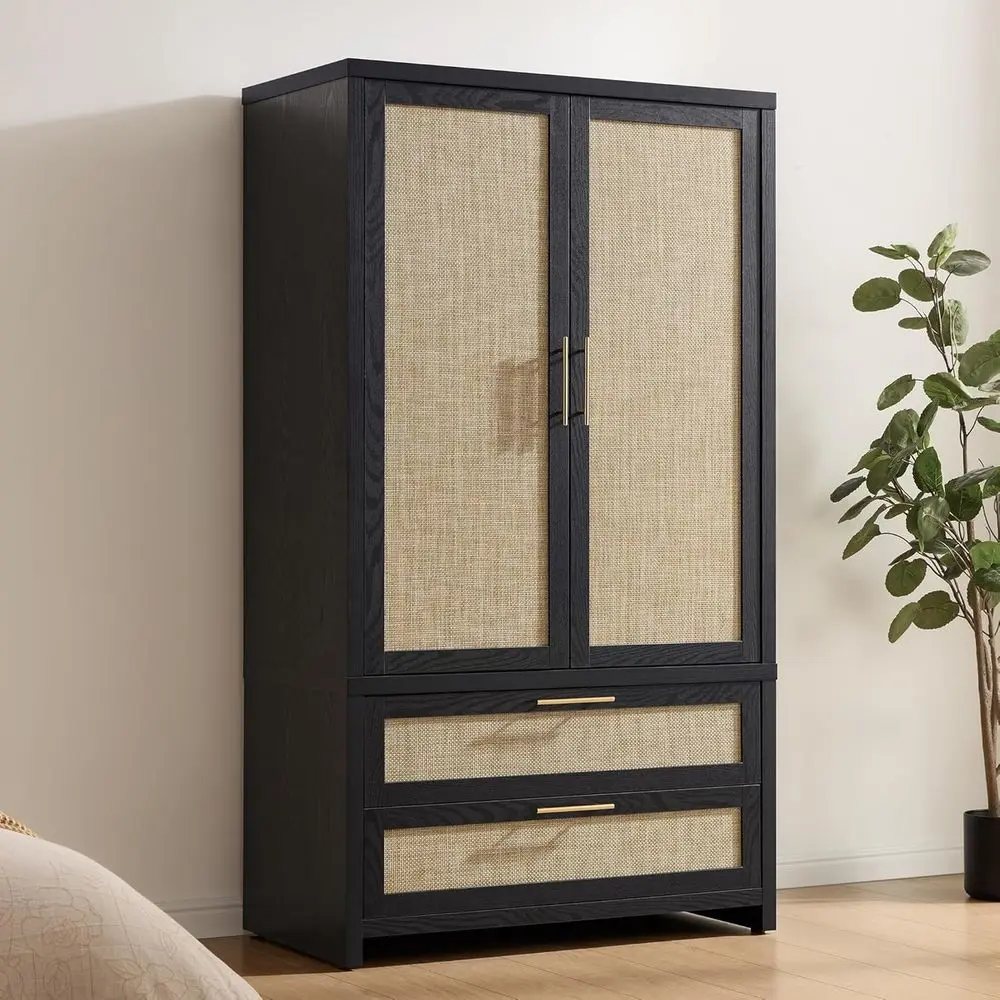
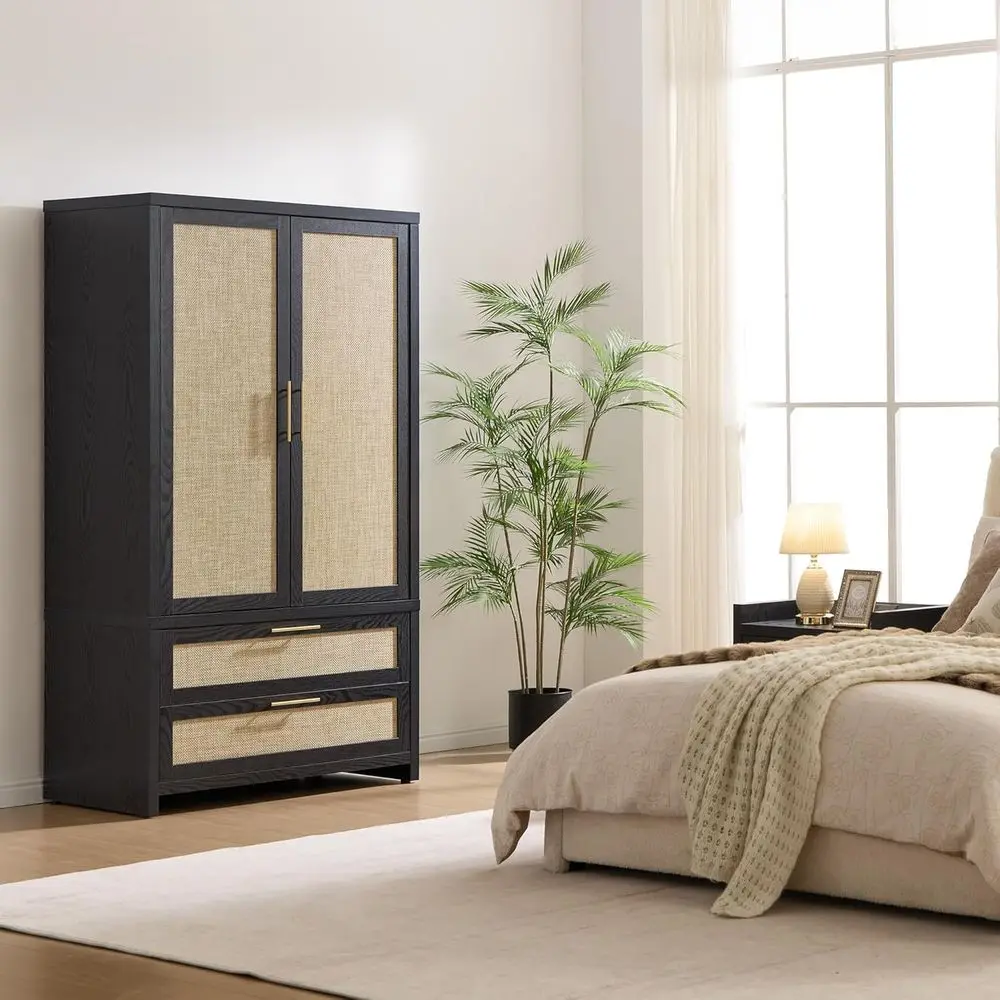
This unit solves the common issue of shoulder-crushing depth constraints. Featuring an upgraded 21-inch depth, garments hang perfectly flat without rubbing against door backs. The high-density FSC-certified engineered wood structure pairs black oak styling with natural rattan mesh for breathability, completed by gold metal hardware.
Spatial Trade-Off Analysis: Provides 53.3 cm of full garment clearance depth, but requires an extra 5 cm of wall clearance away from door swings due to its extended footprint depth.
2. Reflective Studio White Mirror Armoire with Drawers
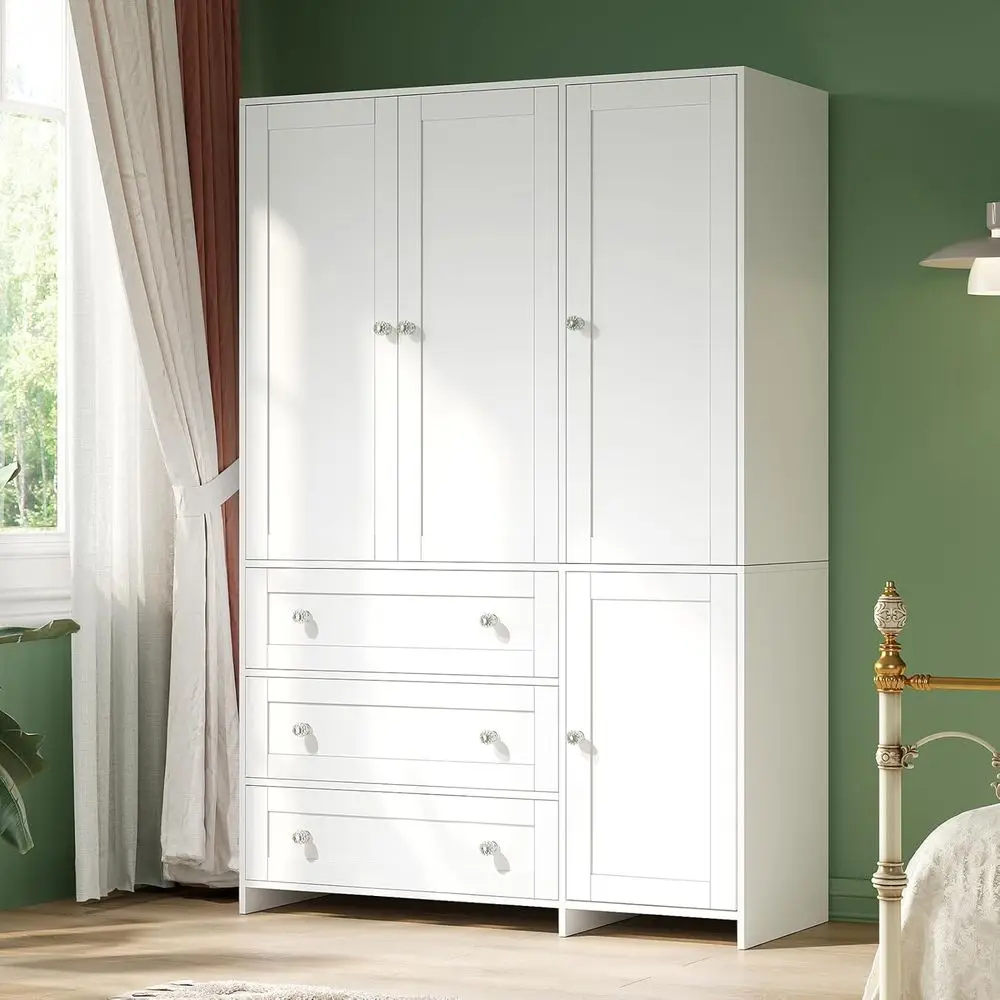
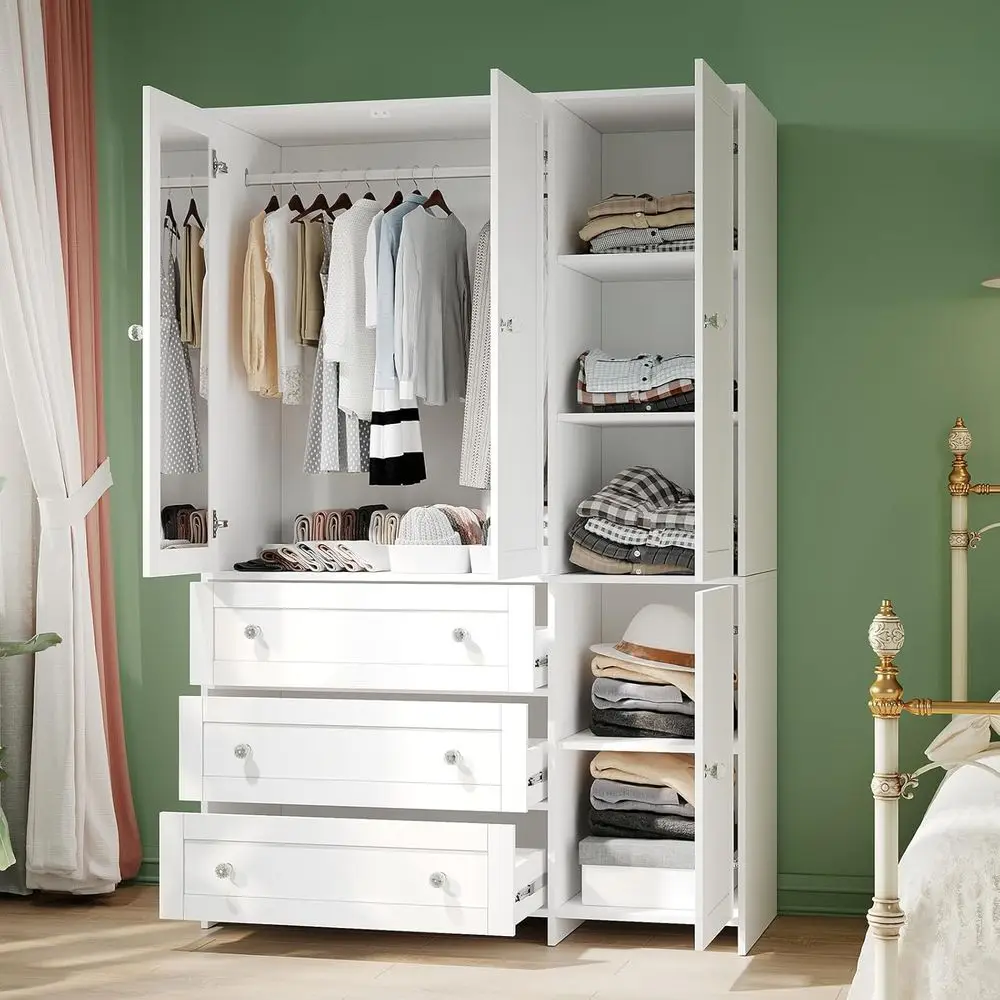
Designed specifically for compact studio layouts where separate standing mirrors take up valuable floor area. Measuring 18.9"D x 47.3"W x 71"H, it combines three oversized lower drawers with soft-close cushioned door hinges, preventing cabinet slam in quiet bedrooms.
Spatial Trade-Off Analysis: Eliminates the need for a separate floor mirror (saving 0.5 sqm), but glass surfaces require weekly wipe-downs to maintain streak-free reflection.
3. Minimalist Grand European 4-Door Wardrobe System
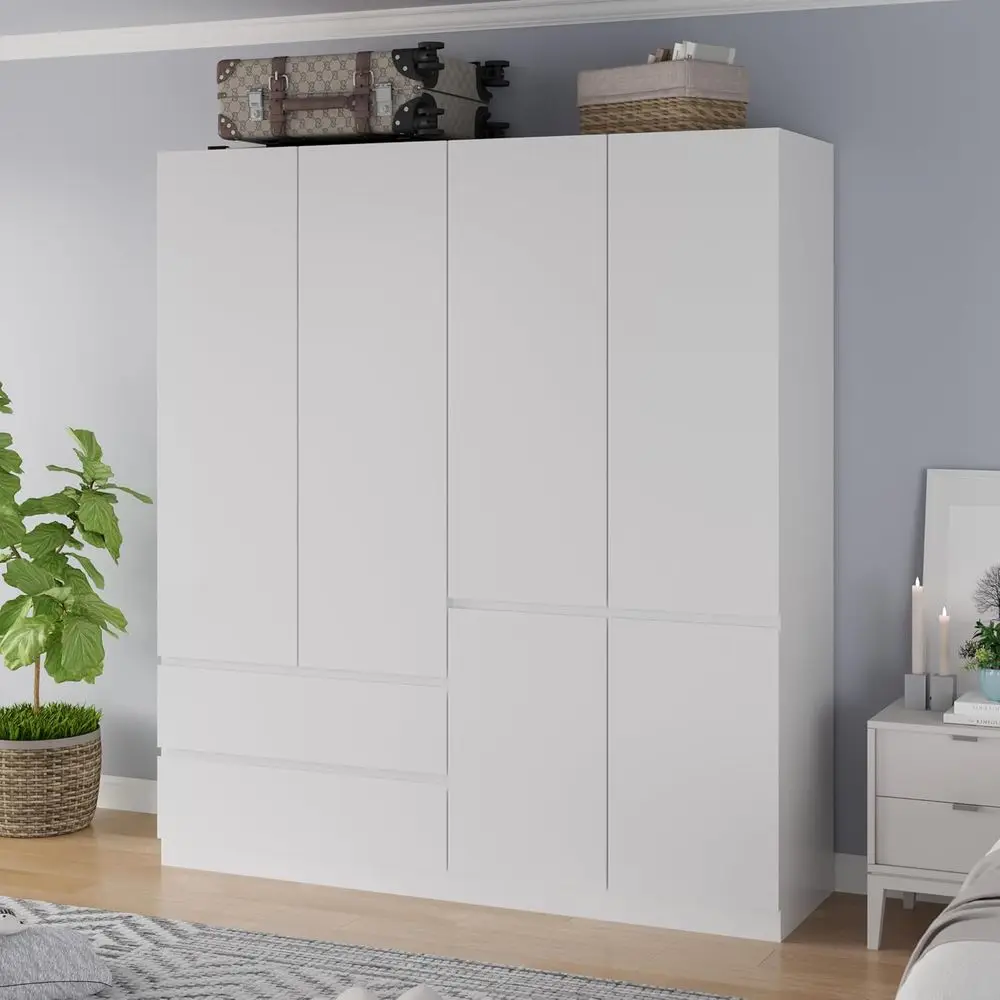
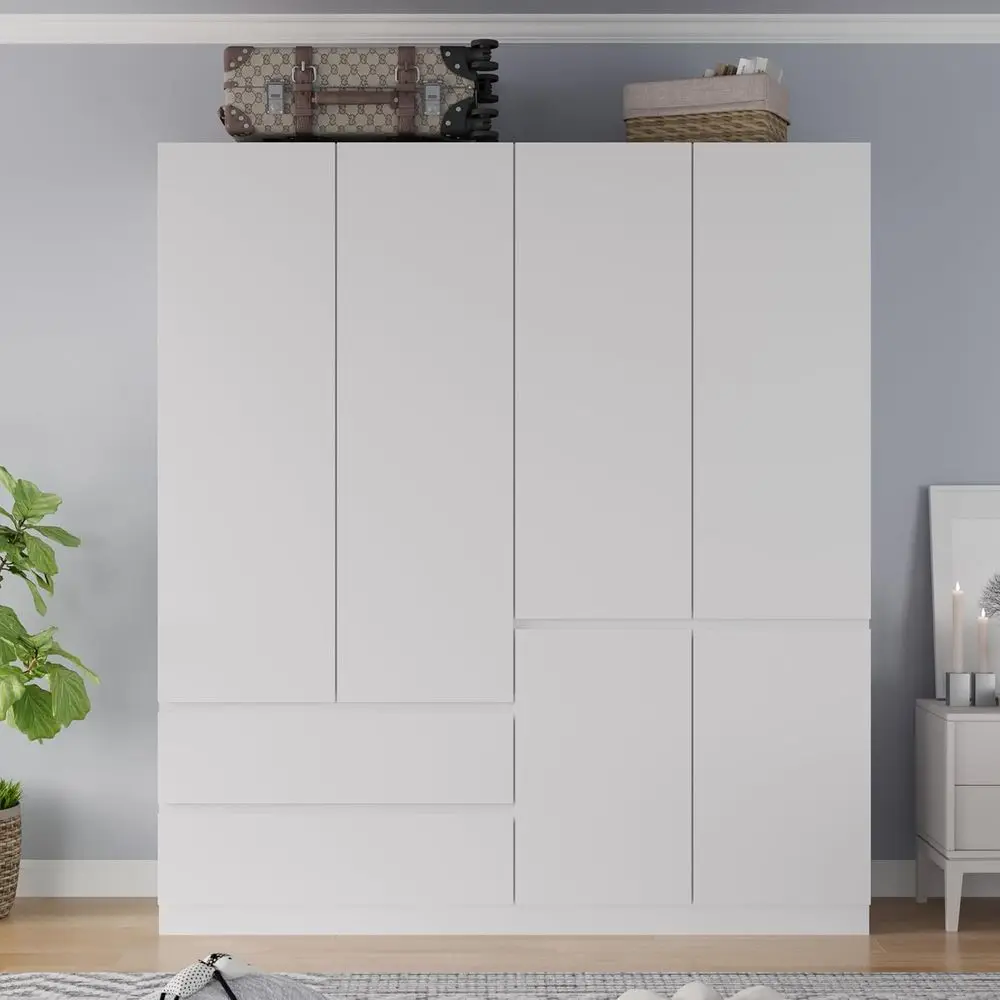
Standing 78.74 inches high, this 4-door wardrobe utilizes full vertical ceiling height. Crafted from high-density MDF with a waterproof, scratch-resistant surface, its handleless front panels present a continuous wall aesthetic. Equipped with dual hanging rails and central storage compartments for comprehensive storage.
Spatial Trade-Off Analysis: Offers massive 160 cm storage width, but requires a two-person assembly process and at least 2.2 meters of clear ceiling height during assembly tilting.
4. Fluted Wave Tactile Compact Wardrobe Cabinet
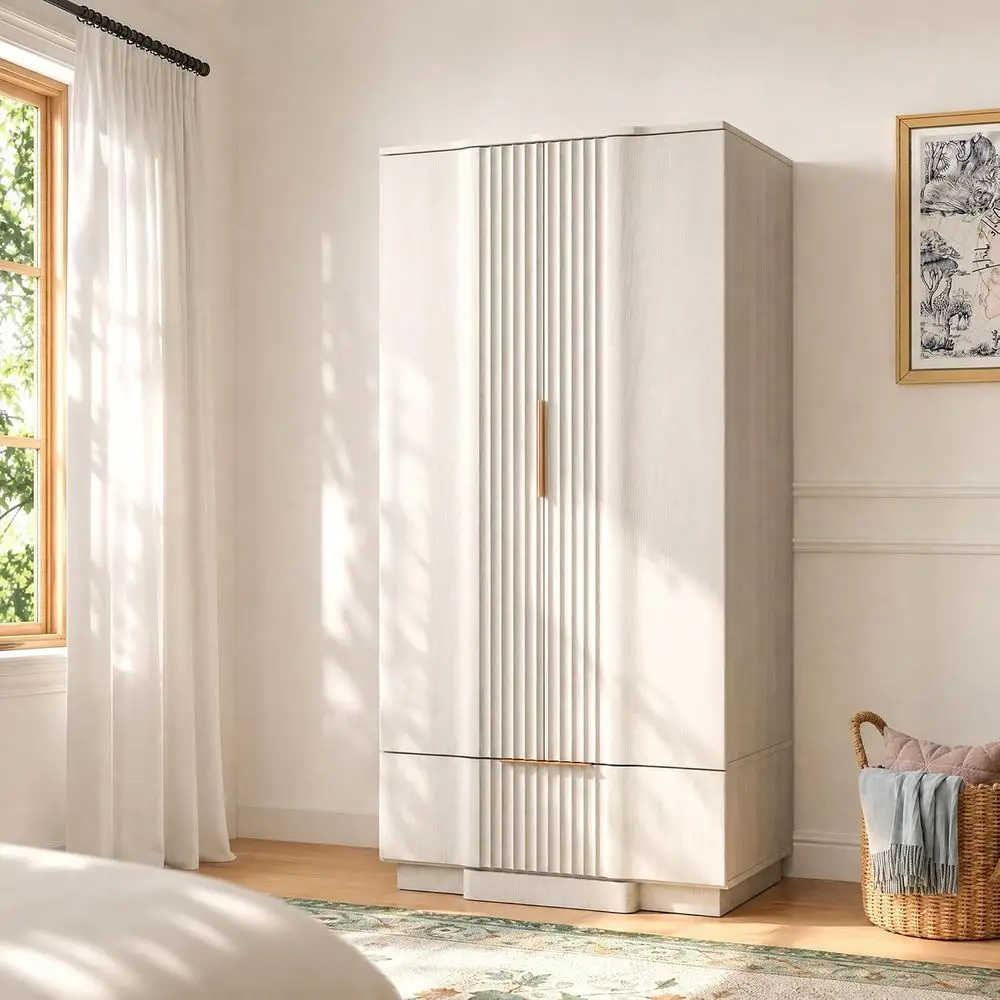
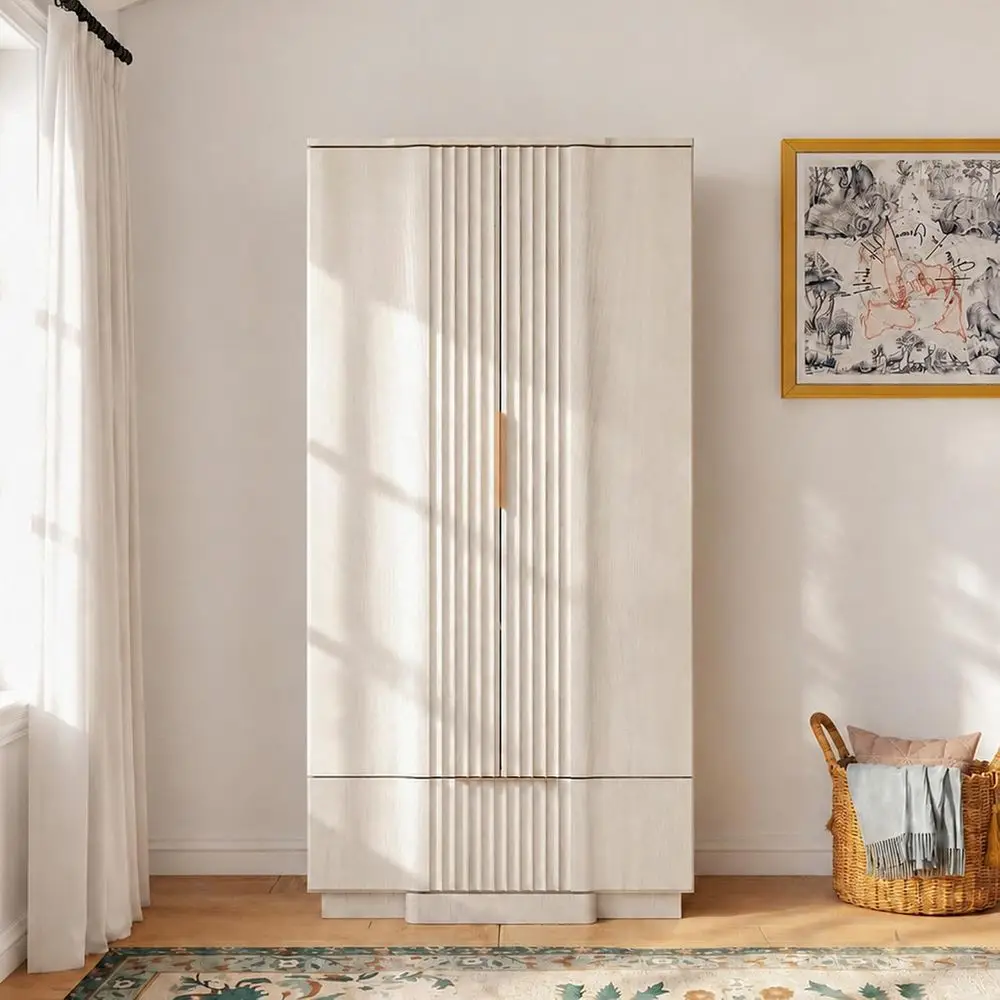
Featuring a 3D fluted wave veneer door panel, this P2-grade engineered wood cabinet delivers tactile elegance to small alcoves. At 67 inches high, it provides easy access while offering a 19-inch deep hanging cavity, adjustable shelving, and a 9.5-inch deep bottom drawer for secondary storage.
Spatial Trade-Off Analysis: Fits narrow 55 cm alcoves perfectly, but its lower 67-inch height reduces full-length coat hanging clearance compared to 78-inch units.
5. Natural Birch & Warm Oak Dual-Door Storage Armoire
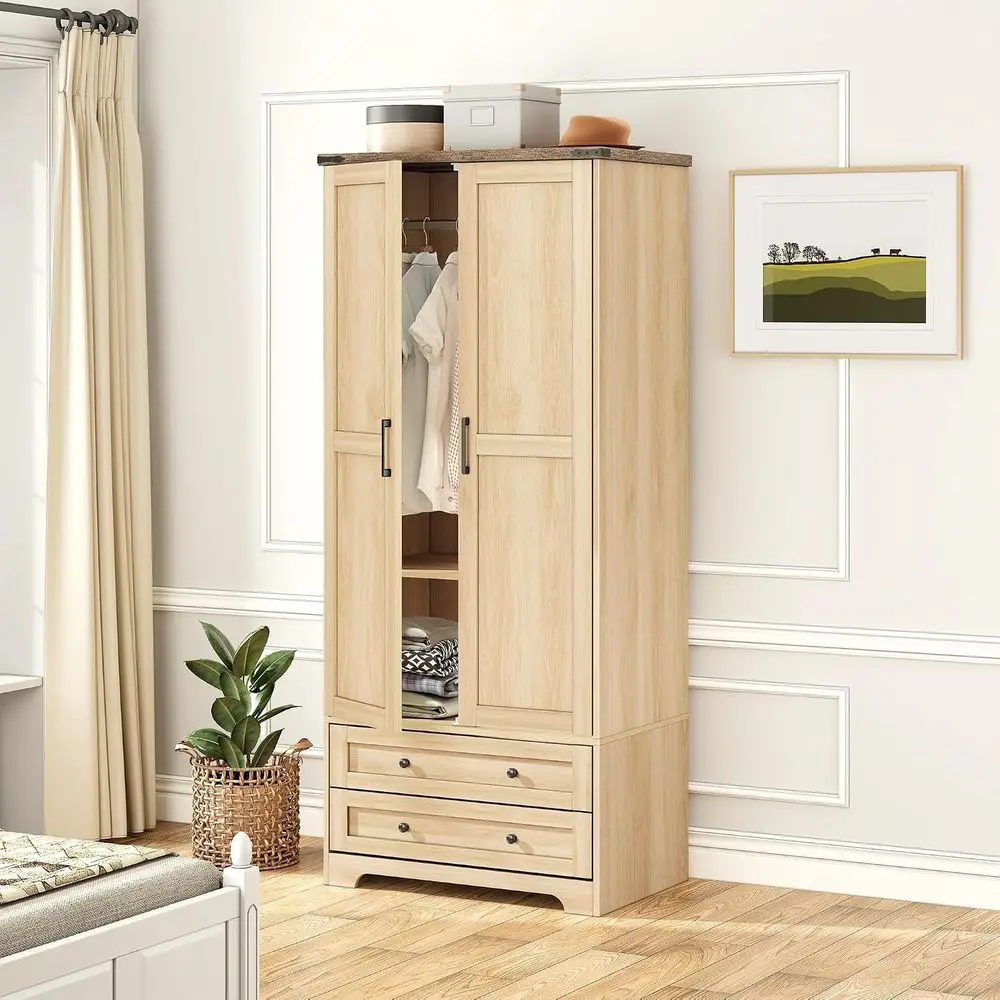
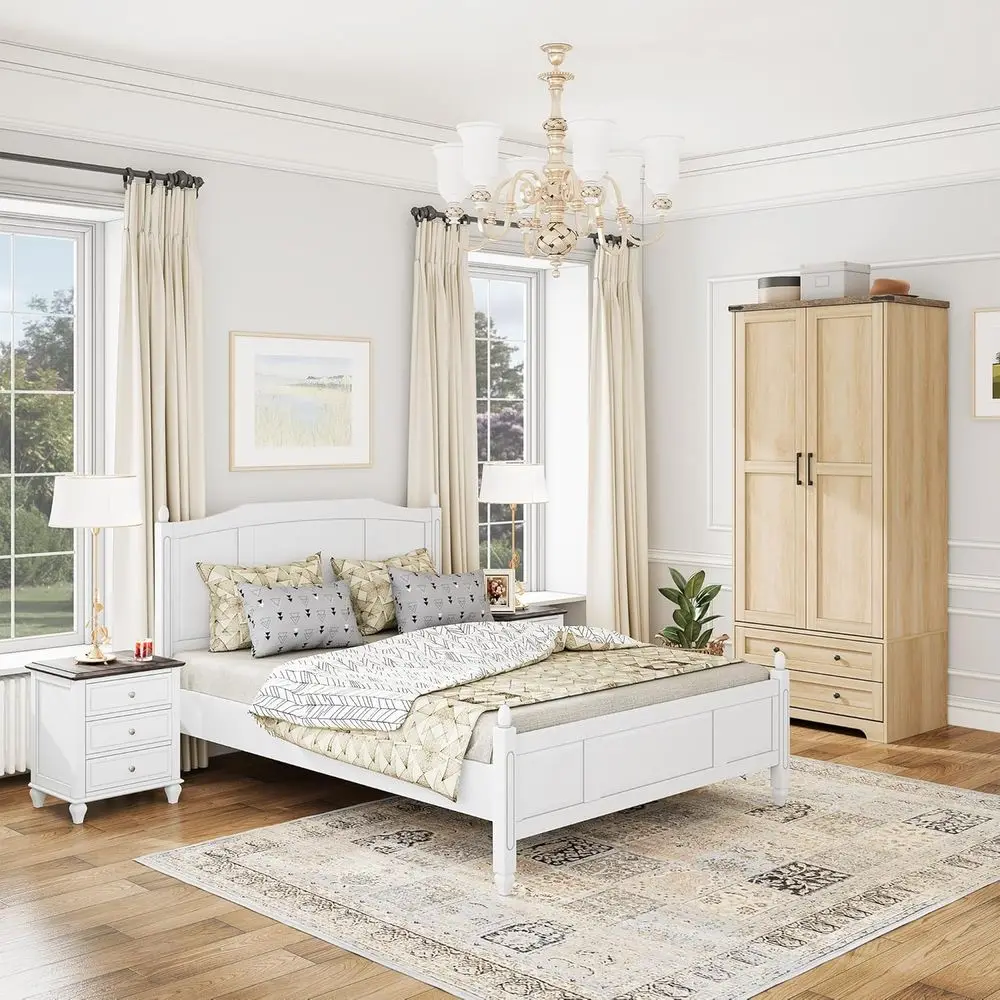
Embodying authentic Muji simplicity, this 70.8-inch tall wardrobe is crafted from durable laminated composite wood with a light oak finish. Features a sturdy internal metal hanging rail, adjustable upper shelving, and two large lower drawers to organize seasonal wardrobe collections effortlessly.
Spatial Trade-Off Analysis: Ultra-compact 29.9-inch (76 cm) width fits tight wall gaps, but internal hanging width limits capacity to roughly 12–15 heavy garments.
7. Frequently Asked Architectural Questions
What internal depth is required to prevent suit jackets from wrinkling?
Standard suit hangers require an internal clear depth of at least 19 inches (48 cm). Units featuring a 20 to 21-inch external depth allow garments to hang parallel to side walls without door pressure crease marks.
How do anti-tipping safety devices attach to drywall in rental units?
Most modern armoires include heavy-duty nylon strap or steel bracket systems. For drywall mountings, anchor into wood wall studs using 2-inch wood screws or use heavy-duty toggle bolts rated for 50 lbs minimum load capacity.
Why choose engineered wood over solid timber for small space armoires?
High-density P2 engineered wood and MDF maintain dimensional stability under varying room temperatures and humidity levels, resisting panel warping while offering lightweight structural stability optimal for urban living space assembly.
Curated Japandi Showcase Authored by Truff
Senior Interior Architect & Japandi Living Curator specializing in spatial optimization micro-frameworks for compact residential living spaces.
Looking to refine your bedroom space planning further? Explore our detailed buying guide on solid oak low-profile bed frames for complete Japandi bedroom spatial harmony.
Disclosure: As an affiliate, I earn from qualifying purchases at no extra cost to you.


