Japandi Wardrobe Selection Framework: Top Compact Storage Solutions for Small Spaces

Must-Have Recommendation Summary:
Solving small-space storage requires prioritizing vertical plane utilization over floor footprint. Modern Japandi wardrobes utilizing cold-rolled steel frames or laminated composite wood offer 70.8 to 86 inches (180 cm to 218.4 cm) of vertical storage capacity while keeping depth under 20 inches (50.8 cm). Maintaining a minimum 60 cm front clearance prevents layout congestion, ensuring smooth door swings and drawer extension in tight quarters.
Small-Space Layout Mistakes & Trade-Off Frameworks

Space fails here when homeowners prioritize raw storage volume over architectural clearance. Placing a 50 cm deep wardrobe in a 250 cm wide bedroom leaves only 200 cm for bed placement and walkways. According to Neufert Architectural Data, primary circulation paths in residential bedrooms require an absolute minimum of 60 cm (23.6 inches) of unobstructed width.
- Ignoring Baseboard Projections: Pushing a cabinet tight against 10mm drywall baseboards creates a 10mm top gap, inducing tilt and causing a 2mm door rub against adjacent frames.
- Overlooking Vertical Ceiling Clearances: Installing an 86-inch (218.4 cm) wardrobe under standard 240 cm ceilings leaves less than 22 cm of overhead buffer, making top-shelf access tight without step stools.
- Door Swing Traffic Collisions: A standard 45 cm wardrobe door swinging outward into a 50 cm walkway leaves a meager 5 cm clearance. Knee collisions with nightstands become inevitable.
- Unanchored Tall Structures: Free-standing tall cabinets over 180 cm high shift up to 8mm during heavy drawer extension on plush carpeting if wall safety anchors are skipped.
Everyday Ergonomics & Legroom Clearance Calculations

Clearance matters. As specified in standard ergonomic space guidelines, human body movement during dressing requires a minimum operational zone of 75 cm to 90 cm (29.5 to 35.4 inches). When designing Japandi studio apartments, every millimeter counts toward visual airiness and physical comfort.
| Zone Category | Dimension (cm) | Dimension (in) | Functional Spatial Purpose |
|---|---|---|---|
| Door Opening Radius | 40 cm - 46 cm | 15.7 in - 18.1 in | Unobstructed door arc trajectory |
| Full Drawer Extension | 35 cm - 45 cm | 13.7 in - 17.7 in | Complete internal drawer visibility |
| Standing Dressing Buffer | 60 cm - 75 cm | 23.6 in - 29.5 in | Comfortable arm reach & bending |
| Primary Walkway Buffer | 60 cm minimum | 23.6 in minimum | Uninterrupted walking path without shin bumps |
Multi-Functional Mechanism Reliability & Wear Testing

Hardware longevity dictates real-world utility. A wardrobe structure can look immaculate, but cheap glides produce drawer resistance on thick pile rugs and annoying squeaks over time.
- Magnetic Latch Pull Force: Dual magnetic catches per door requiring 1.8 kg to 2.2 kg of pull force keep doors firmly sealed against draft and dust without violent snapping sounds.
- Ball-Bearing Steel Glides: Smooth-gliding steel drawer slides rated for 15,000 extension cycles eliminate wobbling when you lean on one side of an open drawer.
- Hanging Rod Structural Flex: Reinforced steel hanging rails spanning up to 80 cm hold up to 25 kg (55 lbs) of heavy winter coats with under 1.5mm of mid-point vertical deflection.
- Adjustable Leveling Feet Range: Threaded foot levelers providing 15mm of height correction compensate for uneven flooring, preventing cabinet racking and frame twist.
Material Tactility, Acoustic Dampening & Care
Tactile feel and acoustic response define the Muji aesthetic philosophy. Cold-rolled steel panels treated with electrostatic powder coating provide a matte, fingerprint-resistant texture that dampens sound compared to untreated tin. Meanwhile, high-density laminated composite wood offers organic warmth while retaining a non-porous surface that wipes clean with damp microfiber cloths.
Why You Need This Spatial Approach
Selecting durable, low-emission materials like FSC-certified MDF or powder-coated steel prevents off-gassing in compact bedrooms. Paired with magnetic door dampening, these material choices reduce ambient noise in shared apartments during early morning routines.
Top Curated Product Showcase & Comparison Matrix
Here is our architect-curated selection of top-performing Japandi and Muji armoires engineered specifically for tight footprints.
| Product Name | Dimensions (D x W x H) | Primary Material | Core Features | Spatial Rating |
|---|---|---|---|---|
| Hinoki-Toned Slate Grey Wardrobe | 19.68" x 29.92" x 70.8" | Laminated Composite Wood | 2 Drawers, Hanging Rail, Shelf | High Compact Utility |
| Pure White Modular Double-Door Closet | 19.88" x 35.87" x 70.87" | Engineered Wood / MDF | Side Hooks, 2 Drawers, Adjustable Shelves | Max Storage Capacity |
| Steel Vertical Tower Armoire (86") | 18" x 31" x 86" | Powder-Coated Steel | Ultra-Tall, Magnetic Doors, Stacking Shelves | Best Vertical Efficiency |
| Peacock Blue Convertible Metal Wardrobe | 18" x 31" x 71" | Heavy-Duty Steel Frame | 2-in-1 Convertible Layout, Custom Shelving | Aesthetic Statement |
| Industrial Black Steel Armoire | 17.7" x 31.5" x 71" | Cold-Rolled Steel | 180 lbs/Shelf, Dual Drawers, Leveling Feet | Maximum Heavy Duty |
1. Hinoki-Toned Slate Grey Dual-Drawer Tall Wardrobe
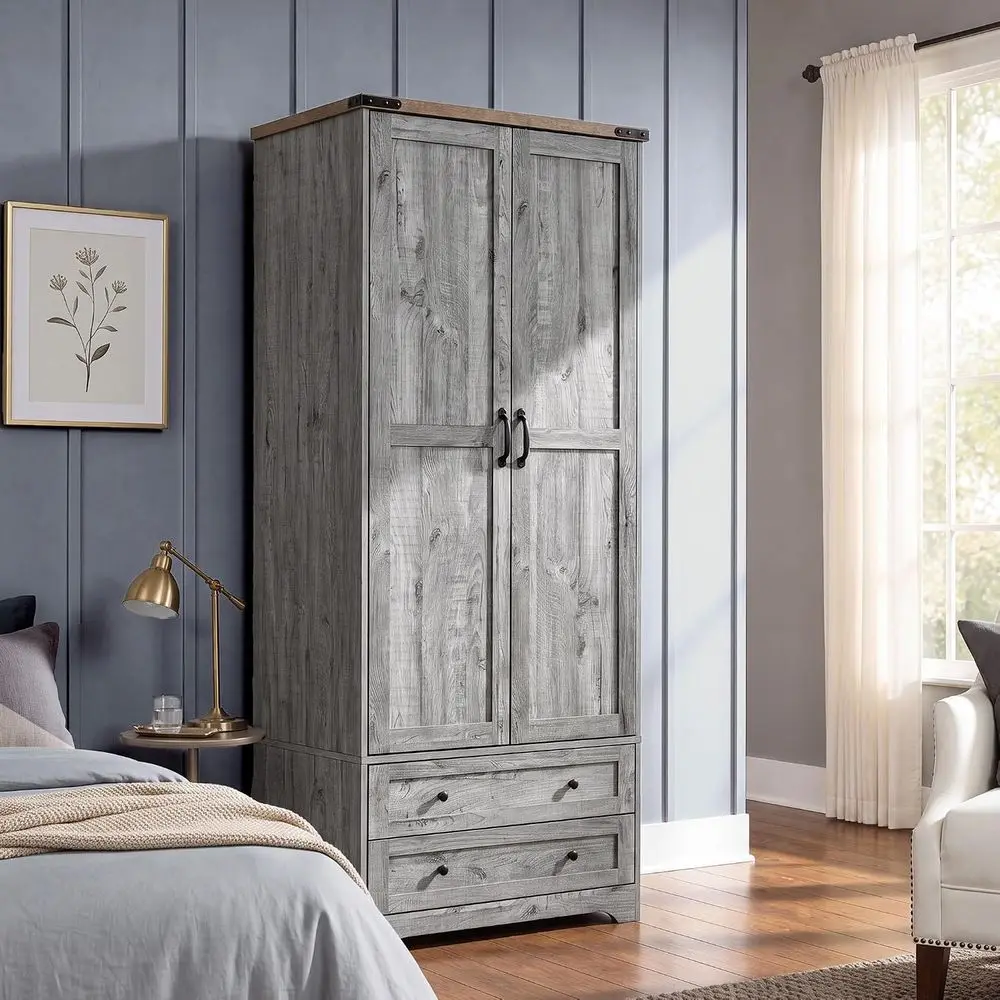
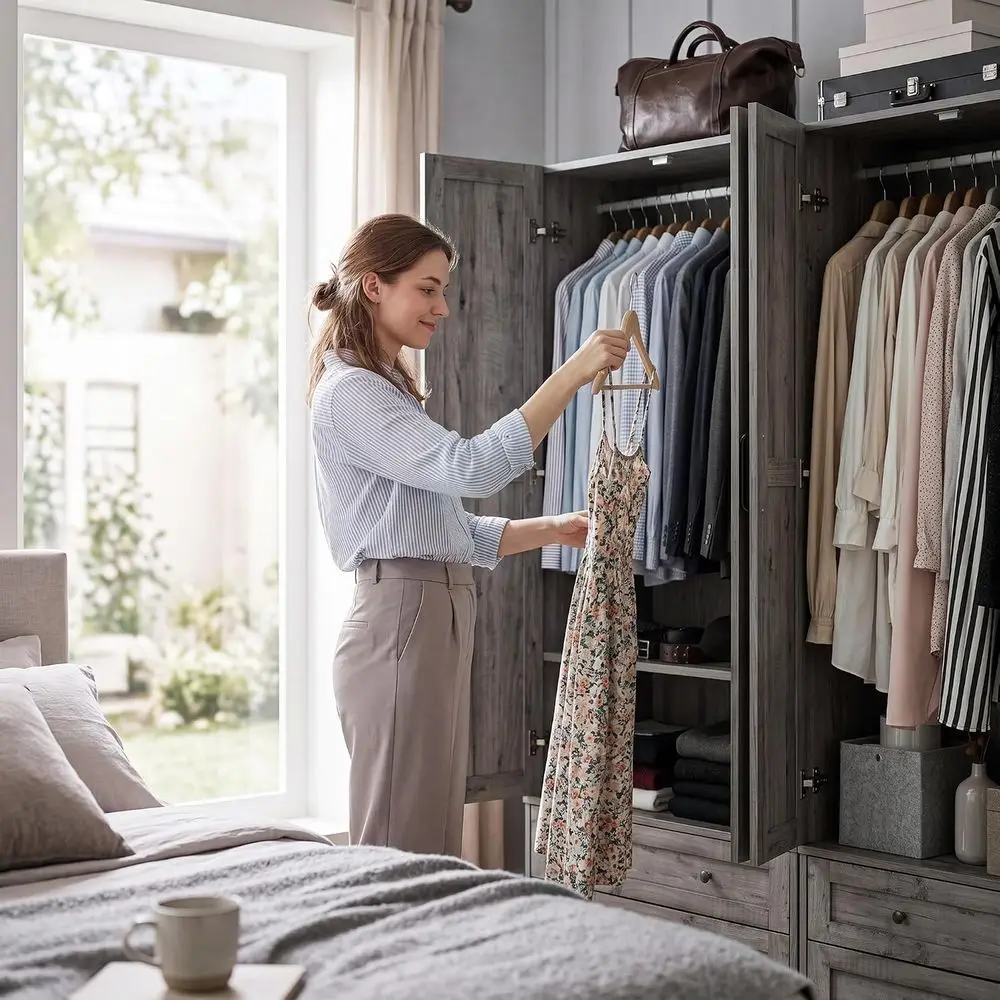
This sleek 70.8-inch tall wardrobe cabinet features laminated composite wood construction designed for daily stability. Measuring 19.68"D x 29.92"W x 70.8"H (50 cm x 76 cm x 180 cm), it includes a metal hanging rail, adjustable shelf, and two smooth-gliding drawers for folded items or bedding.
Spatial Trade-Off Analysis: Provides 180 cm of vertical organization within a compact 76 cm width, but the 50 cm depth requires a full 60 cm front clearance for complete drawer extension.
2. Muji-Style Pure White Modular Double-Door Closet with Side Hooks
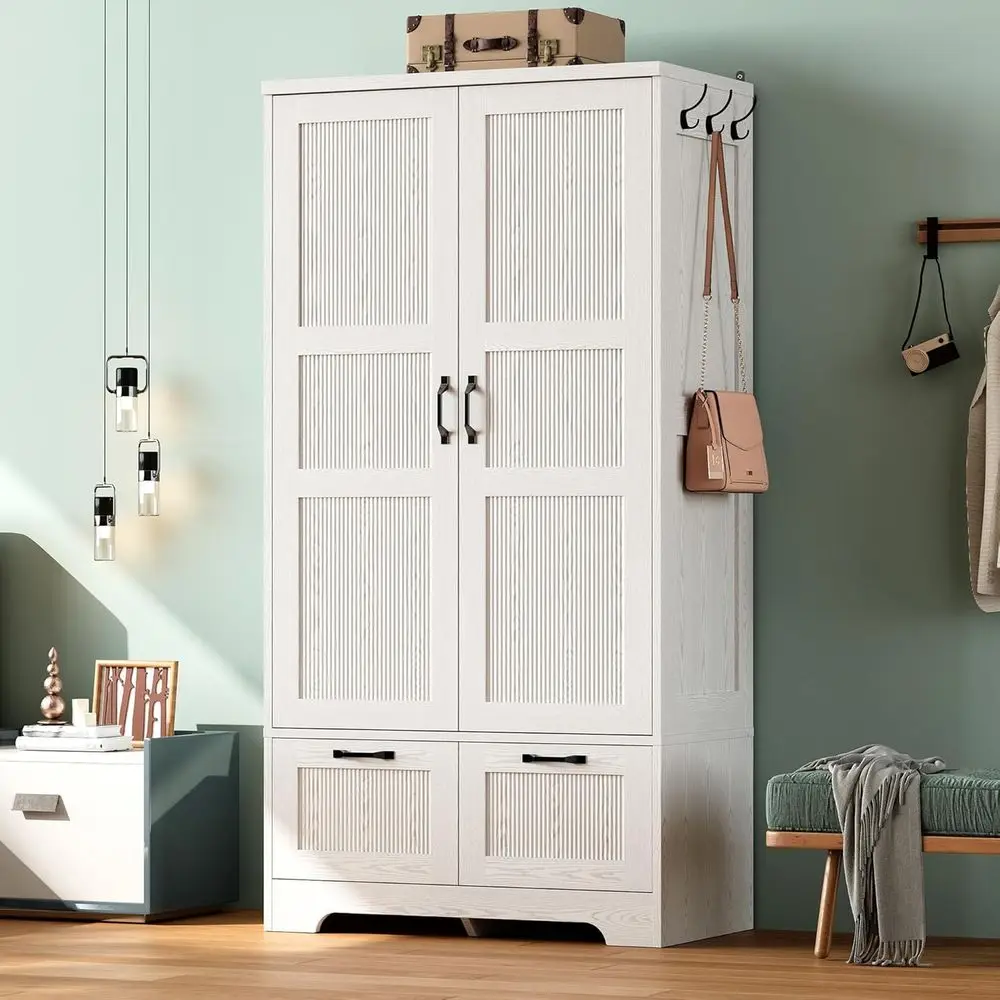
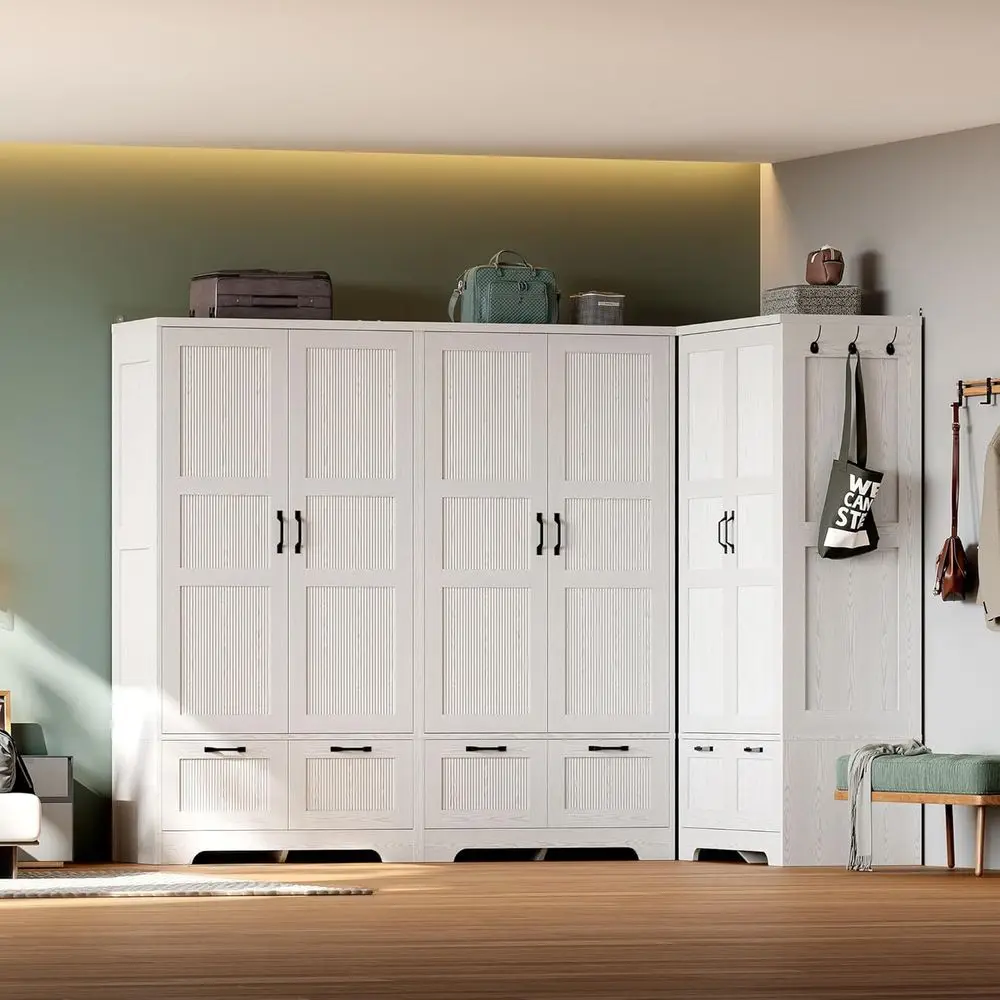
Measuring 19.88"D x 35.87"W x 70.87"H (50.5 cm x 91 cm x 180 cm), this white engineered wood armoire offers multi-functional flexibility. Equipped with a removable hanging rail, adjustable shelves, two 7.09" (18 cm) deep drawers, and 3 integrated side hooks for accessories.
Spatial Trade-Off Analysis: Delivers exceptional lateral capacity with 91 cm of width and 3 side hooks for bags, though the wider double doors demand an unobstructed 46 cm swing radius into your primary walkway.
3. Architectural Steel Vertical Tower Armoire (86-Inch White Edition)
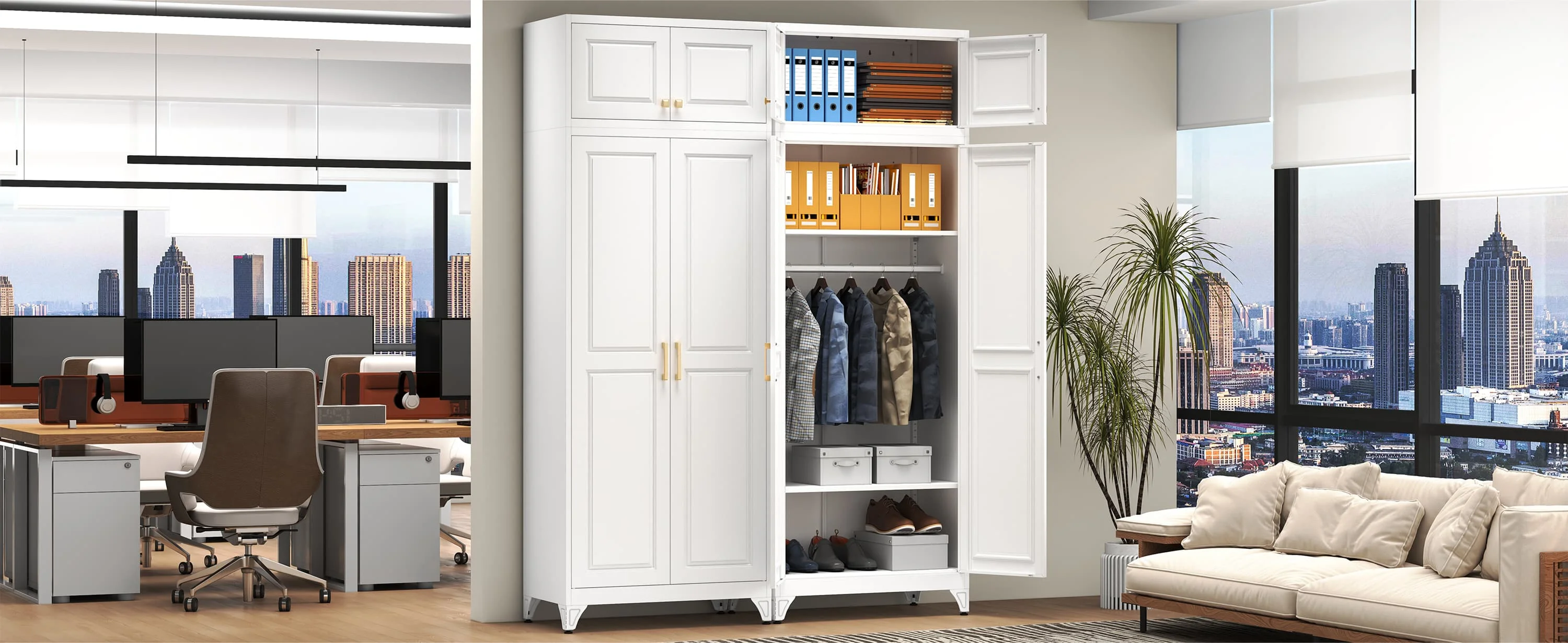
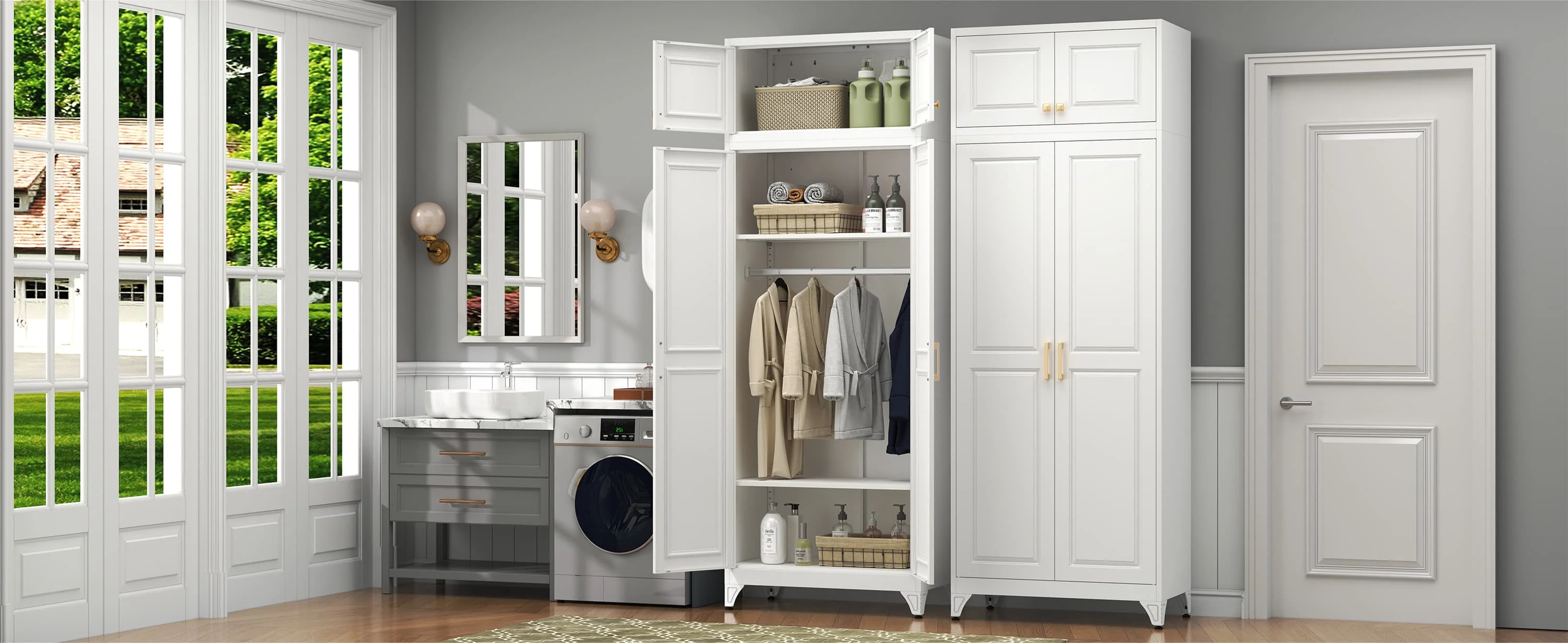
Built from thickened powder-coated steel panels, this 86-inch high metal armoire (18"D x 31"W x 86"H / 45.7 cm x 78.7 cm x 218.4 cm) maximizes overhead vertical volume. Features magnetic doors, adjustable leveling feet, anti-tip wall brackets, top storage shelf, two stacking shelves, and a wide hanging bay.
Spatial Trade-Off Analysis: Unlocks an incredible 218.4 cm of vertical storage on an ultra-shallow 45.7 cm depth footprint, but requires minimum 230 cm ceiling height clearance and compulsory wall-anchor mounting.
4. Peacock Blue Modular Convertible Metal Wardrobe Cabinet
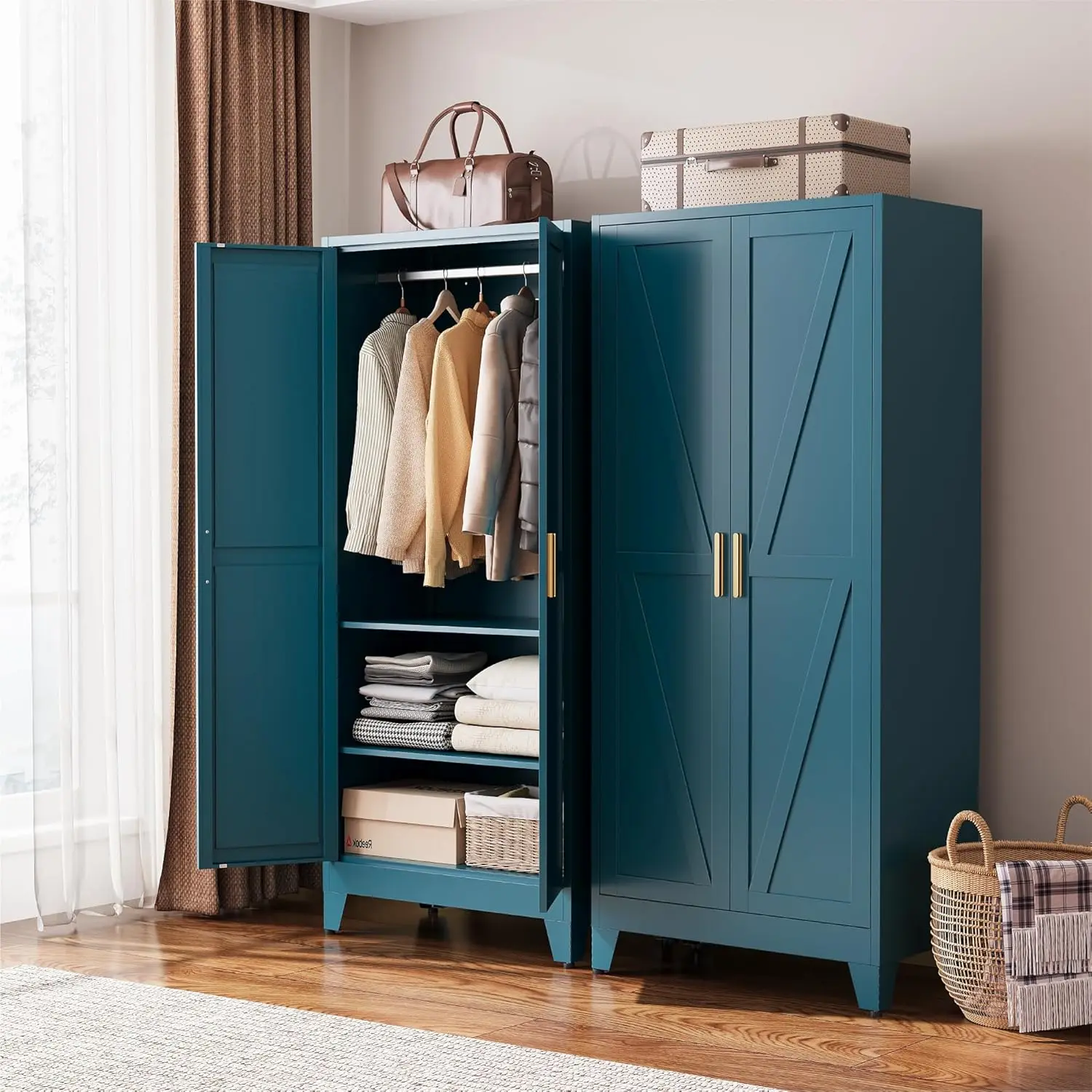
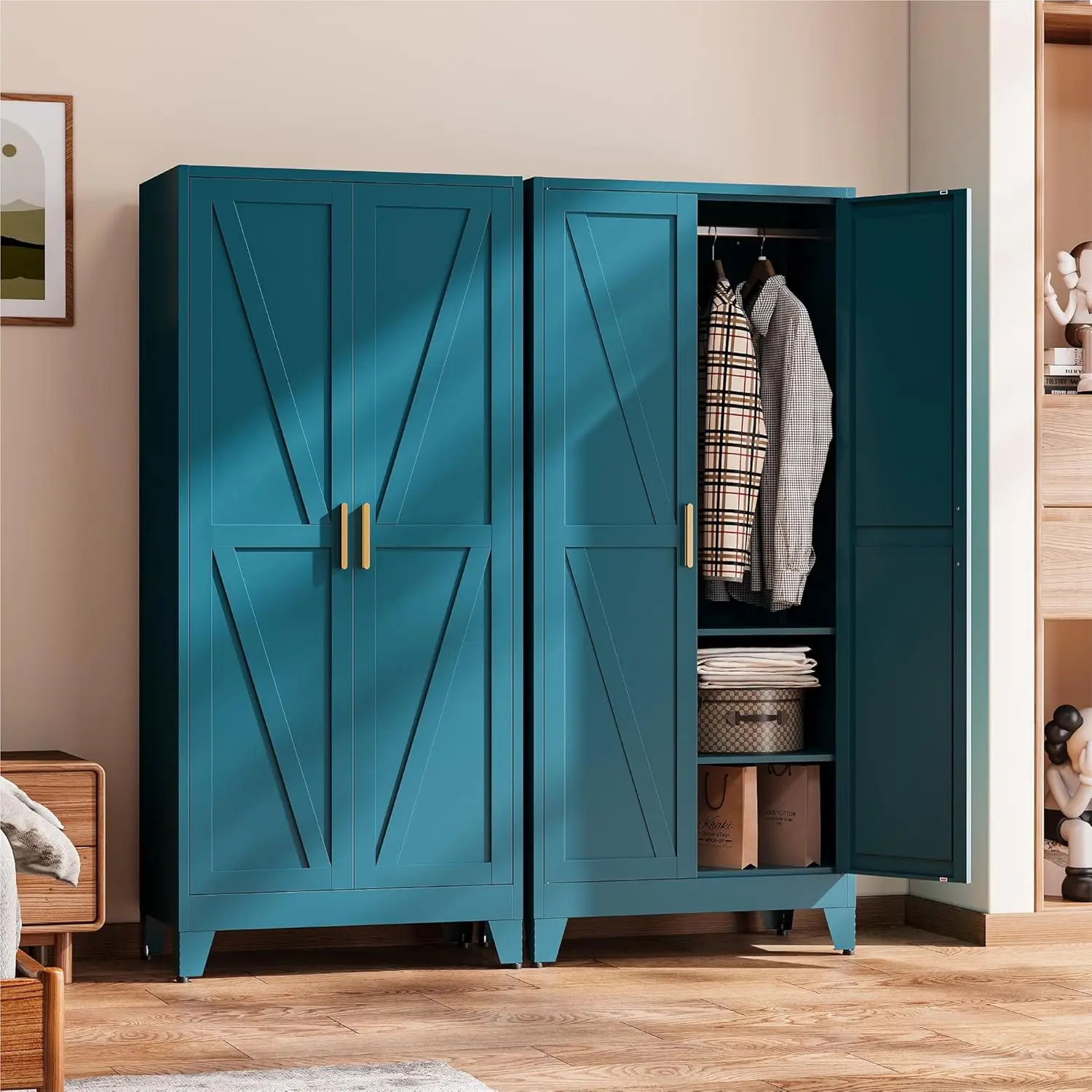
Featuring a durable metal frame construction and an eye-catching peacock blue coating, this 71-inch freestanding wardrobe offers a 2-in-1 convertible interior layout. Adjustable clothes rods and customizable shelves accommodate hanging coats, shoes, or folded storage boxes.
Spatial Trade-Off Analysis: Brings a bold architectural focal point and total internal layout modularity, though the unique peacock blue coating requires gentle microfiber cleaning to prevent visible fingerprints.
5. Cold-Rolled Industrial Black Steel Armoire with Dual Storage Drawers
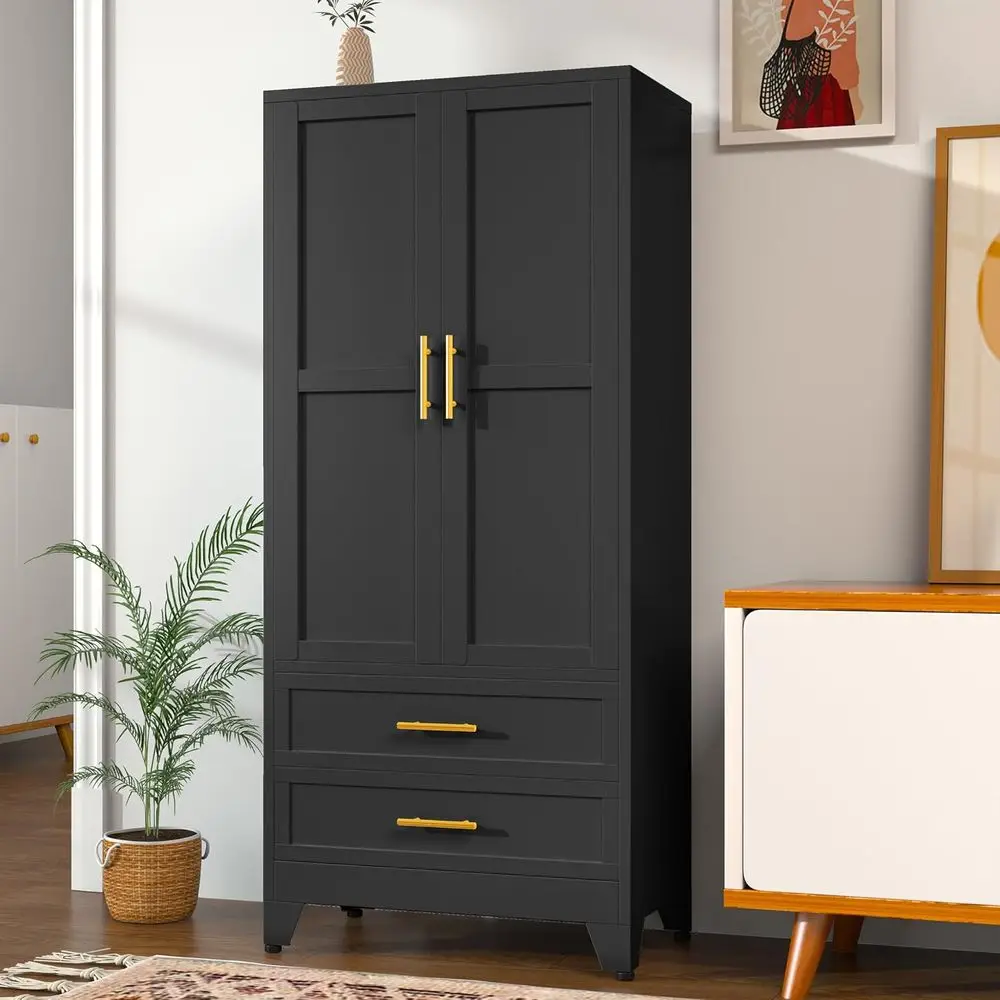
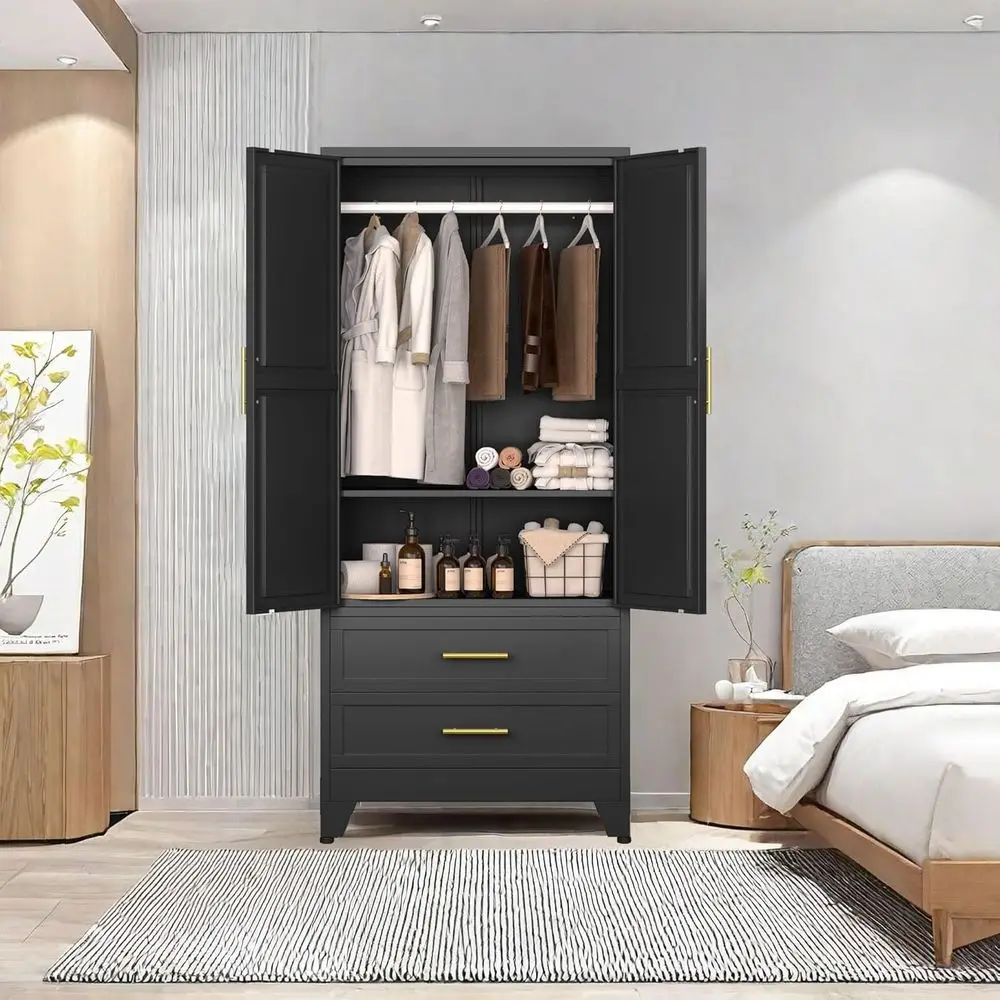
Crafted from extra-thick cold-rolled steel, this 17.7"D x 31.5"W x 71"H (45 cm x 80 cm x 180 cm) cabinet supports up to 180 LBS (81.6 kg) per shelf. Features dual magnetic door catches, height-adjustable leveling feet, wall anti-tip anchor kit, integrated hanging rail, and two enclosed lower storage drawers.
Spatial Trade-Off Analysis: Boasts a heavy-duty 81.6 kg per shelf load rating and leveling feet for uneven floors, but the industrial dark finish absorbs light in dim rooms without dedicated accent lighting.
Frequently Asked Questions
How much front clearance is required for small wardrobe doors?
Standard ergonomic guidelines require a minimum of 60 cm (23.6 inches) of front clearance to comfortably open doors and extend drawers without hitting adjacent furniture or blocking walkways.
Are steel wardrobes better than MDF for humid room conditions?
Cold-rolled steel with electrostatic powder coating resists ambient humidity and warp far better than engineered wood, making steel ideal for multi-climate apartments or bedrooms near bathrooms.
What ceiling height is needed for an 86-inch wardrobe?
An 86-inch (218.4 cm) wardrobe requires at least 230 cm (90.5 inches) of vertical ceiling clearance to safely tip the frame upright during assembly without hitting light fixtures or drywall.
Looking for complementary dressing solutions? Explore our detailed buying guide on compact Japandi vanity desks and minimalist dressing setups.


