Evaluating Compact Multipurpose Seating: Nordic Slotted Bentwood Fan-Shell Chair Spatial Selection Framework
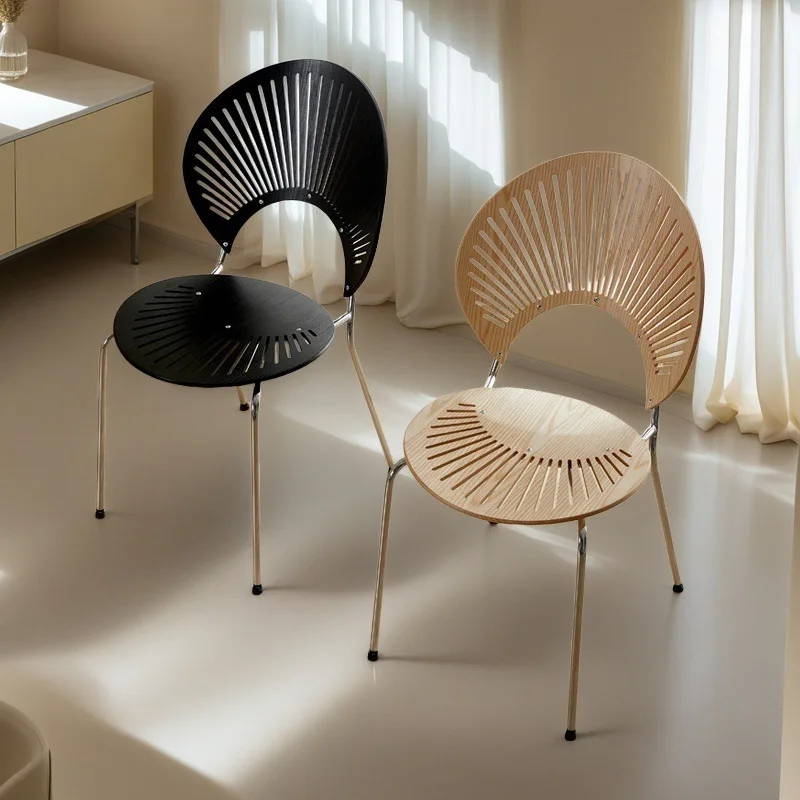
Micro-Apartment Design Principles: Evaluating Fan-Shell Bentwood Seating for Compact Japandi Interiors
Designing for micro-living environments demands furniture that balances physical utility with optical lightness. In urban apartments where floor area is severely constrained, solid, high-backed seating creates visual blockades that instantly make a room feel cramped and overcrowded. The Nordic Slotted Bentwood Fan-Shell Chair directly solves this layout challenge through its sculptural, slatted architectural form inspired by classic Scandinavian and Japanese Muji design principles.
The core philosophy of Japandi spatial architecture centers on Kanketsu (simplicity) and organic warmth. When selecting seating for multipurpose alcoves—such as a combined dining room and work-from-home corner—the primary objective is maintaining uninterrupted sightlines. The radiating fan-slats on the backrest allow ambient light and air to pass freely through the frame. This structural transparency tricks the eye into perceiving an open, uncluttered room, even in floor plans under 400 square feet.
Furthermore, selecting furniture for small spaces requires evaluating dual-purpose adaptability. A dining chair must seamlessly transition into a guest negotiation chair or task seat without overwhelming the surrounding decor. The combination of molded natural wood veneer and minimalist metallic legs establishes a balanced aesthetic bridge between raw organic warmth and refined modern industrialism, making it an ideal anchor piece for urban dwellers seeking high design density within minimal physical footprints.
Dimensional Analysis & Clearances: Measuring Small Space Footprints and Weight Limits
Before purchasing compact seating, precise spatial measurement is critical to avoid architectural friction in tight traffic lanes. A chair may fit beneath a table theoretically, but fail to provide adequate knee clearance or aisle passage when occupied. Below is the precise engineering matrix and dimensional footprint breakdown for the Nordic Slotted Bentwood Fan-Shell Chair to ensure seamless architectural integration.
| Spatial Specification Parameter | Exact Metric Measurement | Small Space Compatibility Impact |
|---|---|---|
| Total Vertical Height | 82 cm (~32.2 in) | Sits below standard counter heights, preserving open room vistas. |
| Seat Surface Height | 45 cm (~17.7 in) | Standard dining height; slides easily under 72–75 cm dining tables. |
| Seat Depth & Width | 48 cm W x 42 cm D (~18.9 x 16.5 in) | Compact ergonomic footprint optimized for tight dining nooks. |
| Leg Stance Base Footprint | 50 cm x 52 cm (~19.7 x 20.5 in) | Ultra-efficient floor contact area requiring minimal aisle clearance. |
| Maximum Load Capacity | 120 kg (~265 lbs) | High strength-to-weight ratio powered by tubular steel sub-framing. |
| Primary Construction Materials | Molded Ash/Oak Veneer + Tubular Steel | Lightweight construction allows easy relocation around micro-flats. |
When calculating placement in a micro-dining setup, ensure a minimum clearance allowance of 60 cm between the chair back and any adjacent wall or cabinetry. This allows an individual to push back comfortable without scuffing perimeter surfaces or restricting adjacent walkway flow.
Structural Material Integrity: Examining Slotted Veneer Joinery and Tubular Metal Legs
Understanding structural mechanics is vital when selecting lightweight furniture. High-stress points in bentwood seating usually occur at the curve between the lumbar support and seat pan, as well as the mechanical connection points attaching the shell to the metal chassis.

The construction of this fan-shell chair employs multi-ply heat-pressed wood veneer. Thin layers of hardwood are laminated under intense pressure with alternating grain directions. This engineering technique prevents warp, twist, and splitting over time—a critical advantage in climate-controlled apartments where indoor humidity fluctuates. The individual slats are precision CNC-milled, creating smooth, rounded radiuses along every edge that prevent clothing snagging and provide tactile refinement.
The undercarriage relies on a cross-braced tubular steel frame, finished either in high-luster chrome or matte powder coating. Four heavy-duty mechanical fastener points join the shell to the frame, reinforced with rubber dampening washers. These washers absorb dynamic load shifts, preventing structural squeaks and protecting the wood shell against stress fractures during long seating sessions.
Performance Decision Framework: Structural Trade-offs and 5 Small Space Buying Mistakes to Avoid
Every furniture selection in a micro-apartment involves deliberate spatial and functional trade-offs. While full-upholstered armchairs offer plush lounge cushioning, they devour valuable square footage and trap dust. Conversely, the slatted bentwood architecture prioritizes clean maintenance, airflow, and spatial expansion over deep lounge softness.
Key Structural Trade-offs
- Cushioning vs. Maintenance & Hygiene: Unupholstered bentwood simplifies cleaning and eliminates dust mite accumulation, but may require adding a thin wool felt seat pad for extended 8+ hour remote work sessions.
- Fixed Geometry vs. Armless Versatility: The armless shell design allows the chair to tuck 100% underneath table surfaces, freeing up valuable floor space when not in use, though it offers less lateral arm support during casual lounging.
- Reflective Metal vs. Matte All-Wood: The metallic leg frame adds modern structural rigidity and resistance to leg scuffs, though it introduces a cooler, contemporary industrial tone that requires pairing with warm textiles.
5 Critical Small Space Buying Mistakes to Avoid
- Ignoring Leg Splay and Outward Angles: Buying chairs with excessively splayed legs causes trip hazards in narrow dining hallways. Check that the floor footprint does not exceed seat width by more than 5 cm per side.
- Failing to Verify Table Apron Clearance: Measure the distance from your floor to the bottom edge of your dining table's apron. Ensure the 45 cm seat height leaves at least 25 cm of thigh clearance.
- Choosing Dark, Opaque Shells in North-Facing Rooms: Opaque, bulky chairs block natural light. Opt for slatted, light ash, or natural oak finishes to bounce soft indirect sunlight deeper into dim rooms.
- Neglecting Floor Protection Caps: Metal legs can scratch hardwood or polished concrete floors. Ensure protective rubber or felt floor glides are integrated into the foot bases before assembly.
- Over-crowding Small Round Tables: For a standard 80 cm (31.5 in) bistro table, limit seating to a maximum of two or three fan-shell chairs to preserve comfortable elbow room during meals.
Compact Layout Integration: Lighting Pairings, Muji Aesthetics, and High-Intent Buying Rules
Integrating this piece into a cohesive Japandi or Muji-inspired apartment requires intentional color palette curation and ambient lighting choices. The natural timber finish pairs effortlessly with muted earth tones, warm white walls (e.g., Benjamin Moore Swiss Coffee or Sherwin-Williams Alabaster), and low-profile linen window draping.
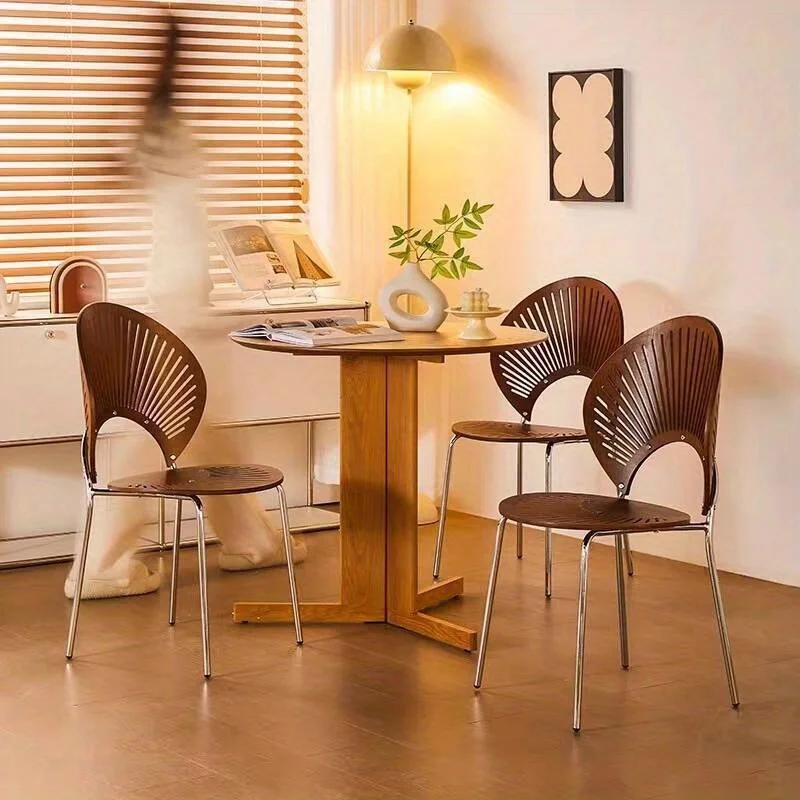
To maximize the warm architectural shadows cast by the slatted backrest, position lighting overhead or at a 45-degree angle. A soft 2700K LED pendant light suspended over a light oak or travertine bistro table will project subtle linear shadow patterns across floor surfaces, turning the chair into a passive sculptural element even when unoccupied.
Final Buyer Selection Checklist
- Confirm Colorway Harmony: Select natural ash wood for light, Scandinavian interiors; choose walnut stains for darker, Mid-Century Modern or moody Japandi nooks; select black lacquer for crisp graphic contrast.
- Verify Floor Surface Compatibility: Ensure your floor surface is flat. Add felt adhesive discs to the floor glides if placing on hardwood, or retain rubber endcaps for ceramic tile.
- Calculate Multi-Chair Spacing: Allow a minimum 15 cm gap between adjacent chairs when setting up a multi-seat dining arrangement to maintain clean visual symmetry.
Frequently Asked Buyer Questions: Micro-Living Spatial Fit & Maintenance FAQs
How does the slotted fan-shell backrest enhance comfort compared to solid wood backs?
The individual bentwood slats offer micro-flexibility under back pressure, allowing the backrest to adapt gently to body posture changes. Additionally, the open slot spacing prevents heat and moisture buildup along the back during extended sitting.
Is this chair suitable for heavy daily use as a remote work home office seat?
Yes. The heat-molded ergonomic seat shell supports upright posture. However, for continuous desk work exceeding 4–5 hours daily, pairing the seat pan with an ergonomic felt or high-density foam cushion is recommended for optimal ischial tuberosity (sit-bone) pressure relief.
How do I clean and maintain the wood veneer finish in compact kitchen environments?
Wipe down wood surfaces using a slightly damp microfiber cloth followed immediately by a dry towel. Avoid harsh chemical solvents or abrasive pads that can degrade the clear protective lacquer topcoat. Promptly clean grease splatters in open-plan micro-kitchens.
Can these chairs be stacked or tucked away when clearing floor space?
While not fully stackable vertically due to the curved seat shell geometry, the armless profile allows them to be pushed fully underneath standard dining tables, reclaiming up to 80% of their operational footprint when not in use.
Spatial Guide Authored by: Elena Vance, Senior Spatial Ergonomics Specialist & Japandi Architectural Consultant | 12+ years in compact urban interior design and small space furniture curation.


