Small Space Patio Umbrella Layout Guide: Overhead Clearance & Japandi Spatial Zoning Solutions

Architectural Guidance Summary:
Maximizing floor area in compact Japandi and Muji outdoor spaces requires maintaining a minimum vertical clearance of 210 cm beneath canopy ribs and preserving a 50 cm perimeter wall buffer. Utilizing offset cantilever systems frees up primary foot-traffic pathways while maintaining focused solar shading.
This guide contains affiliate links — see full disclosure below.
Maintenance Protocols & Material Behavior Under Daily Wear-and-Tear
Outdoor micro-climates place unique physical stresses on structural umbrella components. In tight urban courtyards and balconies, wind channeling increases canopy uplift force by up to 25% compared to open lawn environments.

| Material / Component | Stress Factor | Standard Material Lifecycle | Preventative Architectural Maintenance |
|---|---|---|---|
| 240 GSM Polyester Canopy | UV Degradation & Water Pooling | 3,000–4,000 Sun Hours | Apply hydrophobic spray bi-annually; retreat after heavy rainfall cycles. |
| Alloy Steel Pole & Ribs | Joint Oxidation & Shear Fatigue | 5–8 Years Under Normal Load | Inspect connection rivets monthly; apply marine-grade silicone lubricant to sliding collars. |
| Synthetic PE Thatch | Brittle Fracture & Thermal Expansion | 2–4 Years Outdoor Exposure | Store indoors during freezing temperatures to prevent polymer embrittlement. |
Material Tactility, Acoustic Dampening & Sustainable Care
Selected textiles define both the sensory quality and acoustic profile of small outdoor spaces. Standard architectural ergonomic guidelines recommend selecting dense weaves to minimize canopy flutter noise in confined areas.

- Acoustic Flutter Reduction: High-density fabrics (240 GSM) reduce high-frequency wind noise by roughly 3 decibels compared to thin 160 GSM nylon fabrics.
- Tactile Balance: Matte-finish synthetic textiles align with Muji design principles by avoiding reflective glares on urban terraces.
- Ventilation Dynamics: Multi-tiered top air vents accelerate hot air exhaust, lowering temperatures beneath the canopy by 3–5 degrees Celsius during peak sun hours.
- Eco-Conscious Preservation: Use non-toxic enzymatic cleaners on polyester canopies to extend fabric life without degrading fiber tensile strength.
Natural Lighting Integration & Palette Pairing
Color choices directly modify perceived spatial volume. Light neutral tones act as secondary reflectors, maintaining ambient brightness in enclosed patios.

- Light Reflection Rates: Cream and beige textiles reflect up to 70% of ambient solar radiation, preventing dark shadows in small ground-floor zones.
- Japandi Neutral Palette Alignment: Warm off-white tones bridge natural timber decking with pale concrete surround walls.
- Visual Mass Reduction: Light canopy colors blend with sky backgrounds, reducing perceived ceiling height limitations on covered balconies.
- Targeted Glare Control: Integrated canopy tilts block directional sunlight at low angles without requiring heavy privacy screens.
Multi-Functional Mechanism Reliability & Structural Strain
Mechanical operating components are the primary failure points in small-space shade structures. Selecting robust crank and rotational hardware ensures consistent spatial reconfigurability.
Architectural Hardware Benchmark: Cantilever joints experience up to three times more torque force than center-pole assemblies. Crank gear systems must incorporate internal locking pawls to prevent unspooling under sudden wind gusts.
Foot-pedal rotation mechanisms allow 360-degree canopy reorientation without shifting the weighted base footprint. This saves valuable floor space in tight balcony corners where moving structural weights is unpractical.
Curated Architectural Spatial Solutions
| Product Identity | Footprint / Dimensions | Mechanism Type | Fabric Specification | Frame Material | Primary Spatial Trade-Off |
|---|---|---|---|---|---|
| Large Square Cantilever Umbrella | 9 ft x 9 ft (274 x 274 cm) | Crank & Foot Pedal 360° Rotation | 240 GSM Polyester | Alloy Steel | Frees central floor area, but requires a separate 100 cm perimeter weighted base zone. |
| Outsunny Double-Sided Patio Umbrella | 116.1" L x 59.8" W x 87.4" H | Crank Handle with 45° Tilt | 180 GSM Polyester | Steel (12 Ribs) | Shades long linear seating, but requires a 66 lbs minimum base weight and central pole placement. |
| 10FT Offset Hanging Umbrella | 10 ft Dia x 8.2 ft H | Crank Handle with 0–45° Tilt | 180 GSM Polyester | Metal (8 Ribs) | Complete vertical angle control, but requires 170 cm swing clearance free of wall obstructions. |
| SucceBuy Tiki Thatched Umbrella | 1.6 m Dia x 1.9 m H | Manual Push-Button 2-Way Tilt | PE Straw & Polyester | Steel Tube & Wire Ribs | Provides organic texture micro-zoning, but coverage is limited to small two-person bistro sets. |
| 9FT Cream White Market Umbrella | 8.7 ft Dia x 7.7 ft H | Crank Handle & Top Vent System | 180 GSM PU Polyester (UPF 50+) | Steel (8 Ribs) | Fits standard dining table center holes, but limits layout flexibility to fixed table positions. |
Case Study 1: Large Square 10ft 2-Tier Cantilever Patio Umbrella
This cantilever configuration isolates structural support to the patio perimeter. The 240 GSM polyester fabric blocks up to 99.99% of direct UV exposure, while the double top vent dissipates heat accumulation under the canopy.
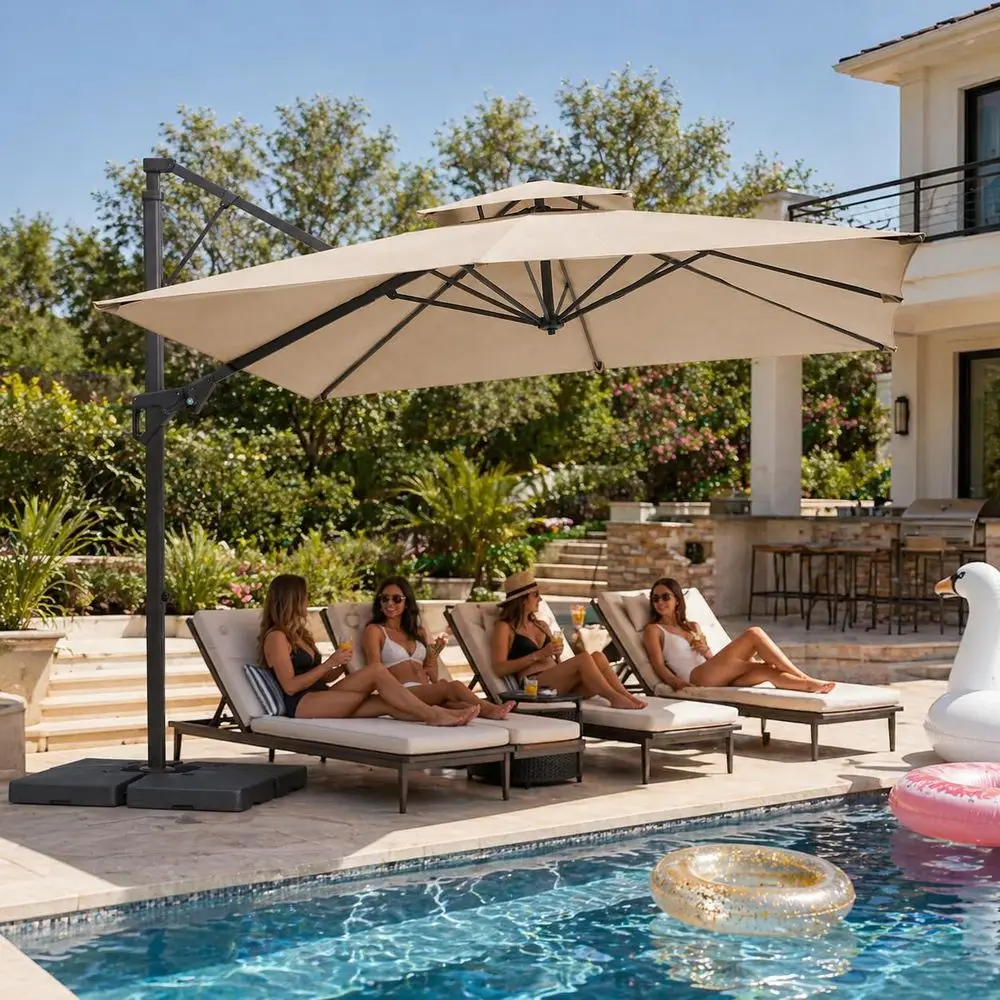
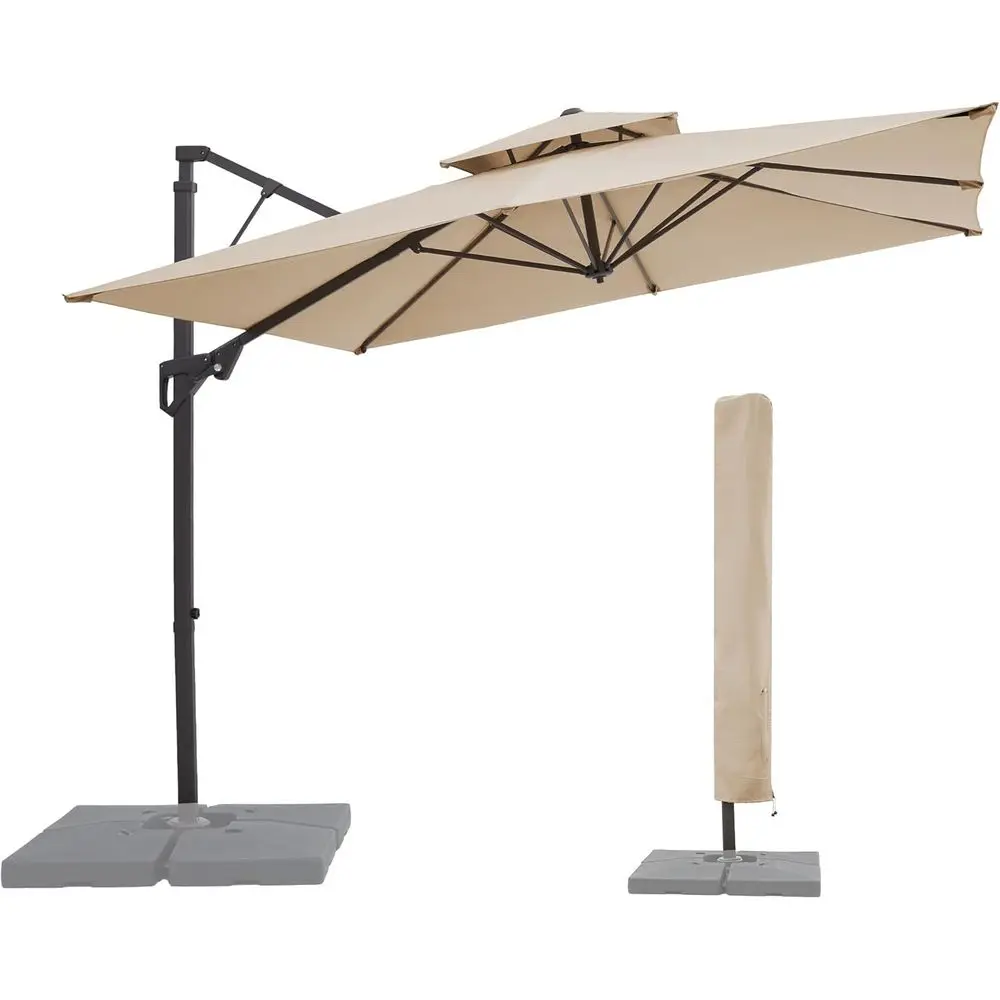
Spatial Trade-Off Analysis: The offset support arm eliminates center pole obstructions across a 274 x 274 cm lounge area. However, it requires purchasing a separate 4-piece weighted base or sandbag system that occupies a 100 cm square perimeter zone.
Verify Cantilever Umbrella Specs & Availability
Case Study 2: Outsunny 9.7' Double-Sided Patio Umbrella
Designed specifically for narrow, elongated outdoor footprints, this double-sided unit spans 116.1 inches in length while maintaining a shallow 59.8-inch depth. The 12-rib steel structure distributes wind forces evenly along its linear canopy.
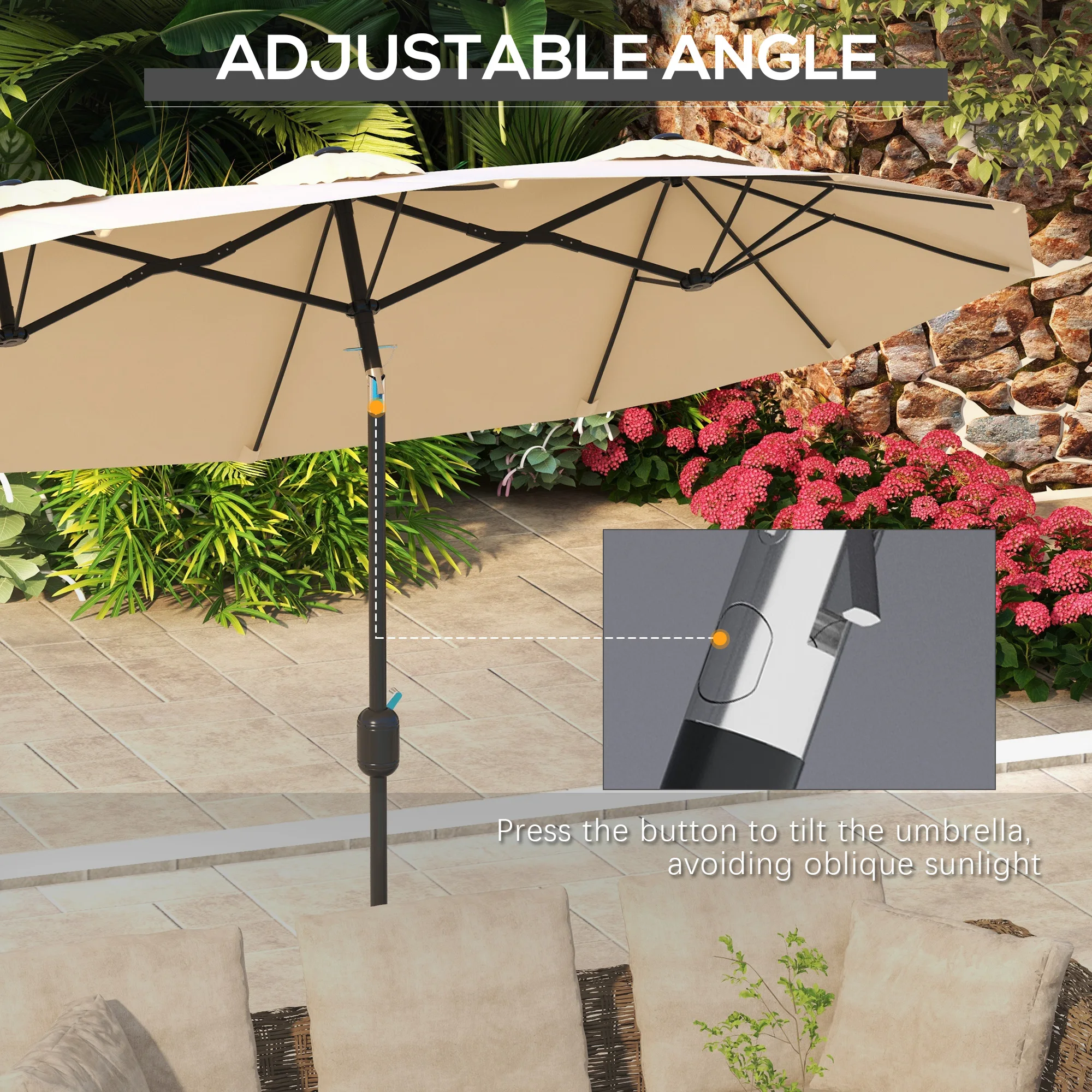
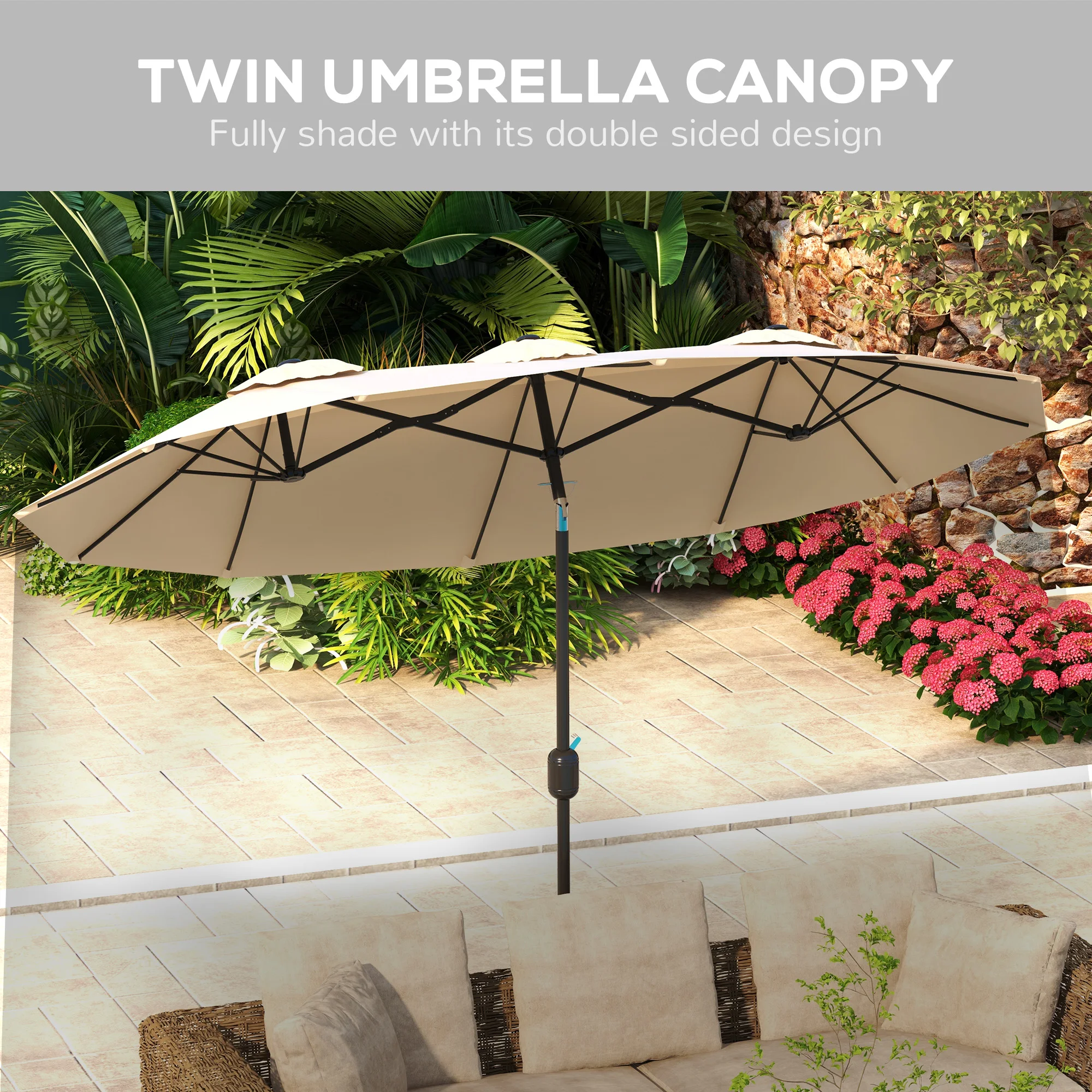
Spatial Trade-Off Analysis: Efficiently shields long dining setups without requiring two separate umbrellas. The trade-off is a central pole placement that requires a table center hole and a minimum 66 lbs base mass to maintain structural balance.
Verify Double-Sided Umbrella Specs & Availability
Case Study 3: 10FT Offset Hanging Umbrella with Protective Cover
Featuring a 10-foot canopy diameter and a 0 to 45-degree vertical tilt range, this unit adapts to shifting low-angle sunlight. The 180 GSM polyester fabric includes top venting for airflow stability during gust conditions.
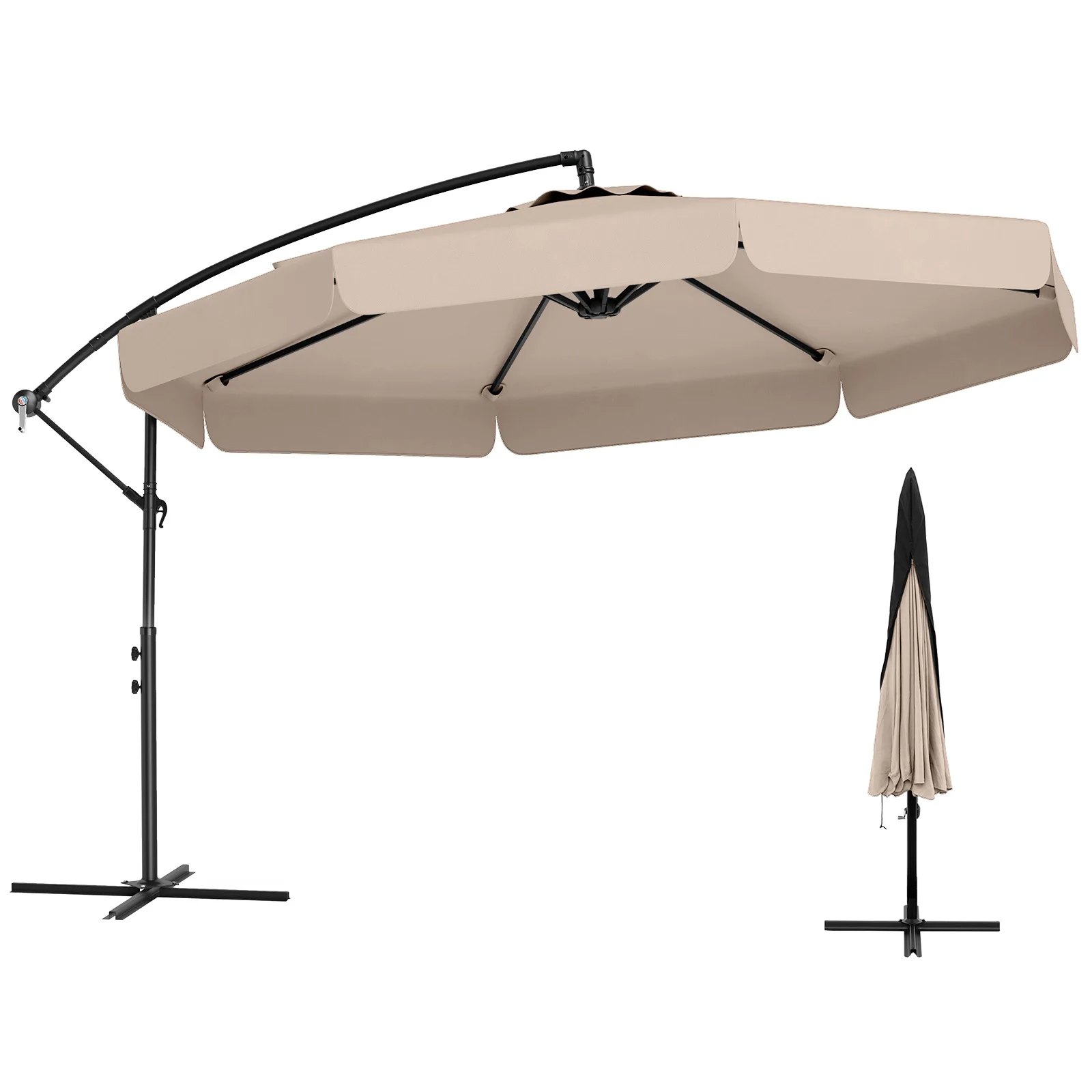
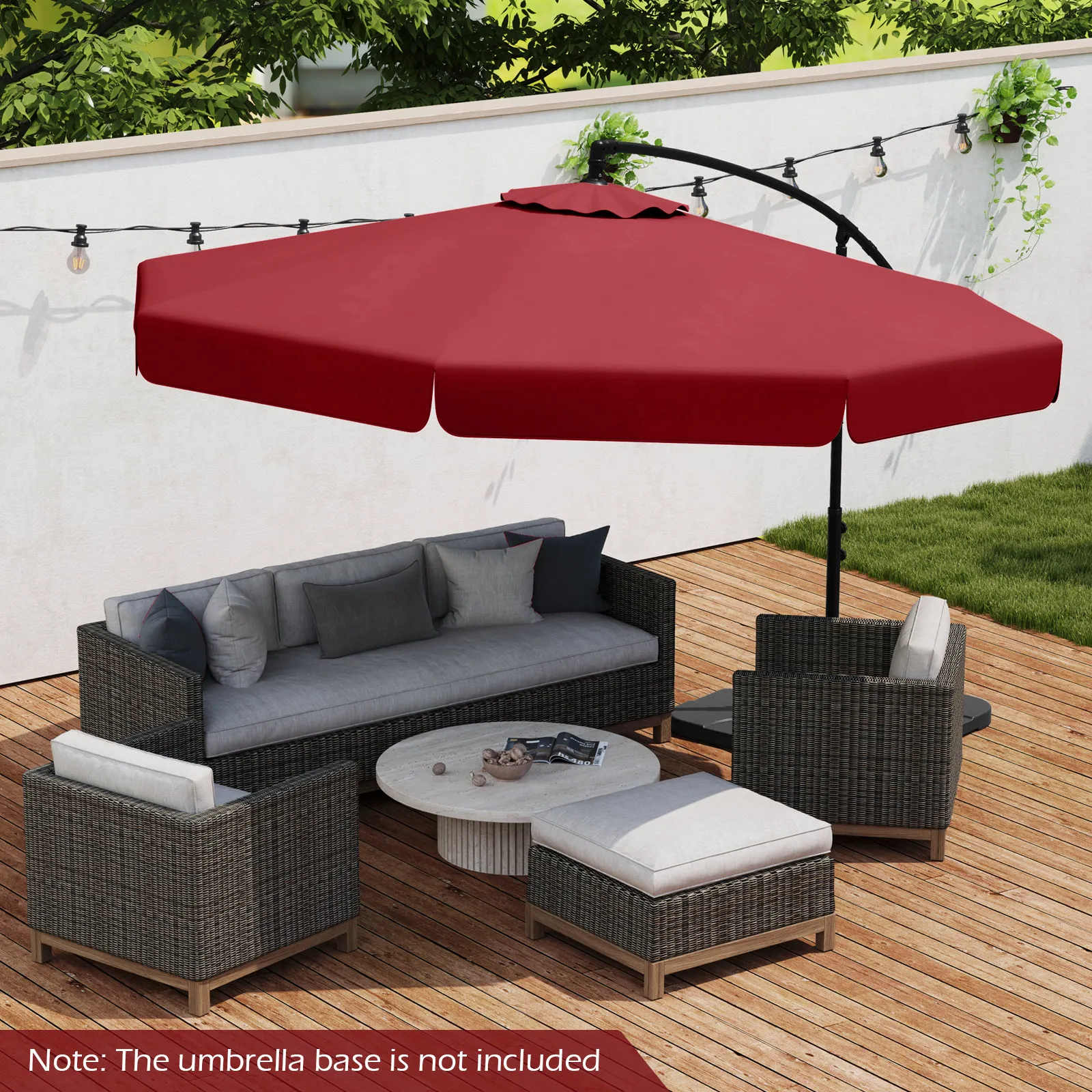
Spatial Trade-Off Analysis: Provides flexible multi-angle shade coverage and includes a dedicated storage cover. However, the hanging arm mechanism requires a 170 cm arc clearance behind the main pole to tilt and fold smoothly.
Verify Offset Hanging Umbrella Specs & Availability
Case Study 4: SucceBuy Tiki Thatched Patio Umbrella
Incorporating synthetic PE thatch over a steel frame, this 1.6-meter diameter umbrella introduces tactile tropical texture into compact urban outdoor schemes. The 2-way push-button tilt allows target adjustment for small bistro seating.
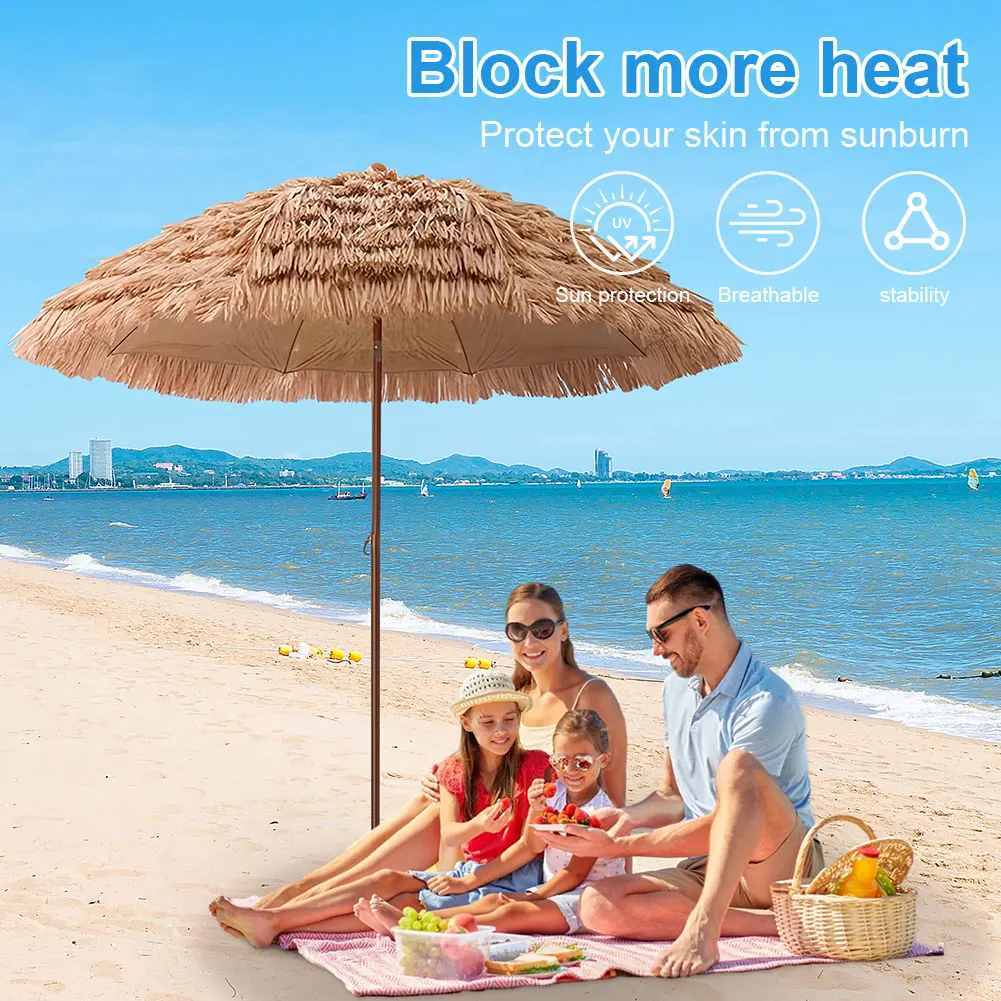
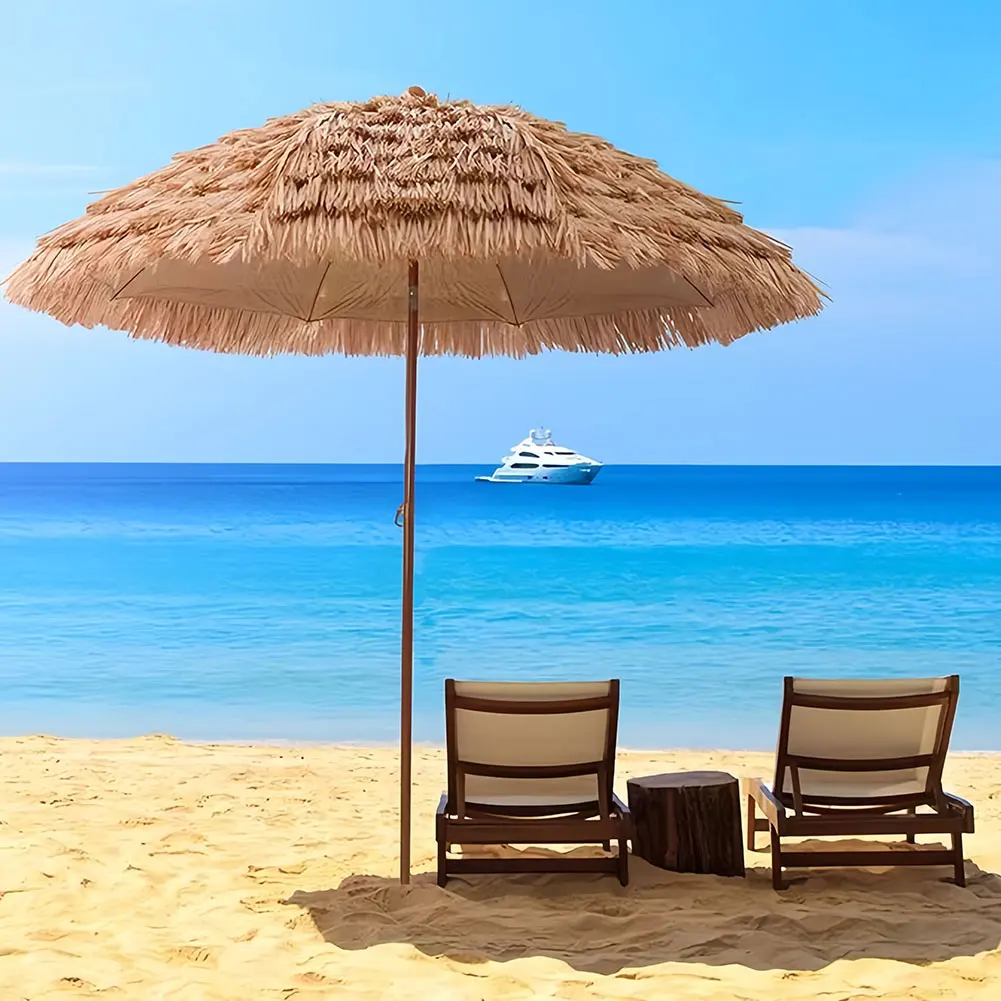
Spatial Trade-Off Analysis: Weighs under 10 lbs and offers quick assembly for tight urban balconies. The trade-off is a small 160 cm shade footprint that limits functional coverage to two seating units.
Verify Tiki Thatched Umbrella Specs & Availability
Case Study 5: 9FT Cream White Outdoor Market Umbrella
This 8.7-foot market umbrella uses a PU-coated 180 GSM polyester fabric rated UPF 50+ to block 98% of solar UV radiation. An 8-rib steel frame maintains canopy tension above standard outdoor dining tables.
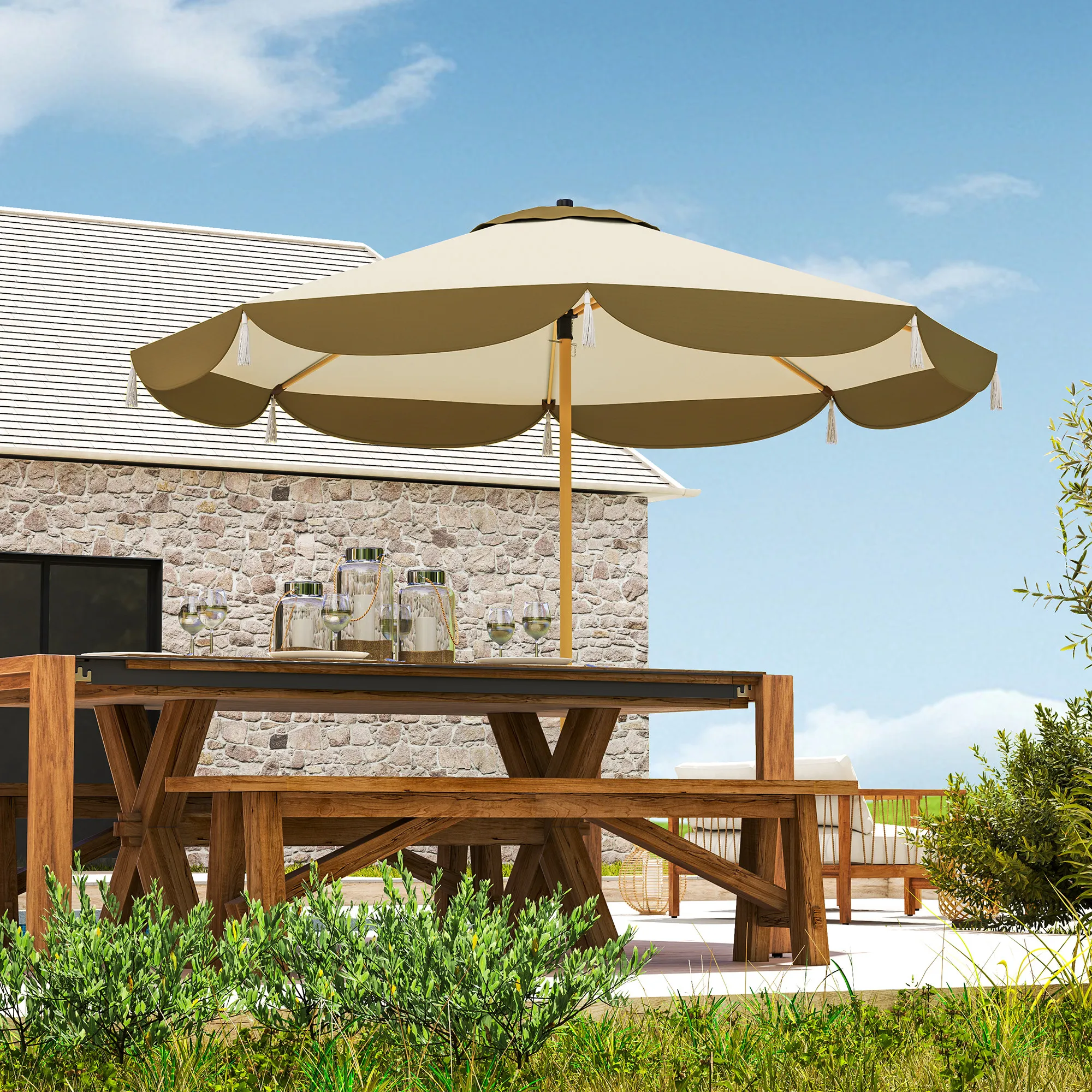
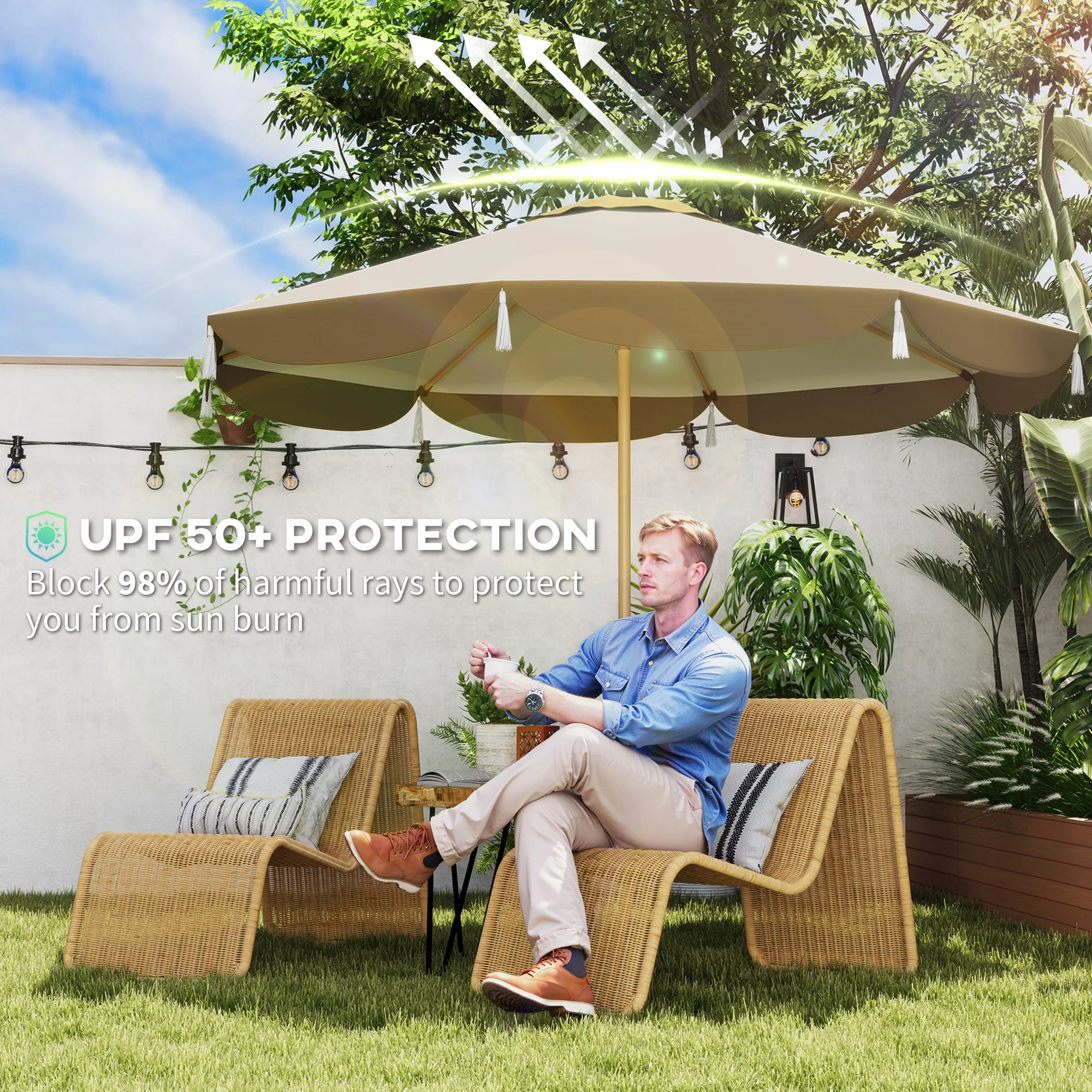
Spatial Trade-Off Analysis: Centering the pole within a dining table creates a symmetrical spatial layout while using table structure for extra lateral support. However, it dictates a fixed furniture placement that cannot be easily reconfigured.
Verify Market Umbrella Specs & Availability
Frequently Asked Questions
How much overhead clearance is required for cantilever outdoor umbrellas in small balconies?
Standard architectural guidelines recommend maintaining at least 210 cm (7 feet) of vertical clearance beneath canopy edges to allow safe foot circulation. Ensure there is a minimum 50 cm buffer between expanded ribs and exterior balcony railings or glass walls.
What fabric density works best for wind resistance in Japandi patio layouts?
A canopy fabric density between 180 GSM and 240 GSM provides optimal balancing between tensile strength, UV blockage, and wind flexibility. Pair denser fabrics with a double-top vent system to relieve air pressure buildup beneath the canopy.
How do offset cantilever umbrellas compare to central market umbrellas for floor space efficiency?
Offset cantilever umbrellas place structural supports outside primary movement zones, leaving 100% of the floor footprint beneath the canopy clear for furniture placement. Central market umbrellas require dedicated center table holes and floor stands that interrupt foot traffic pathways.
Author & Spatial Design Credentials
Truff is a Senior Interior Architect specializing in micro-space optimization, Japandi layout principles, and functional outdoor spatial zoning for compact residential properties.
Related Layout Resources:
Explore our detailed clearance guide on solid oak low-profile bed frames for additional spatial measurement frameworks.
Disclosure: As an affiliate, I earn from qualifying purchases at no extra cost to you.