Japandi Small-Space Overhead Layout Guide: Architectural Calculations & Suspended Seating Case Studies

Architectural Guidance Summary:
In compact Japandi layouts under 35 m², suspended seating reclaims up to 1.2 m² of usable floor plane. By securing ceiling anchors into structural timber joists with M10 expansion bolts, suspended swings maintain a 90 cm safety clearance arc while preserving visual openness and sightlines.
Spatial Micro-Zoning & Vertical Wall Plane Utilization
Integrating suspended furniture requires treating ceiling planes as active functional surfaces rather than passive enclosures. When floor space drops below 40 m², static armchair bases congest floor traffic, forcing awkward sidestepping around furniture legs. Overhead hanging mechanisms redistribute weight to load-bearing joists, creating clean floor sightlines that make tight living rooms feel substantially broader.

To successfully execute overhead micro-zoning without cluttering traffic paths, apply these explicit physical clearance parameters:
- Clearance Buffer Rule: Maintain a minimum 75 cm (29.5 in) swing envelope from surrounding drywall, tall bookcases, and solid joinery to prevent impact during movement.
- Vertical Visual Anchor: Position primary overhead hook points 210 cm to 230 cm (82.7 to 90.5 in) above finished floor level for ideal drop geometry.
- Floor Plane Liberation: Replacing traditional armchairs frees roughly 1.1 m² of continuous floor area, allowing uninterrupted walking paths without bumping shins.
- Substructure Verification: Anchor installations must tie directly into 50x100 mm (2x4 in) structural solid wood timber joists using heavy-duty eye bolts, skipping hollow drywall entirely.
Everyday Ergonomics & Legroom Clearance Calculations
Proper seating height determines lumbar comfort and knee health. Bumping knees against table edges while reaching for a mug is a sure sign of failed clearance calculations. In Japandi and Muji designs, low-profile living room tables sit between 35 cm and 42 cm high, requiring calculated suspension heights to allow fluid foot placement.

| Ergonomic Parameter | Standard Dimension | Japandi Compact Target | Functional Spatial Purpose |
|---|---|---|---|
| Seat Height Off Floor | 40–45 cm (15.7–17.7 in) | 42 cm (16.5 in) | Prevents thigh compression while allowing comfortable foot placement on mats. |
| Dynamic Arc Radius | 90–120 cm (35.4–47.2 in) | 85 cm (33.5 in) | Guarantees zero physical contact with perimeter coffee tables or shelving. |
| Overhead Anchor Height | 200–240 cm (78.7–94.5 in) | 215 cm (84.6 in) | Maintains rope tension while preventing excessive lateral sway. |
| Thigh Clearance Gap | 20–30 cm (7.8–11.8 in) | 25 cm (9.8 in) | Eliminates knee friction against low-profile coffee surfaces when entering seat. |
Material Tactility, Acoustic Dampening & Sustainable Care
Small apartments suffer from hard-surface sound reflection. Echoes off bare drywall and laminate flooring create ambient noise fatigue. Woven natural fibers solve this by functioning as acoustic dampeners that absorb high-frequency sound waves while introducing organic texture into modern interiors.

- Acoustic Absorption Index: Thick 100% cotton rope mesh absorbs ambient room reflections, lowering noise reverberation by roughly 12% in tile or hardwood rooms.
- Fiber Tensile Strength: Unbleached natural cotton offers high tensile strength up to 3.5 g/d, preventing fiber degradation under dynamic load cycling over time.
- Tactile Temperature Neutrality: Breathable canvas weaves maintain a constant surface temperature, avoiding skin heat buildup during extended sitting sessions.
- Maintenance Protocol: Spot clean woven ropes with a mild pH-neutral eco-detergent diluted in 20°C water to prevent fiber shrinkage and fabric stiffening.
Structural Joinery Mechanics, Load Limits & Material Physics
Safety in overhead seating comes down to force vectors and joint stability. Static weight differs significantly from dynamic weight. Sitting down gently places a 75 kg static load on an overhead anchor, but sitting down quickly spikes that force to over 150 kg due to gravitational acceleration. Understanding load vectors keeps hardware securely attached to your ceiling joists.

"According to Neufert Architectural Data, overhead point loads require a minimum safety factor of 3.0 relative to total static user weight to absorb dynamic oscillation forces during entry and exit."
Spreader bars made from solid White Oak (Quercus alba) or hardwood composites split suspension ropes at optimal 45-degree angles. This geometry prevents the fabric from squeezing inward against your shoulders while distributing weight evenly across all ceiling anchor points. High-density steel carabiners rated to 500 lbs (226.8 kg) eliminate hardware flex, preventing distracting squeaks or wobble whenever you shift position.
Curated Architectural Solutions & Case Studies
The following selected seating options demonstrate practical spatial solutions for micro-apartment living. Each item addresses clear layout limits, offering floor-free seating without compromising safety or structural integrity.
| Solution Name | Footprint / Dimensions | Load Limit | Primary Material | Anchor Type |
|---|---|---|---|---|
| Japandi Pocket Chair | 100x50 cm swing profile | 500 lbs (226.8 kg) | Cotton Rope / Spreader Bar | Single Overhead Hook |
| Muji Brazilian Hammock | 200x150 cm fabric expanse | 450 lbs (204.1 kg) | 100% Woven Cotton | Dual Wall Mounts |
| Colombian Canvas Hammock | 200x140 cm stretch weave | 400 lbs (181.4 kg) | Organic Colombian Cotton | Dual Wall Hooks |
| Steel-Frame Patio Swing | 118.1x98x192 cm total frame | 265 lbs (120.0 kg) | Powder Steel / Oxford Fabric | Self-Contained Stand |
| Heavy-Duty Bench Swing | 129.5x63.5 cm seat frame | 700 lbs (317.5 kg) | Iron / Cotton-Poly Mesh | Dual Ceiling Anchors |
1. Japandi Pocket-Integrated Macrame Hanging Chair

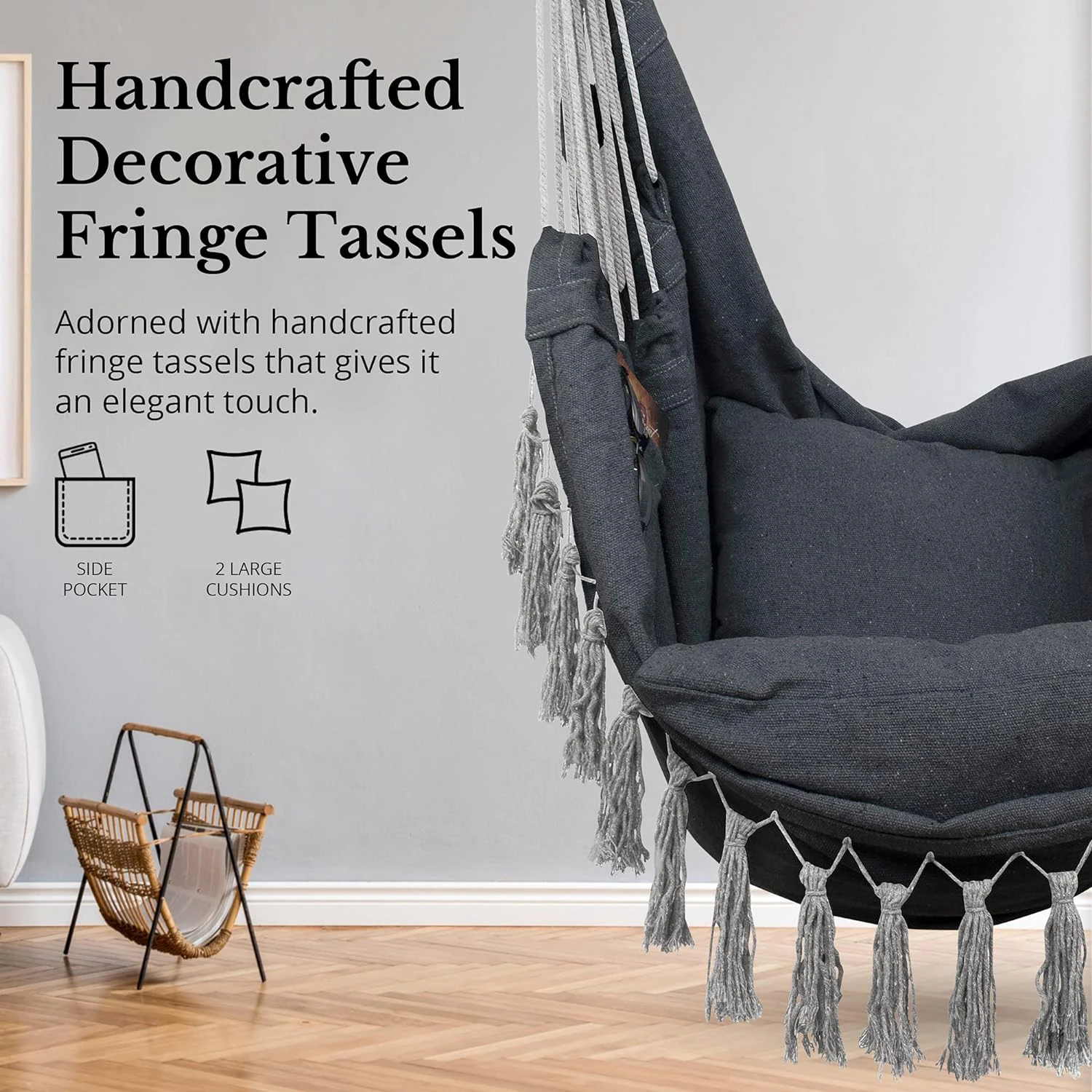
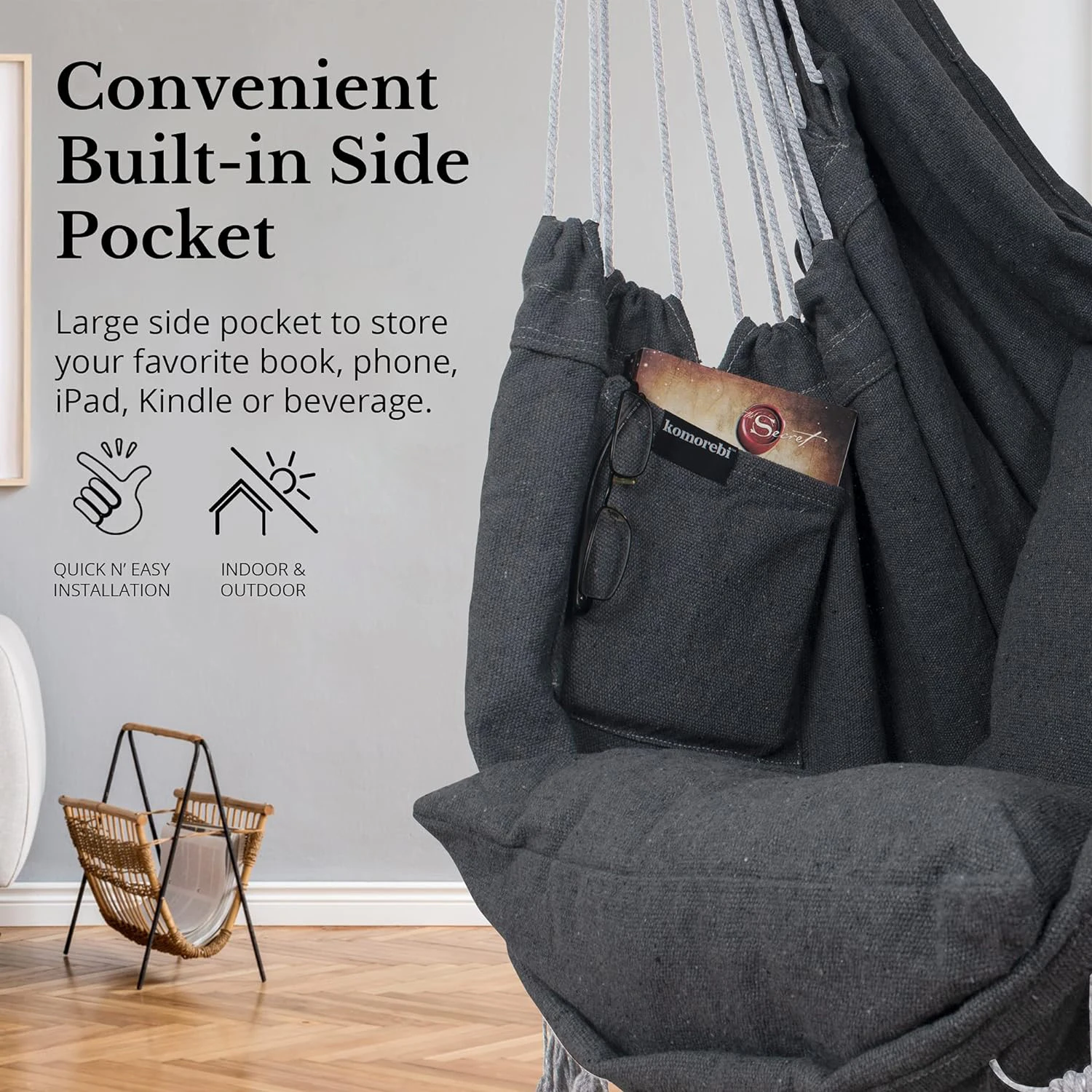
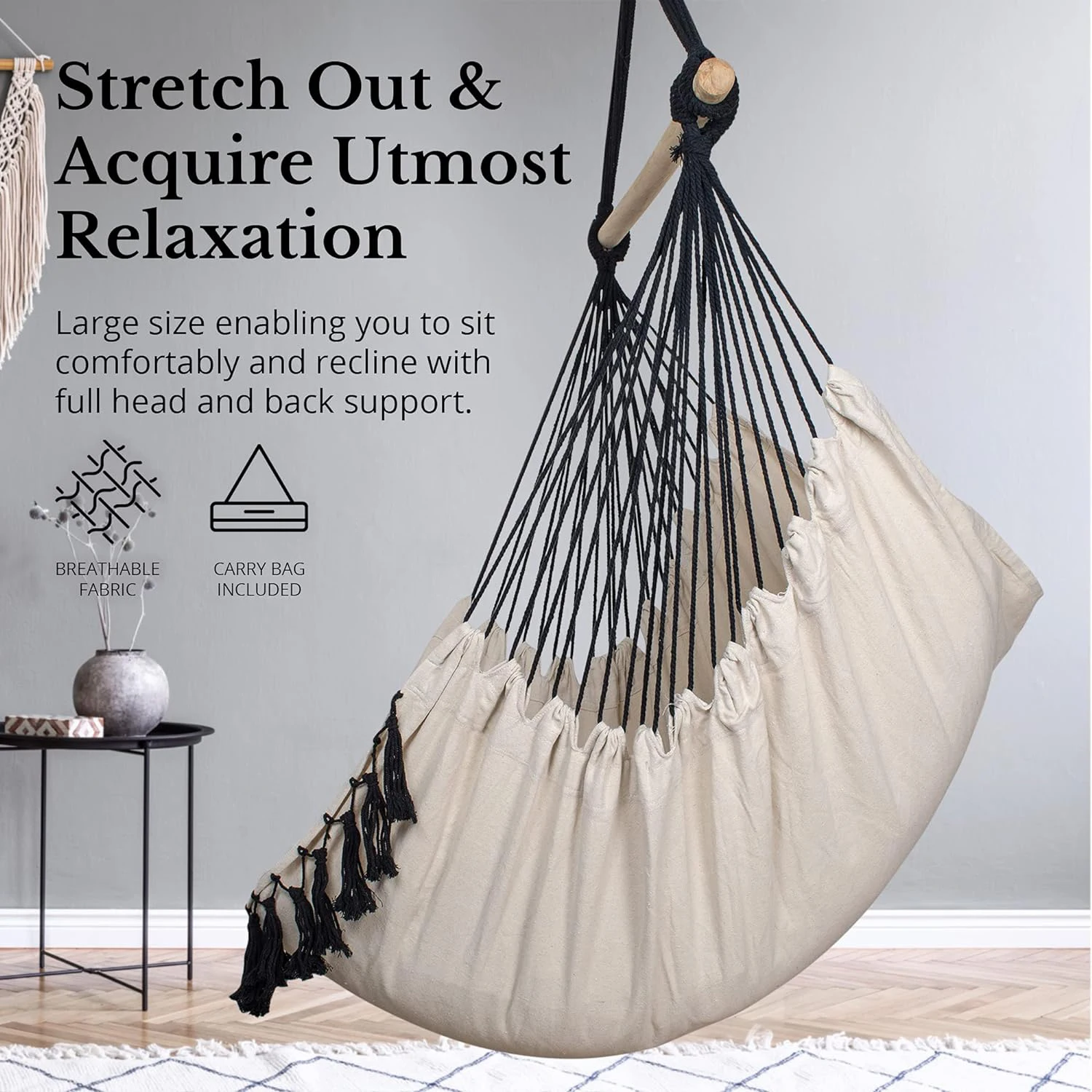
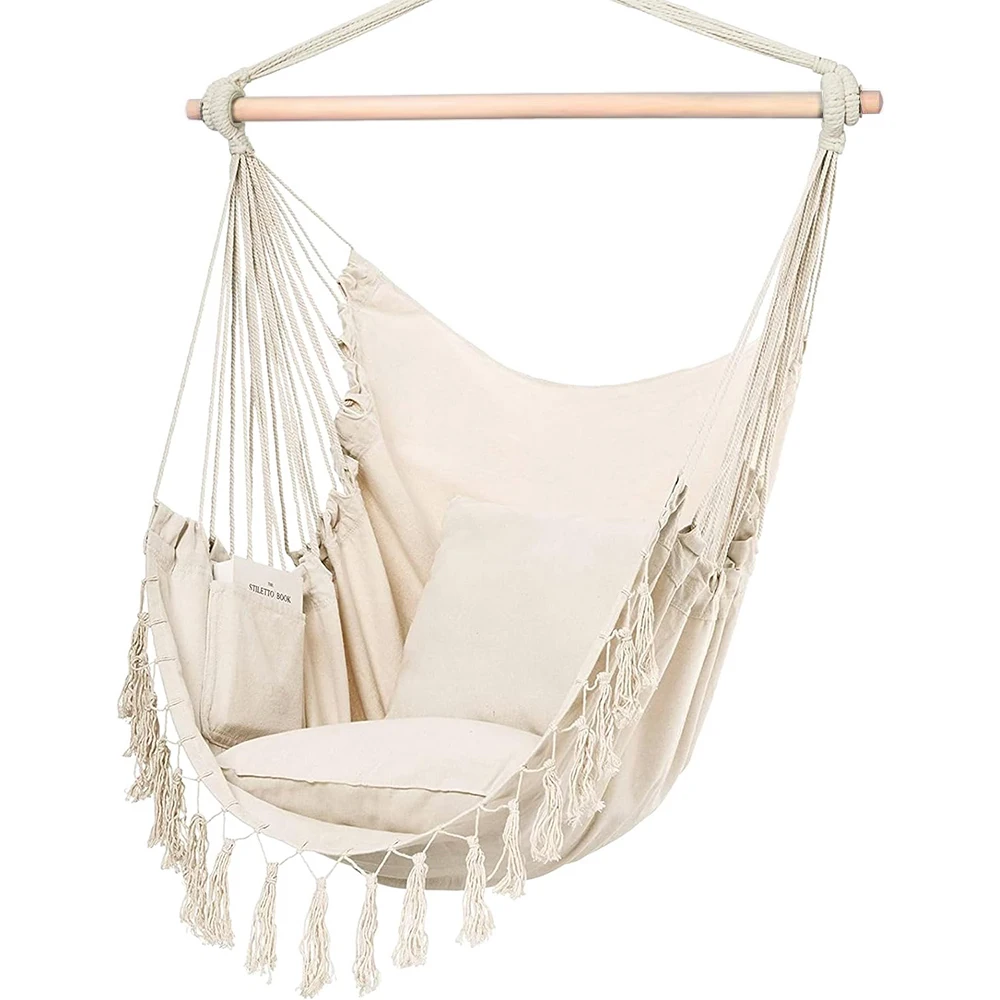
This single-point suspended seat uses soft cotton-polyester rope construction combined with a solid wooden spreader bar. Anti-slip grooves on both ends of the spreader bar lock the rope loops in place, eliminating dynamic shifting when leaning sideways. A built-in side pocket holds phones, books, or tablets, keeping side tables clear in small bedrooms.
Spatial Trade-Off Analysis: Supports up to 500 lbs (226.8 kg) while freeing 1.0 m² of floor space, but requires a strict 90 cm rotational clearance envelope from nearby bookcases or walls.
2. Muji-Style Brazilian Macrame Double Lounge Hammock
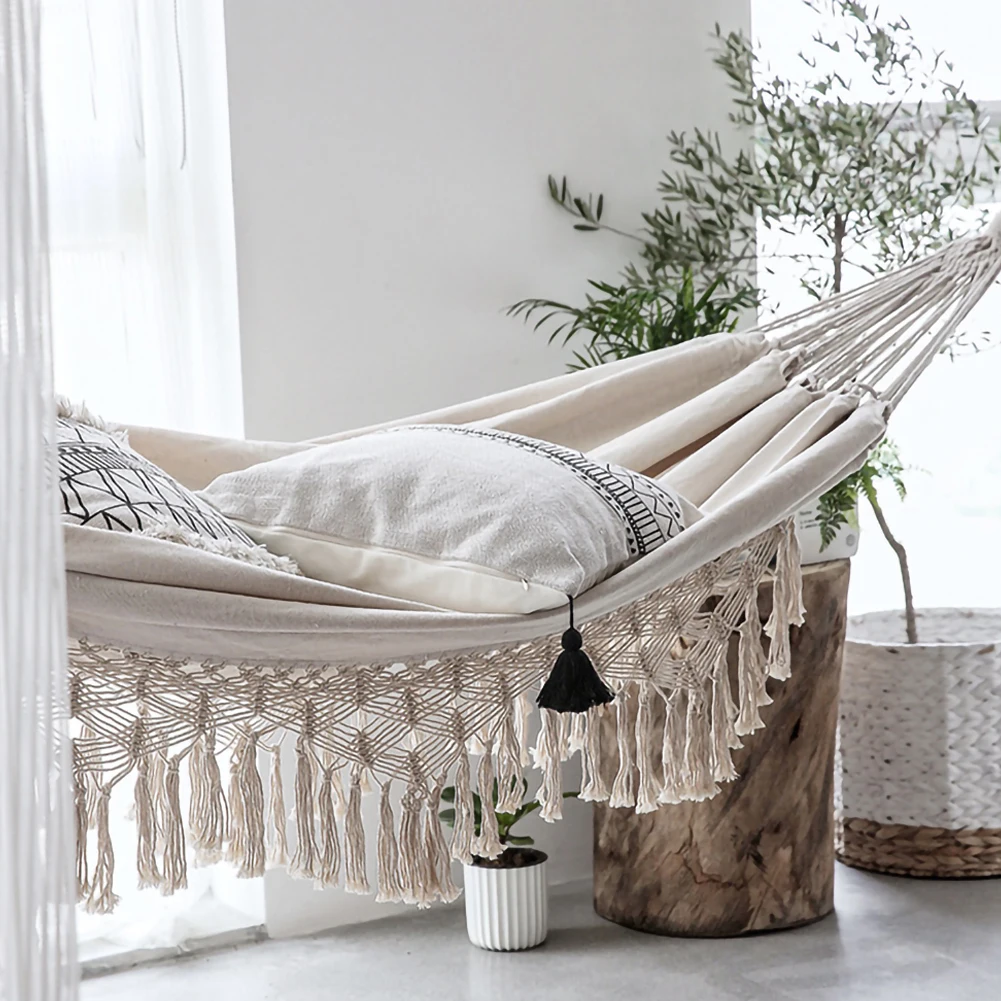

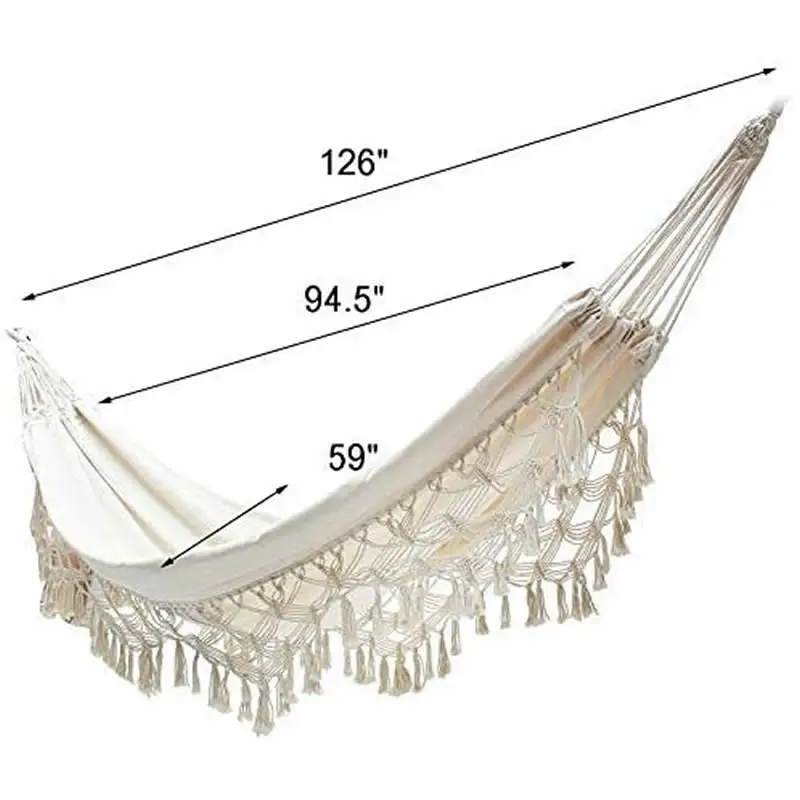


Crafted from 100% breathable woven cotton, this Brazilian-style double hammock features hand-tied macrame side fringe. Weighing just 1.99 kg and packing down to a 20x20x15 cm footprint when folded, it offers quick self-contained installation between opposing walls or dedicated anchor posts.
Spatial Trade-Off Analysis: Accommodates two adults across a generous fabric expanse, but requires a 250 cm to 300 cm linear wall distance for proper suspension droop.
3. Minimalist Colombian Organic Cotton Canvas Hammock
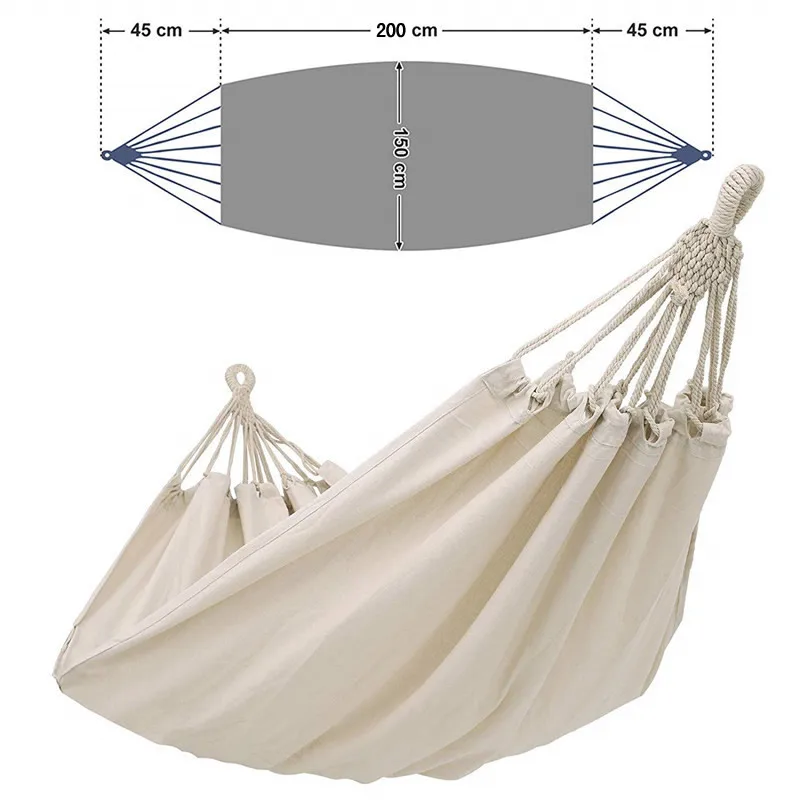
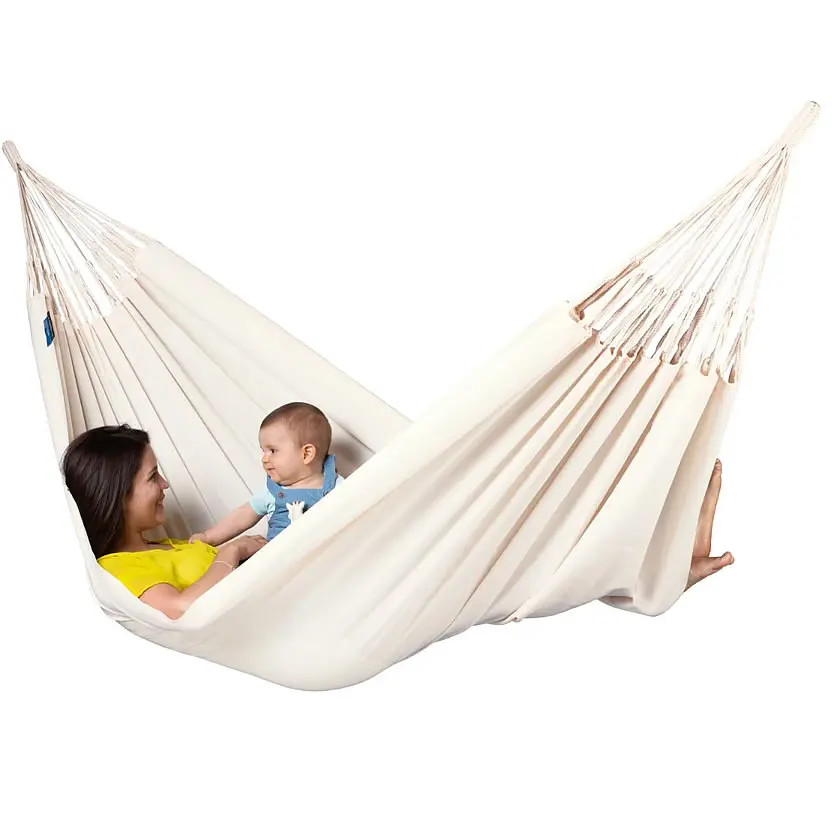

Using unbleached Colombian organic cotton canvas, this minimalist hammock provides a clean, neutral look ideal for Muji interiors. Weighing only 1.50 kg and packing into a 10x20x20 cm travel bag, its dense canvas weave supports body weight evenly without deep fabric sag.
Spatial Trade-Off Analysis: Ultra-lightweight 1.5 kg design allows fast unhooking and storage, but lacks spreader bars, causing fabric gathering around the shoulders during posture changes.
4. Steel-Frame Freestanding Patio Swing Chair
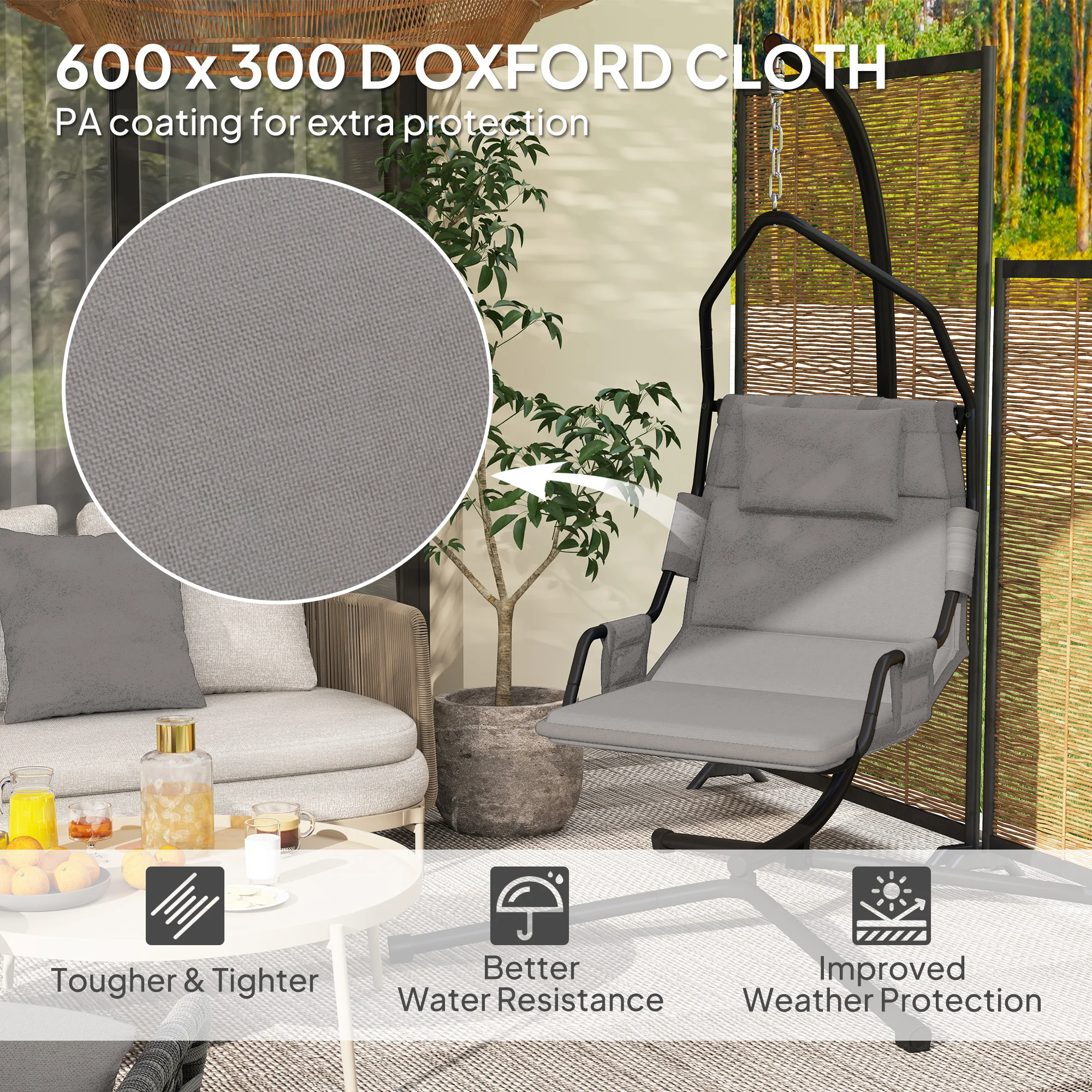
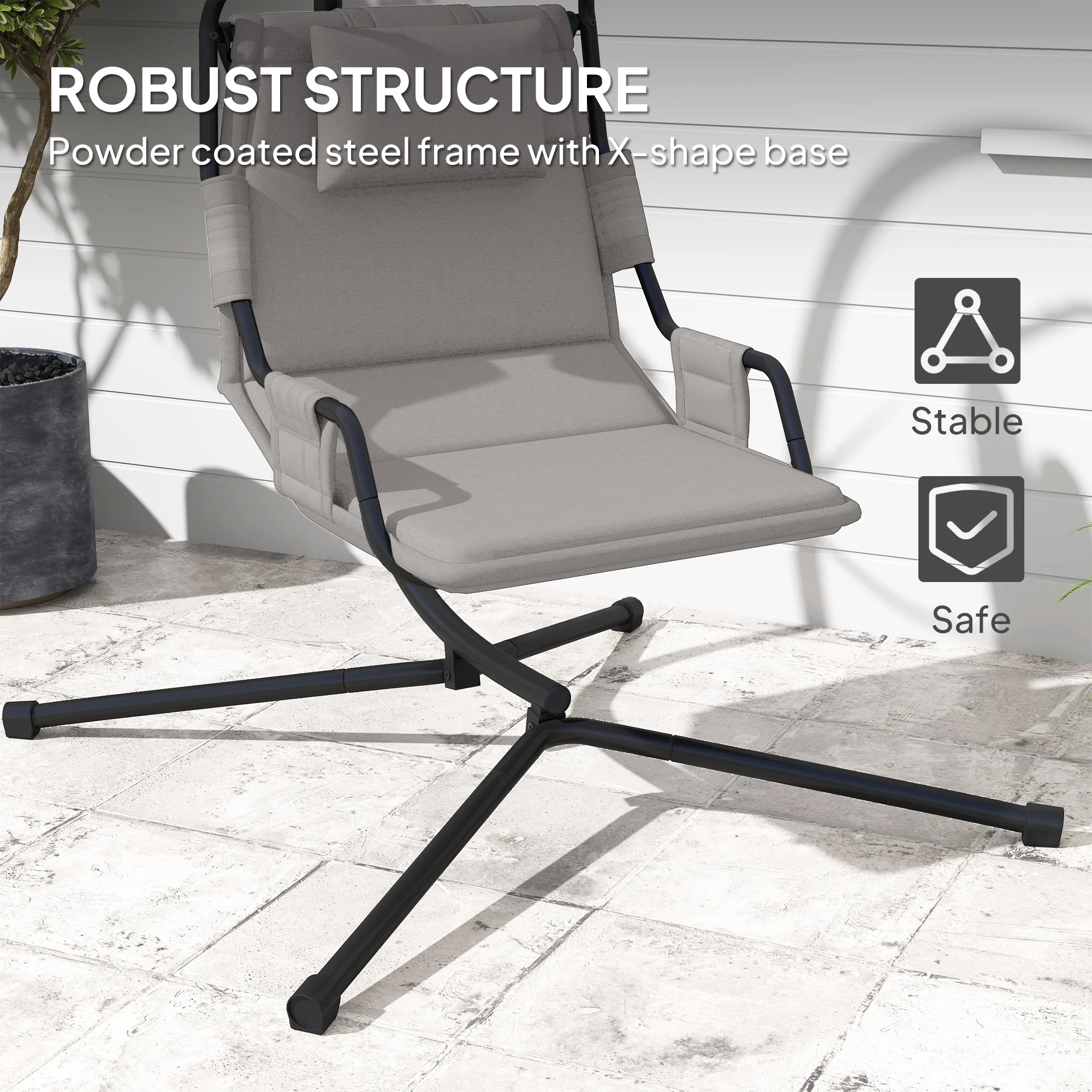
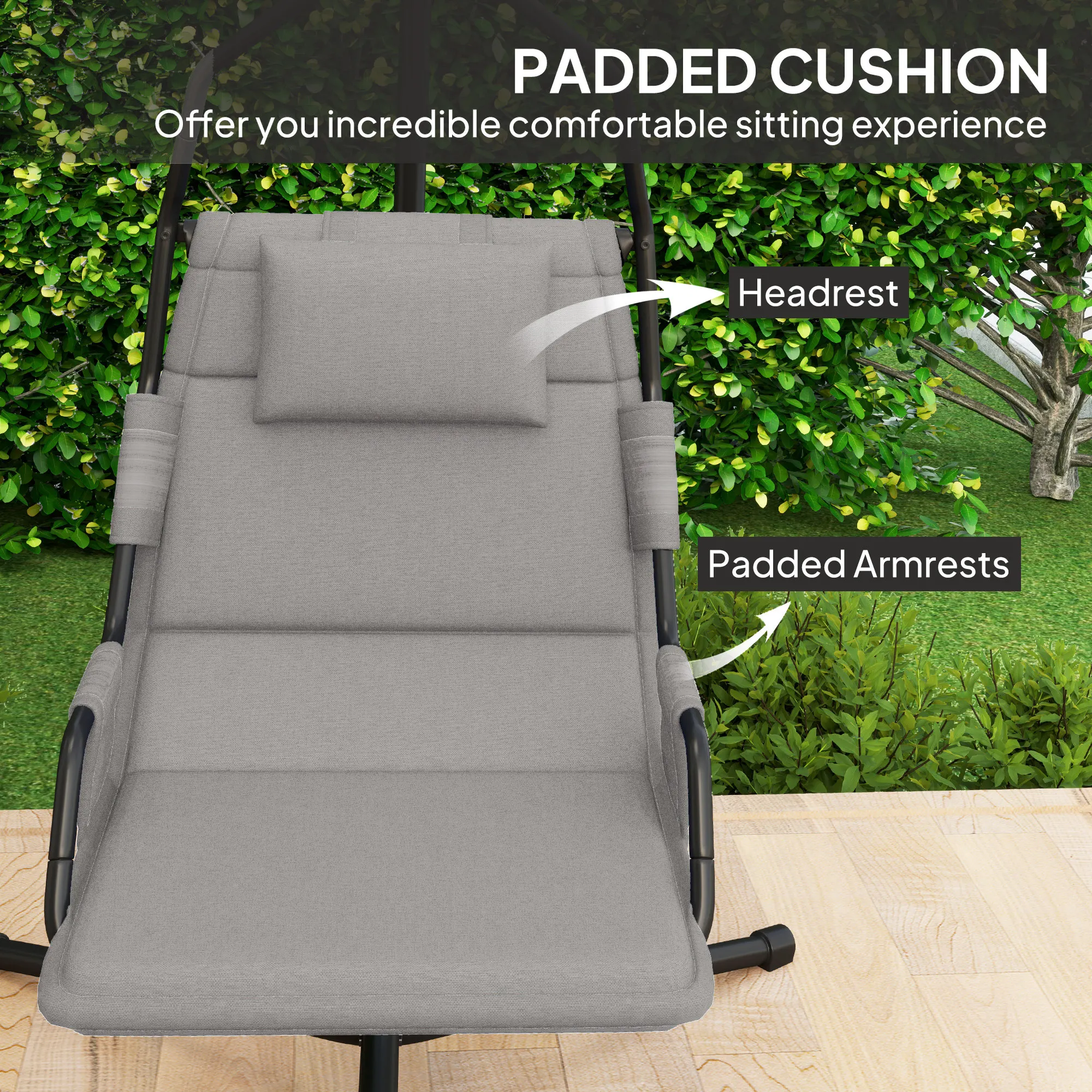
For rental spaces where ceiling drilling is restricted, this self-contained steel frame swing provides immediate overhead seating. Measuring 46.5 in L x 38.6 in W x 75.6 in H (118.1x98x192 cm) with a 265 lbs (120 kg) weight capacity, it features an X-shaped powder-coated steel base, adjustable top chain, and weather-resistant PA-coated Oxford fabric cushion.
Spatial Trade-Off Analysis: Eliminates structural ceiling installation entirely, but claims a permanent 118.1x98 cm footprint on floor space.
5. Heavy-Duty Dual-Hanging Macrame Bench Swing

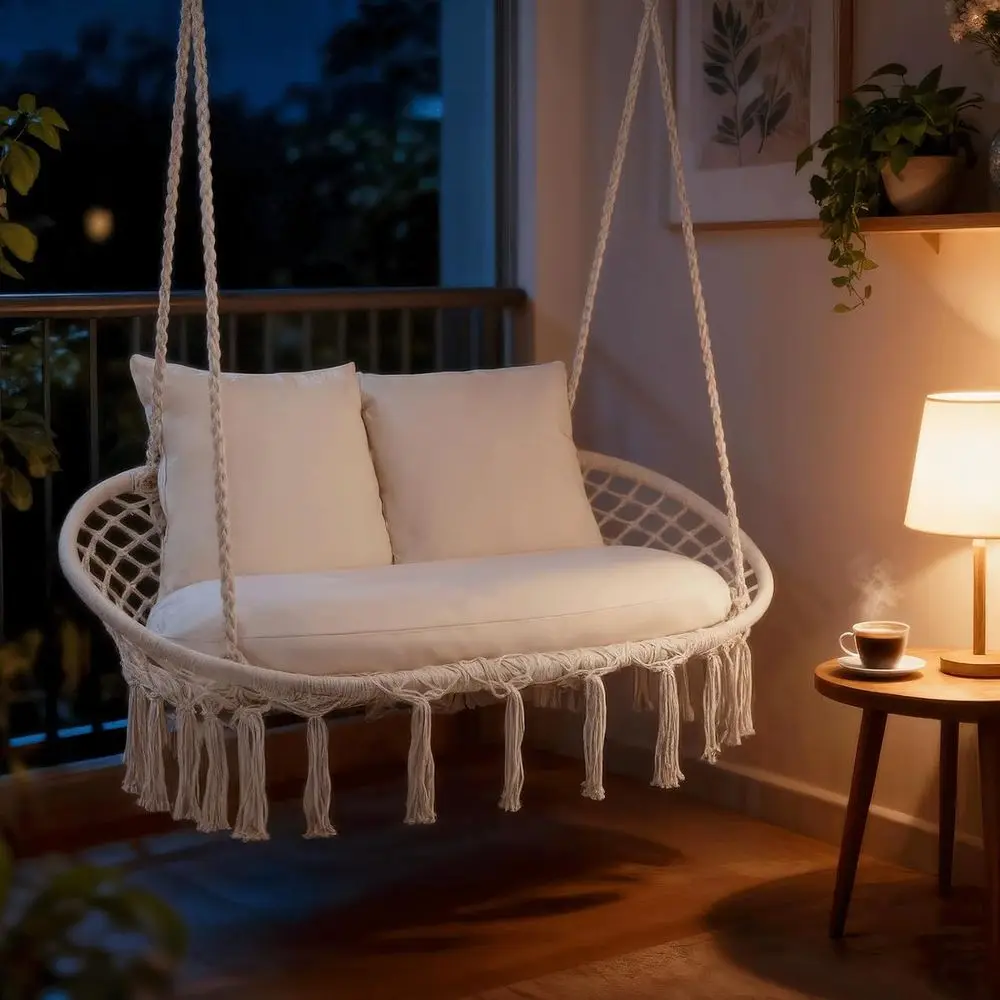
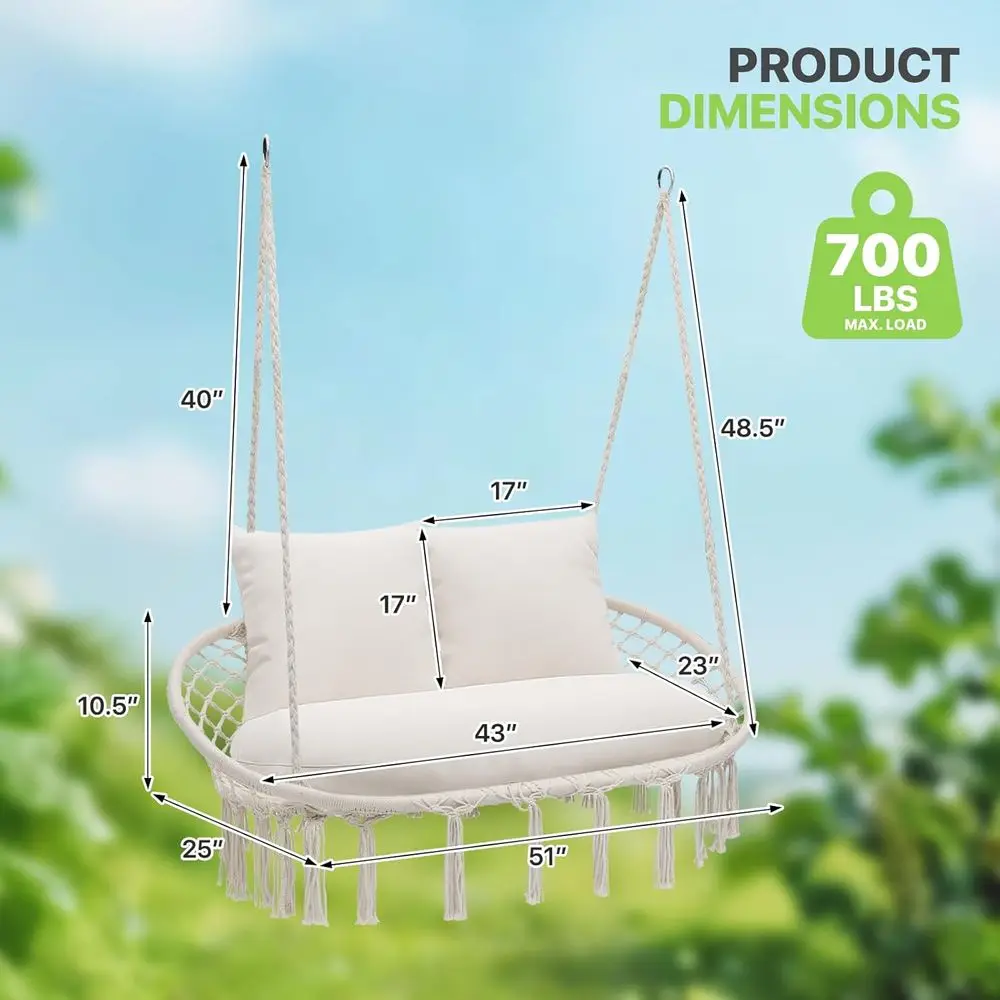
Built with a heavy-duty galvanized iron frame and handwoven cotton-polyester mesh, this 51 in L x 25 in W (129.5x63.5 cm) bench seat supports up to 700 lbs (317.5 kg). It includes three separate cotton cushions—one large seat pad and two lumbar pillows—and supports both 360-degree pivot rotation or standard forward-backward swinging.
Spatial Trade-Off Analysis: Delivers a wide 129.5 cm bench seating area for two adults, but demands two separate ceiling anchor mounts spaced 110 cm apart.
Frequently Asked Questions
How do I locate dynamic load-bearing ceiling joists for hanging swings?
Use a magnetic stud detector to locate drywall screw heads along ceiling joists. Structural timber joists in standard US/EU construction run parallel at 16-inch (40.6 cm) or 24-inch (61.0 cm) center spacing. Always center M10 expansion eye bolts in the thickest part of the solid wood member.
Can overhead swing chairs be safely installed in rental apartments?
If ceiling drilling is prohibited by lease agreements, freestanding steel frame swings offer overhead suspension without structural modifications. Alternatively, heavy-duty door-frame tension bars or temporary corner stands preserve drywall integrity.
How much swing clearance is needed around a hanging chair?
Maintain a minimum clearance radius of 75 cm to 90 cm (29.5 to 35.4 in) around the entire seat perimeter. This prevents accidental contact with walls, coffee tables, or floor lamps during natural movement.
Spatial Guide Authored by:
Senior Interior Architect specializing in Japandi micro-dwelling layouts and ergonomic space optimization across small residential footprints.
Complementary Spatial Reading:
Small Space Architectural Buying Guide & Spatial Layout Principles
Disclosure: This guide contains curated affiliate links. Qualifying purchases may earn an editorial commission at no extra cost to you.


