Japandi Small Space Outdoor Shade Guide: Top 5 Architectural Balcony & Patio Umbrella Solutions

Must-Have Recommendation Summary
Optimizing small outdoor zones like micro-balconies and narrow decks requires strict vertical spatial discipline. Japandi design principles combine Scandinavian functionality with Japanese wabi-sabi organic warmth. Selecting compact patio umbrellas with 30-to-45-degree tilt mechanisms, 180 GSM UV-resistant canopies, and narrow post footprints maximizes usable floor area while preventing visual clutter in tight urban spaces.
Common Small-Space Layout Mistakes & Trade-Off Frameworks
According to Neufert Architectural Data, standard passage corridors on residential balconies require a minimum clear walking width of 60 cm (23.6 inches) to prevent constant body collisions against outdoor furniture. Homeowners frequently oversize shade structures, creating severe operational friction. Oversized 3-meter canopies on 1.5-meter deep balconies block natural light into interior rooms while causing canopy ribs to drag against exterior masonry wall surfaces.
| Layout Error | Spatial Consequence | Architectural Solution |
|---|---|---|
| Oversized Center Pole Base | Consumes 45cm of footwell zone beneath outdoor tables | Deploy offset cantilever or slim 38mm pole profiles with flat cast-iron bases |
| Fixed Overhead Canopy | Fails to block low afternoon glare; causes head bumping when standing | Integrate 30-to-45-degree dual-axis push-button tilt mechanisms |
| Non-Vented Fabric Canopy | Traps rising thermal currents, increasing wind uplift vulnerability by 40% | Select double or triple-tier wind-vented canopy structures |

Structural Joinery Mechanics, Load Limits & Material Physics
Balcony environments expose furniture hardware to intense wind shear and rapid thermal expansion. Structural stability relies heavily on material density and joint engineering. Standard architectural ergonomic benchmarks dictate that main support shafts maintain structural integrity under wind velocities up to 25 mph when paired with a minimum 15 kg (33 lbs) weighted base anchor.
- High-Tensile Steel & Aluminum Framing: Utilizing 38mm diameter aircraft-grade aluminum or powder-coated alloy steel rods prevents frame bending under sudden gust loads exceeding 30 km/h.
- Reinforced 8-Rib Canopy Geometry: Eight structural ribs distribute fabric tension uniformly across a 180 GSM polyester surface, reducing material sagging over time and mitigating seam tear hazards.
- Thermal Silver-Coated Barrier Layers: Silver-coated backing reflects shortwave infrared rays, reducing radiant heat beneath the canopy by up to 4°C (7.2°F) compared to untreated canvas fabrics.
- Mortise-and-Tenon Latch Locks: Precision mechanical safety latches prevent accidental collapse when crank mechanisms experience physical wear over extended usage cycles.
Spatial Micro-Zoning & Vertical Wall Plane Utilization
In micro-apartments with outdoor footprints under 4 square meters (43 sq ft), floor space must be treated with extreme efficiency. Creating vertical depth without cluttering footpaths requires strategic micro-zoning techniques that draw the eye upward.

- Wall-Adjacent Canopy Alignment: Placing rectangular or semi-circular umbrella canopies tight against exterior masonry walls saves 35 cm of floor clearance, allowing full door swing radius.
- Cantilever Arm Perimeter Suspension: Suspending the primary shade umbrella from an offset cantilever arch clears the entire ground level for low-profile teak floor cushions or Muji folding chairs.
- Multi-Tier Canopy Separation: Overlapping triple-tiered canopies create dynamic visual layers while venting warm air upward, maintaining cooler ambient zone temps.
- Fold-Down Storage Profiles: Choosing slim collapsible umbrellas that collapse down to under 12 cm in total thickness ensures effortless winter storage inside narrow hall closets.
Material Tactility, Acoustic Dampening & Sustainable Care
Japandi design hinges on tactile warmth and organic materiality. Introducing PE synthetic thatch straw or woven tassel fringe brings raw texture to clean urban concrete walls. Synthetic poly-thatch structures mimic natural coconut fiber aesthetics while providing complete water impermeability and resistance to UV degradation. Furthermore, fibrous fringe tassels act as subtle physical acoustic dampeners, muffling urban traffic echo on enclosed high-rise balconies. Per ISO 105-B02 colorfastness standards, high-grade 120g to 180 GSM polyester retains rich color saturation across 1,000 continuous sun exposure hours.
Why You Need This: Tactile natural finishes bridge interior living spaces with outdoor elements. Synthetic straw and woven tassel trims provide zero-maintenance organic beauty without the rotting or insect nesting risks associated with untreated raw natural palm fibers.

Compact Shade Solutions Comparative Matrix
Compare essential technical specifications, spatial footprints, and mechanism highlights across our top 5 curated Japandi patio umbrella choices below.
| Model Name | Dimensions (L x W x H) | Canopy Material | Tilt Angle | Key Spatial Feature |
|---|---|---|---|---|
| Wabi-Sabi Fringe Compact Umbrella | 6.5 x 6.5 x 7.0 ft | 120g Silver-Coated Polyester | 30° Push-Button | Lightweight 6 lbs frame with sand anchor |
| Natural Thatch Organic Tiki Umbrella | 5.25 ft Dia x 6.23 ft H | PE Straw & Polyester | Dual-Axis Tilt | Height-adjustable ground clearance post |
| Triple-Tier Solar LED Umbrella | 9.2 ft Dia x 8.0 ft H | High-Density Polyester | Push-Button Tilt | 32 Integrated solar LEDs with 3-tier vent |
| Zero-Footprint Cantilever Offset Umbrella | 10.0 x 10.0 x 8.2 ft | 180 GSM Heavy Polyester | 0-35° Dynamic Tilt | Offset arm clears central walking space |
| Extended Rectangular Twin-Canopy Umbrella | 9.7 x 5.0 x 7.3 ft | 180 GSM Water-Repellent Poly | 45° Wide-Angle Tilt | Slim 5ft width fits narrow balconies perfectly |
Top Curated Japandi Outdoor Shade Solutions
1. Wabi-Sabi Fringe Compact Patio Umbrella with Push-Button Tilt
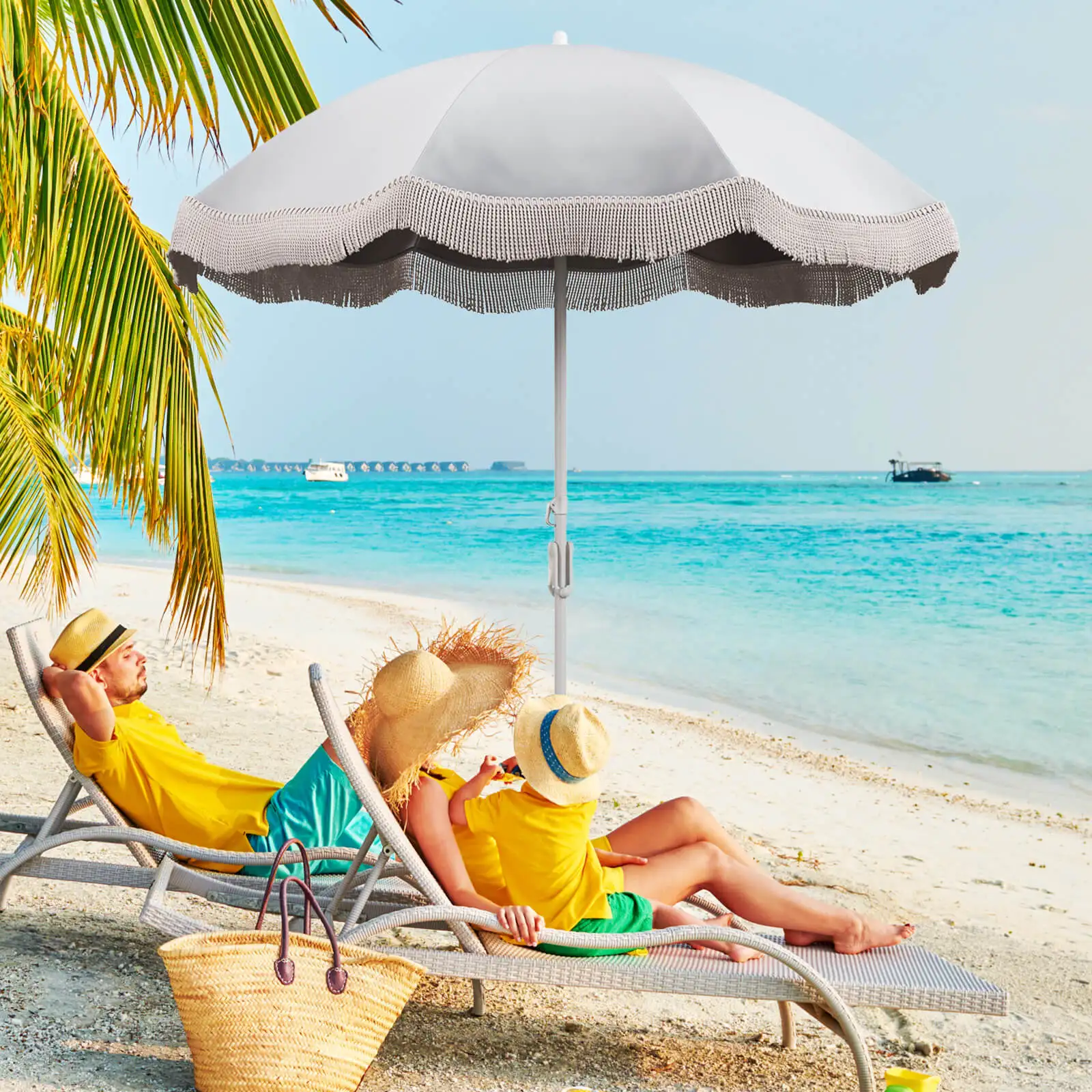
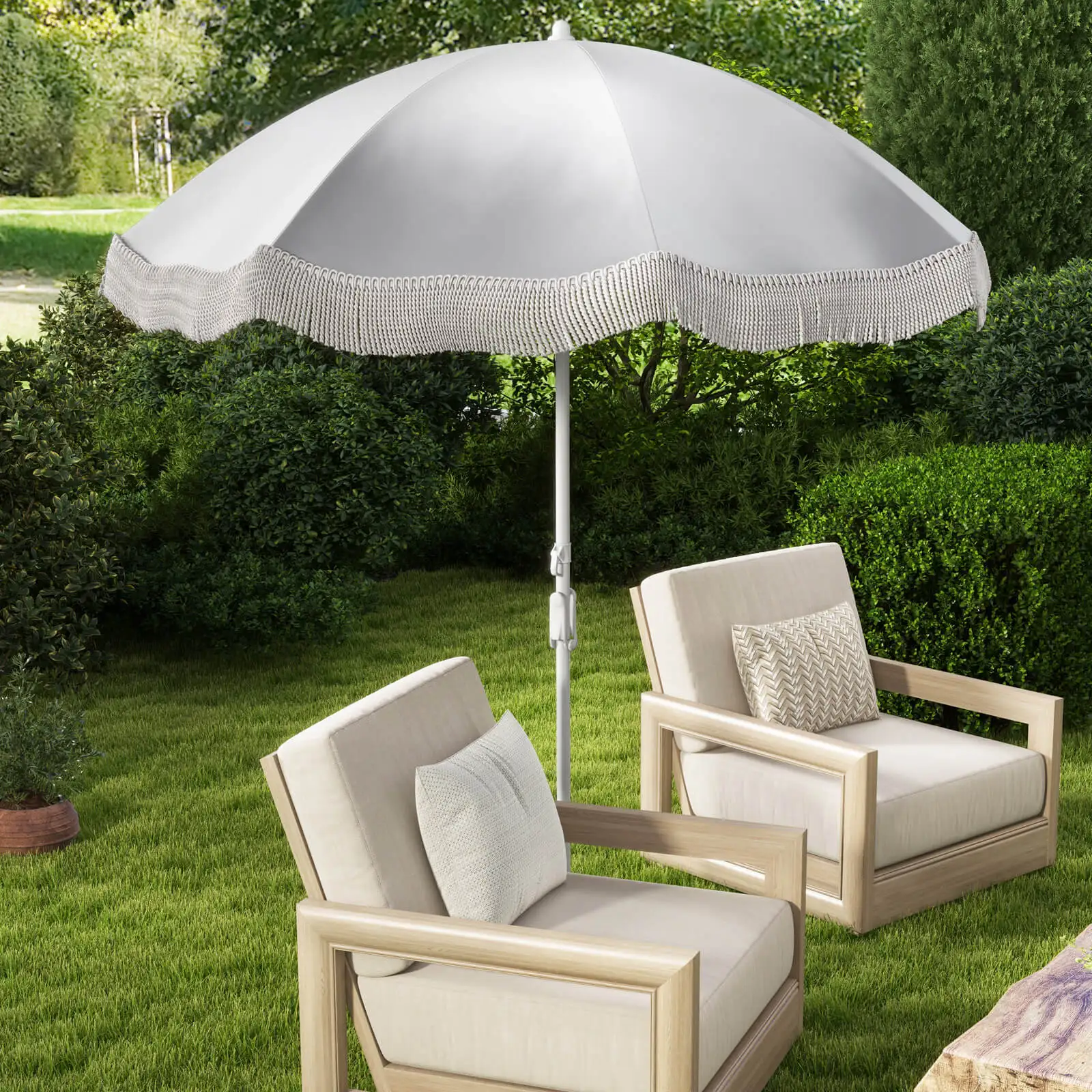
This 6.5 x 6.5 ft compact umbrella brings organic wabi-sabi charm to small urban spaces. Constructed with a 120g silver-coated UPF50+ polyester canopy, it blocks up to 98% of direct ultraviolet radiation while weighing a mere 6 lbs (2.7 kg). The 8-rib reinforced metal pole includes a 30-degree push-button tilt mechanism for tracking low sun angles, complemented by an integrated 8-inch sand anchor for ground stability.
Spatial Trade-Off Analysis
Positive Attribute: Ultra-lightweight 6 lbs frame and slim 6.5-foot footprint allow effortless repositioning on micro-balconies without obstructing narrow doorways.
Operational Trade-Off: The lightweight 6 lbs structure requires a dedicated weighted base (minimum 10 kg / 22 lbs) on elevated apartment decks to prevent wind tipping during sudden afternoon gusts.
2. Natural Thatch Organic Texture Height-Adjustable Tiki Umbrella
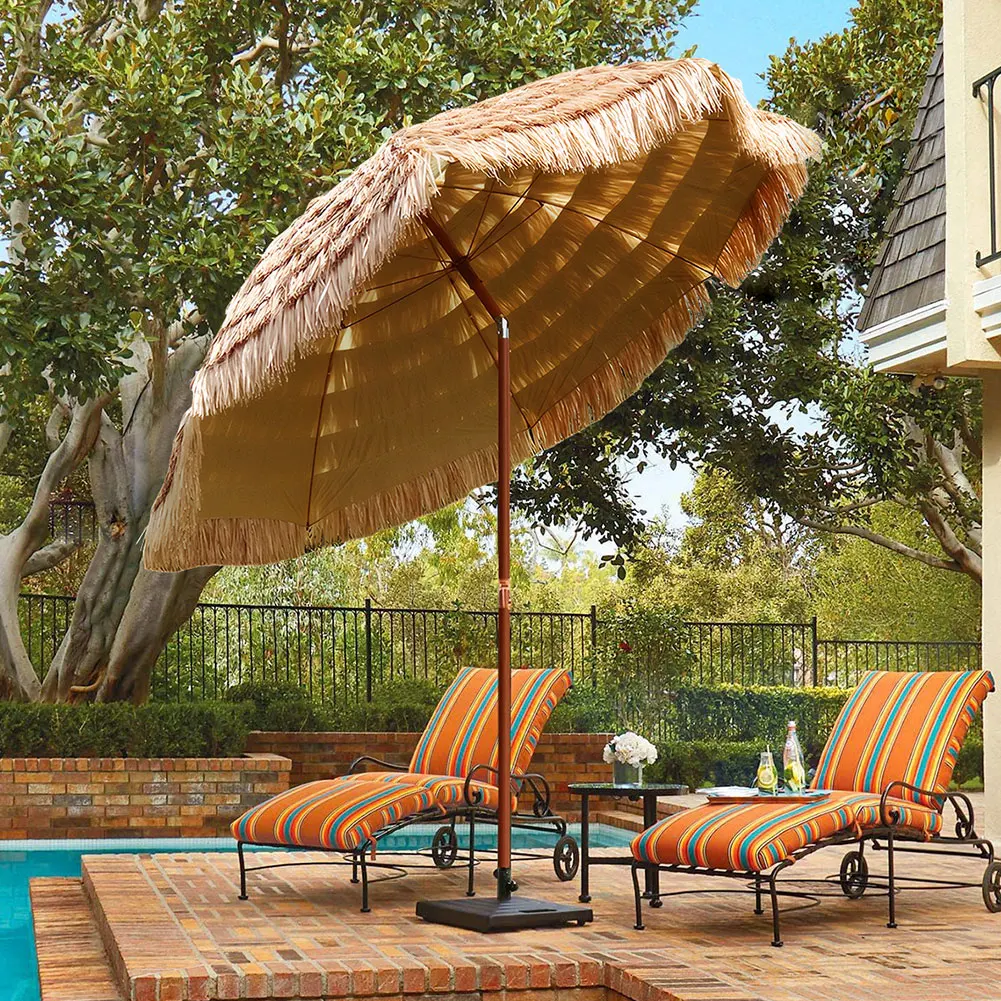
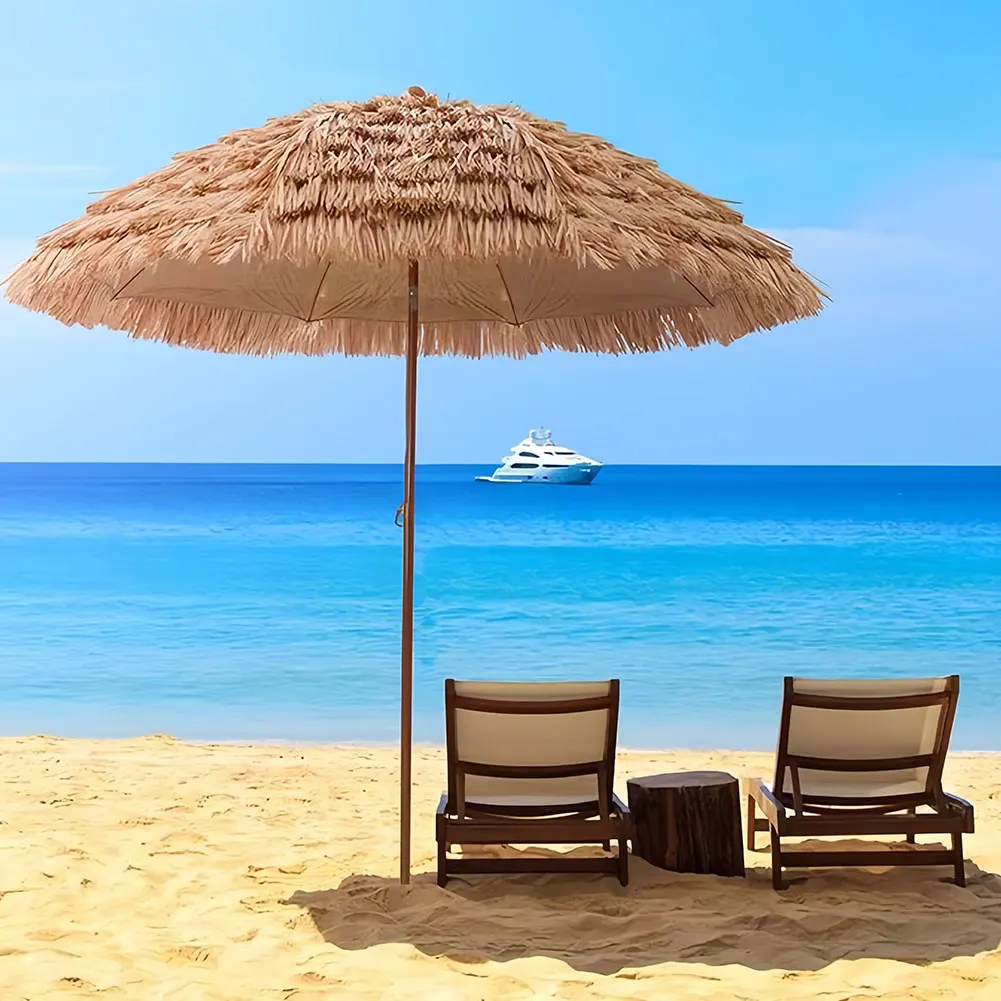
Combining Scandinavian minimalism with tropical warmth, this 1.6m canopy diameter (approx 5.25 ft) umbrella features weather-resistant PE simulated straw wire over a durable high-density polyester layer. Supported by an 8-rib steel frame and telescoping center rod with height adjustment reaching 1.9 meters (6.23 ft), it features a dual-direction tilt mechanism to block angled rays on narrow lawns or deck nooks.
Spatial Trade-Off Analysis
Positive Attribute: Compact 1.6m diameter canopy offers exceptional visual texture without encroaching on overhead wall clearances or outdoor light fixtures.
Operational Trade-Off: The high-density synthetic straw canopy increases wind drag coefficients slightly, requiring user collapse during winds exceeding 18 mph.
3. Triple-Tier Solar Ambient Lighted 10-Foot Patio Umbrella
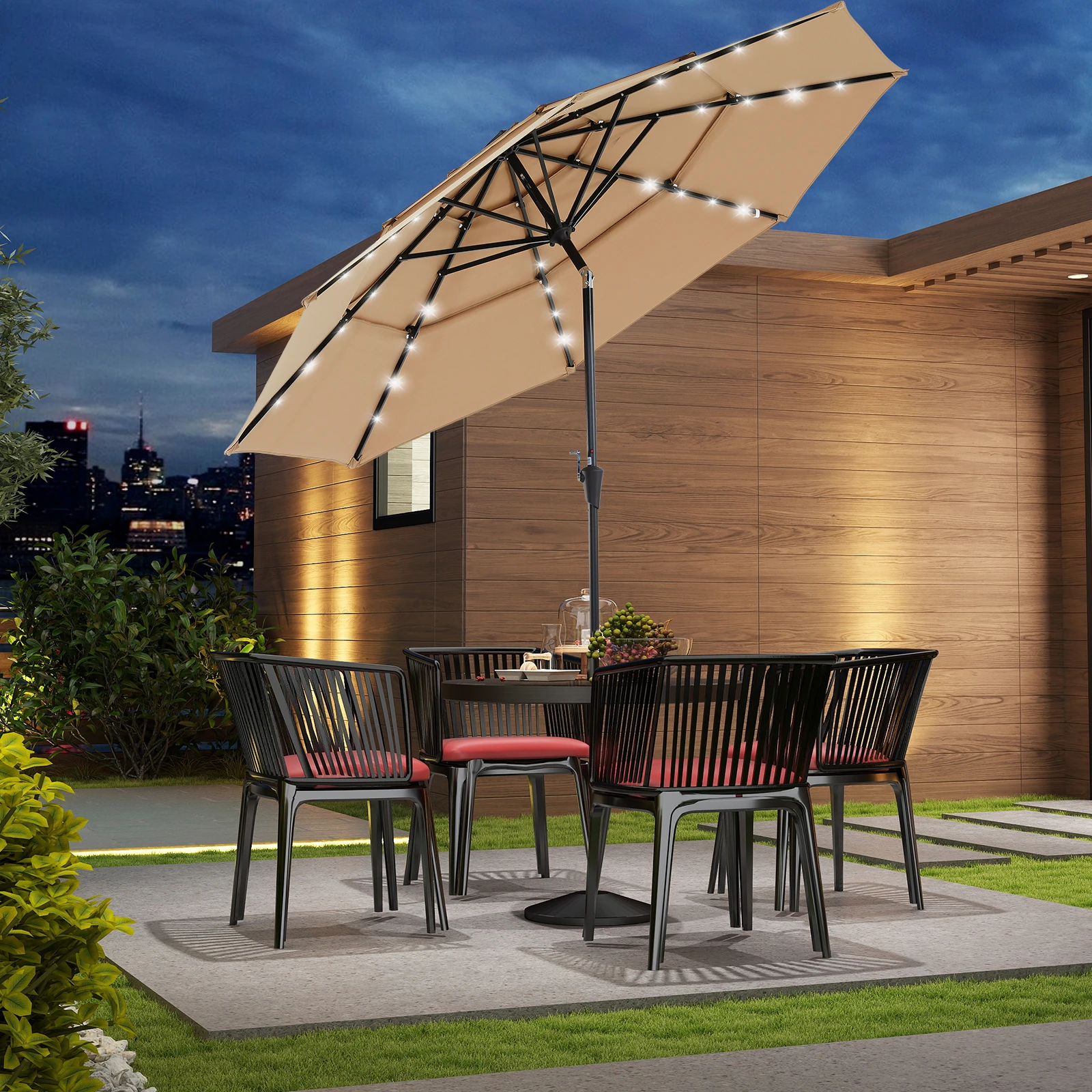
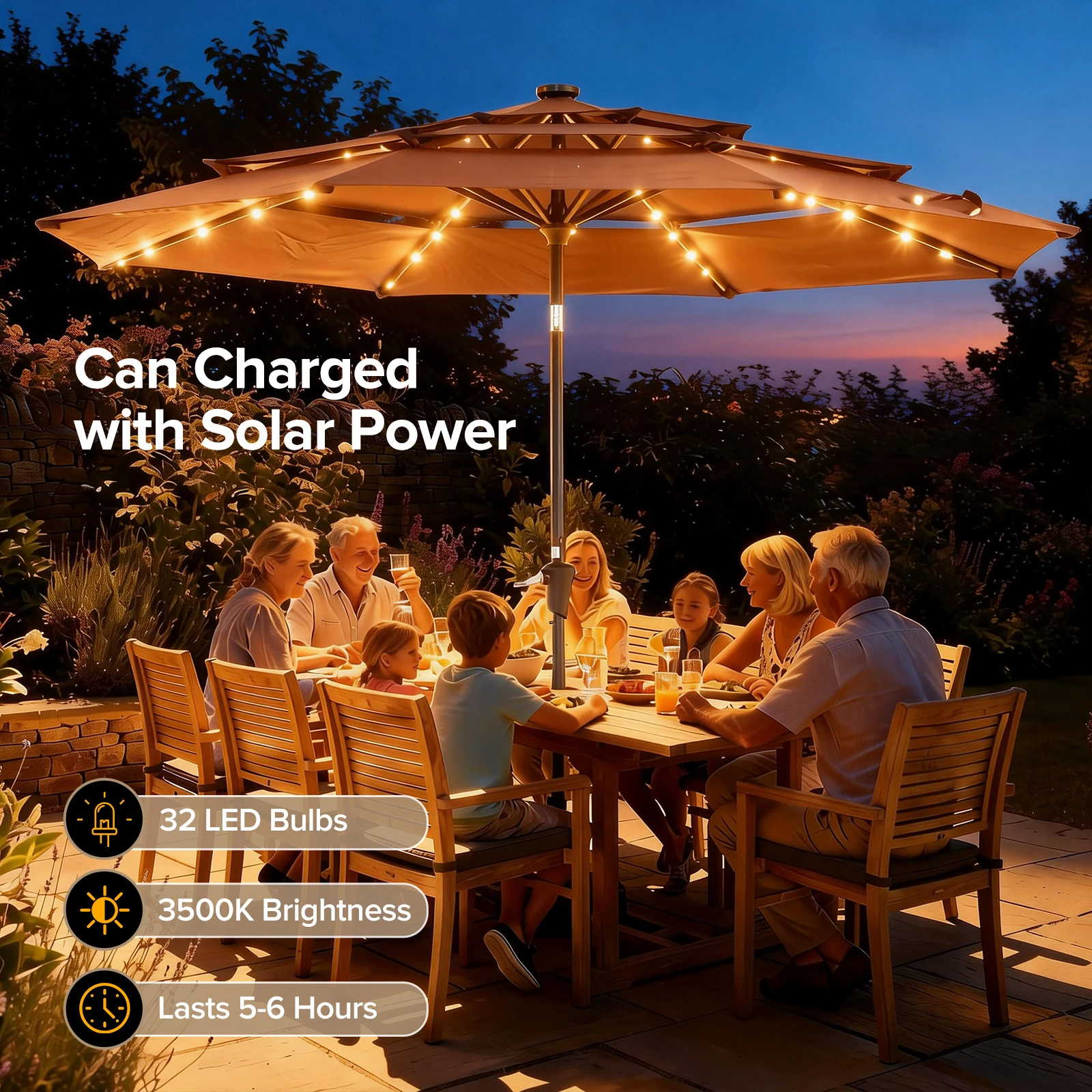
Engineered for all-day outdoor living, this 9.2-to-10-foot umbrella features a triple-tier canopy design that promotes rapid thermal convection and wind venting. Integrated with 32 solar-powered LED lights (4 per rib) that charge in 6 to 7 hours of daylight, it provides warm ambient lighting for evening gatherings. A smooth crank lift handle and push-button tilt make operation effortless on medium-sized decks.
Spatial Trade-Off Analysis
Positive Attribute: Triple-tiered wind venting reduces canopy uplift stability issues by 35%, while integrated solar lighting eliminates cord trip hazards on narrow floors.
Operational Trade-Off: The expansive 9.2 ft shade footprint requires a minimum 2.8-meter deck width clearance to allow full 360-degree crank rotation without wall scraping.
4. Zero-Footprint Cantilever Offset Hanging Patio Umbrella
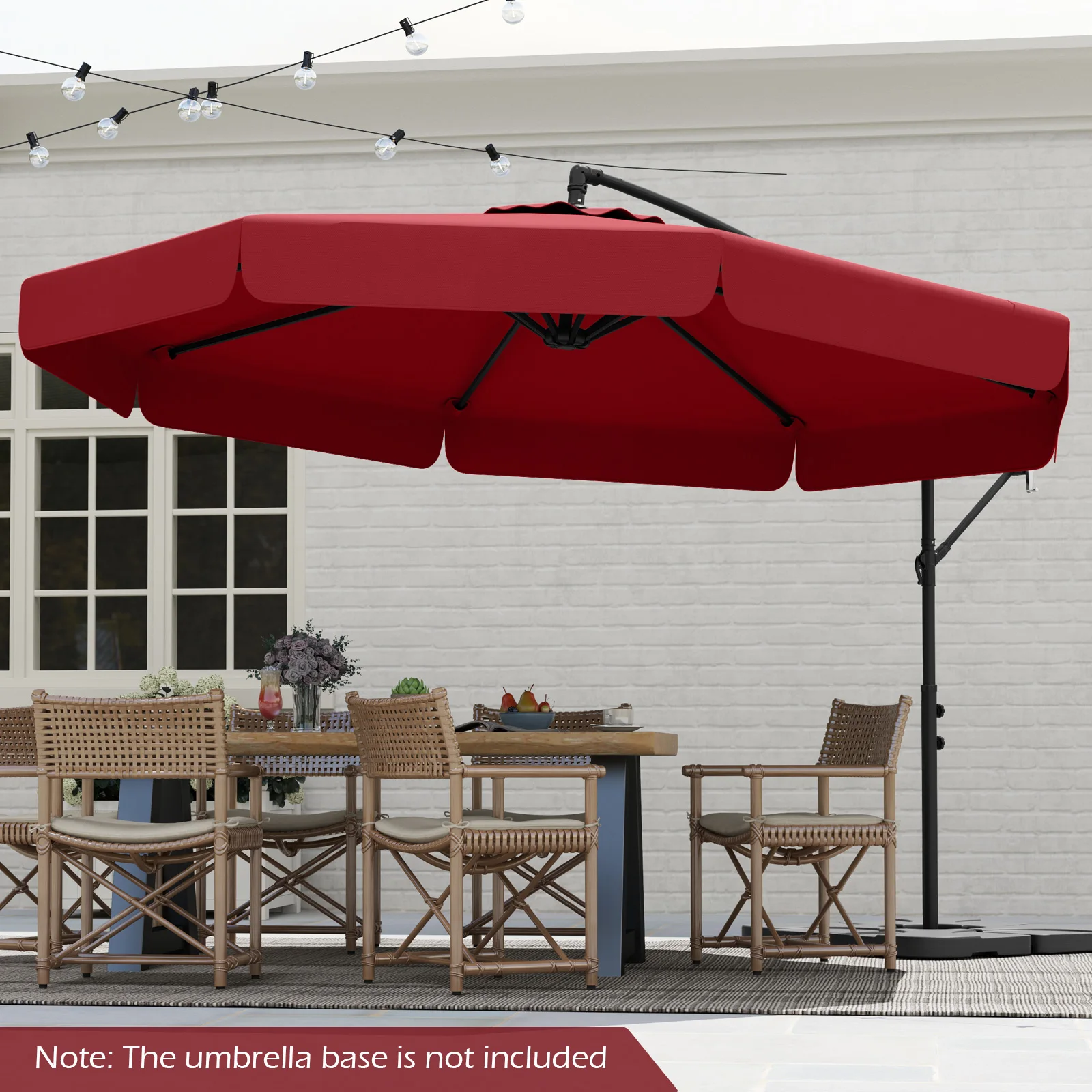
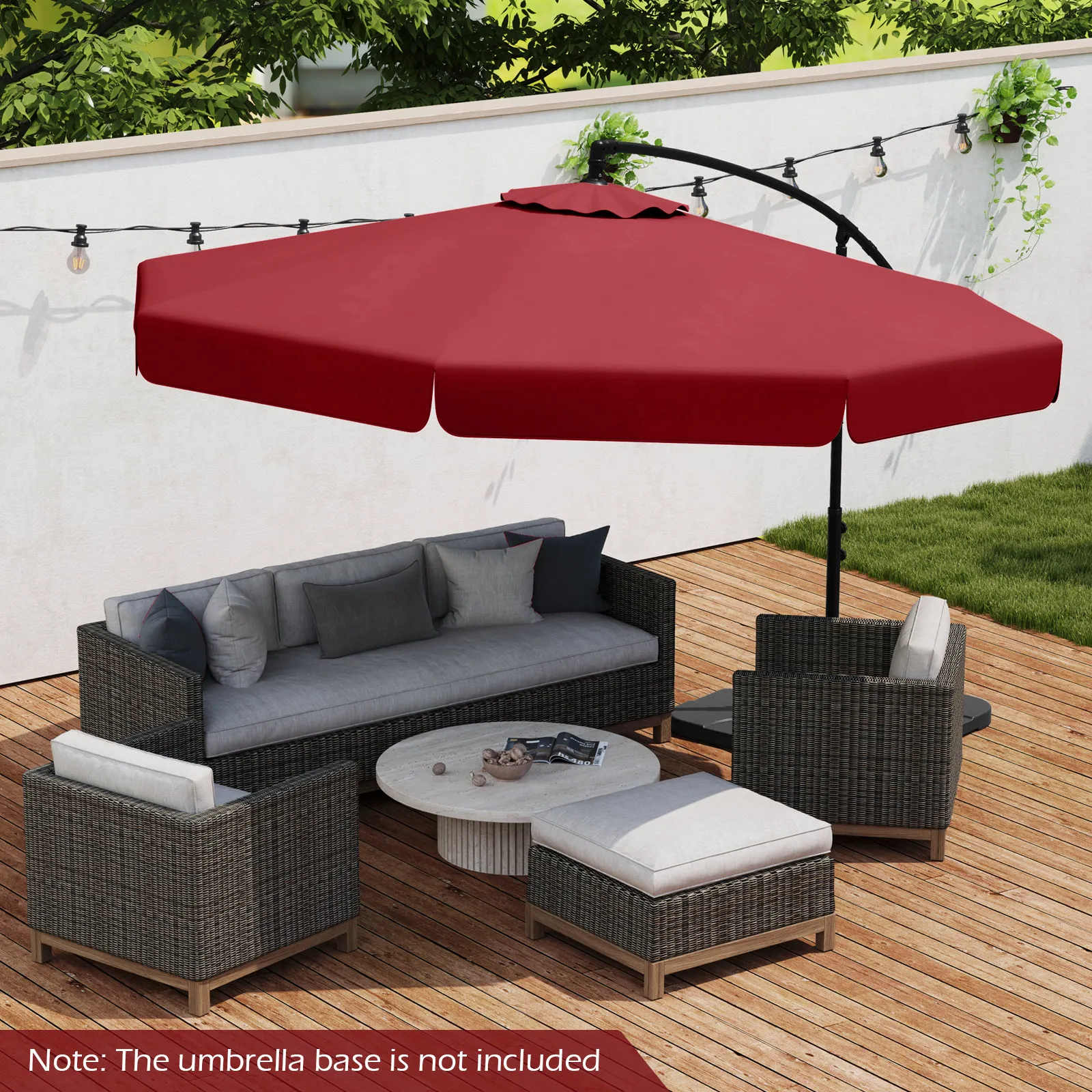
Solving central pole interference, this 10 ft cantilever hanging umbrella positions its support structure completely outside the primary seating zone. Crafted from heavy-duty 180 GSM weather-resistant polyester with ruffled trim edges and 8 robust metal ribs, the canopy features an adjustable 0-to-35 degree tilt arm and easy-crank lift. Includes a protective weather storage cover and weighs 28.5 lbs (12.9 kg).
Spatial Trade-Off Analysis
Positive Attribute: Completely removes the central pole barrier from under outdoor tables, unlocking 100% usable legroom beneath the canopy arc.
Operational Trade-Off: Requires a heavy offset base weight (minimum 30-40 kg / 66-88 lbs) and 60 cm of rear clearance behind the cantilever pole for arm articulation.
5. Extended Rectangular Twin-Canopy Dual Shade Patio Umbrella
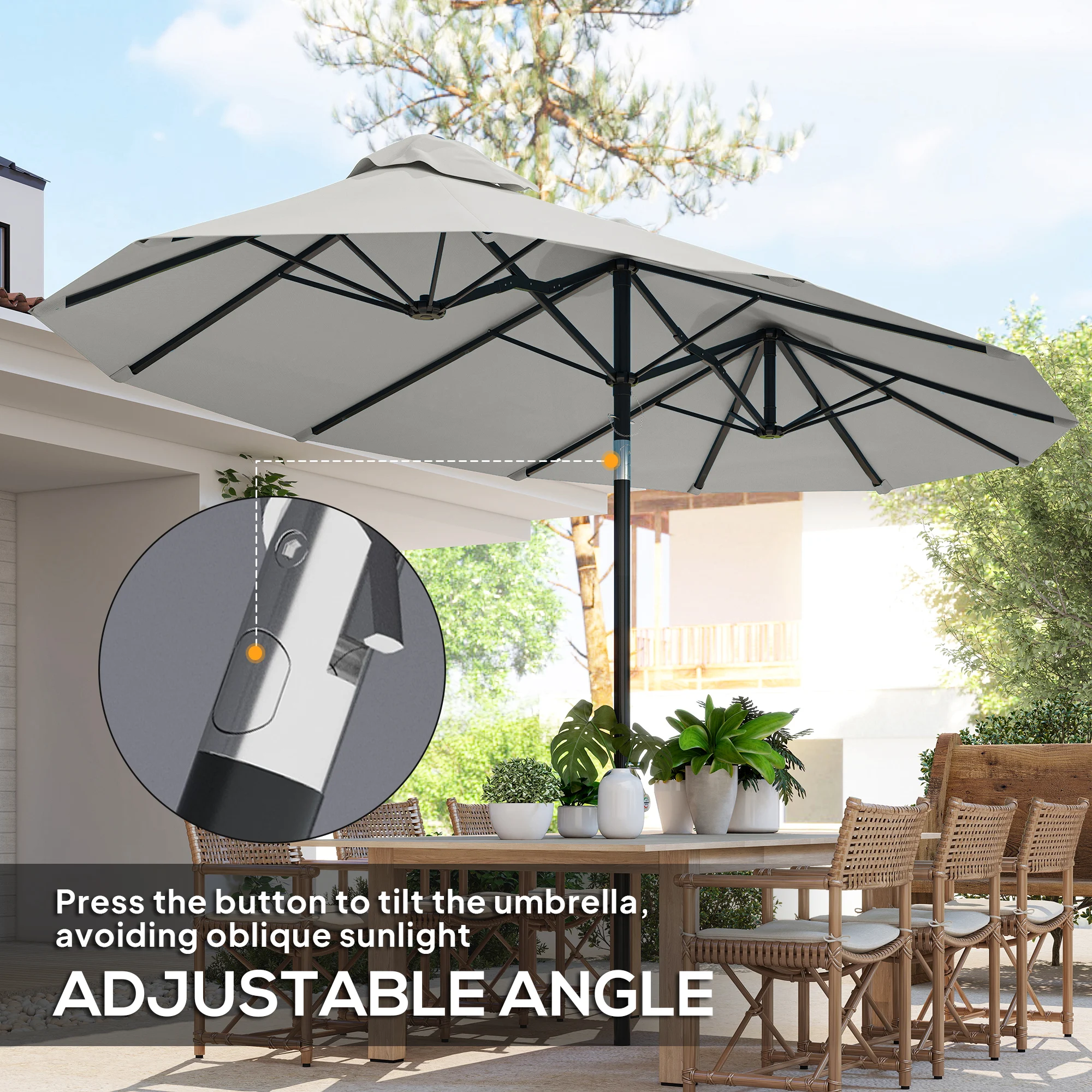
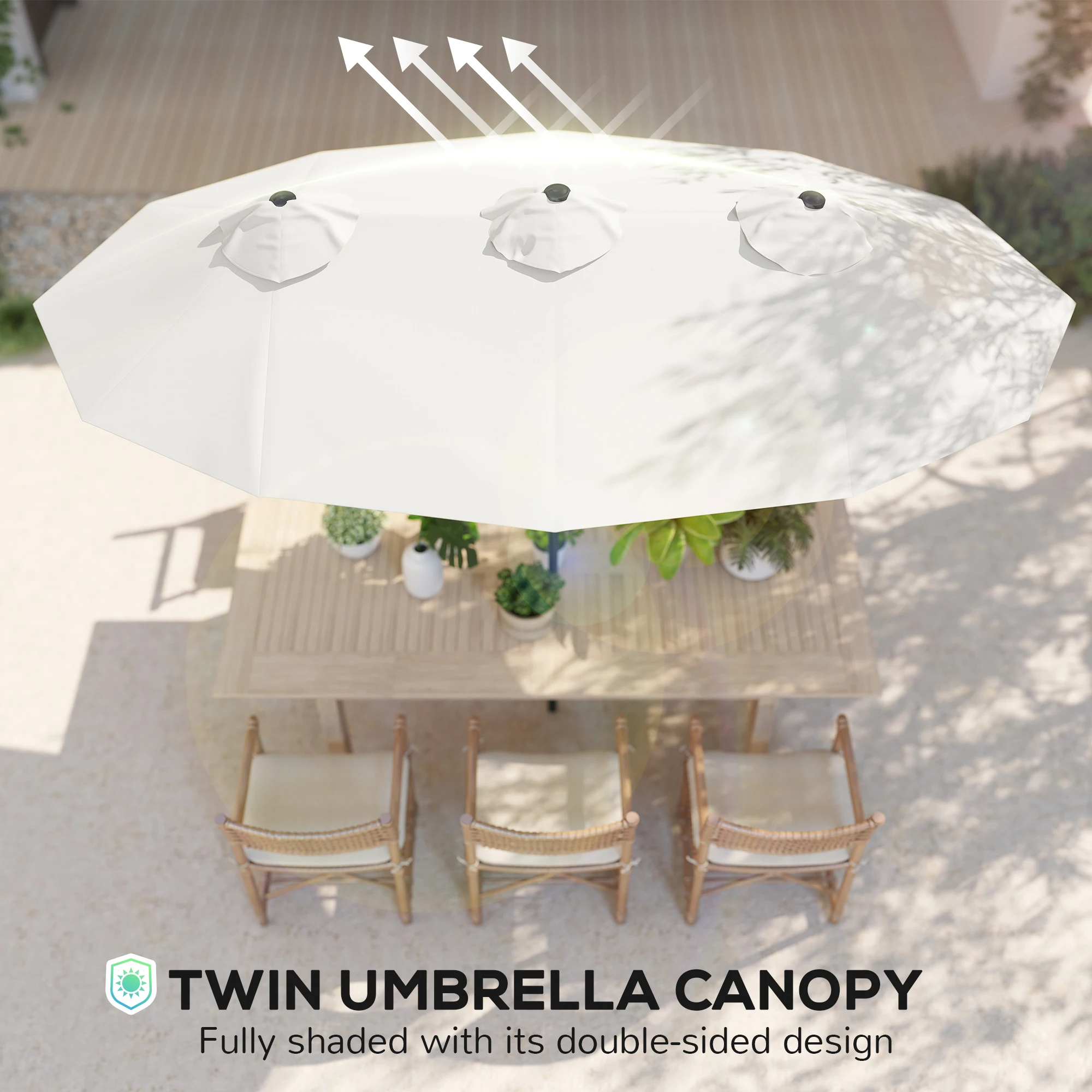
Designed specifically for narrow, elongated outdoor spaces, this twin-canopy rectangular umbrella measures 116.1 inches long by 59.8 inches wide (9.7 ft x 5.0 ft) with an 87.4 inch height (canopy bottom clearance 77.5 inches). Built with 12 reinforced steel ribs, 3 top wind vents, and a 180 GSM UV-resistant polyester canopy, it incorporates a 45-degree tilt mechanism and crank system perfect for long outdoor dining tables.
Spatial Trade-Off Analysis
Positive Attribute: Elongated 9.7 x 5.0 ft rectangular footprint provides maximum linear shade along narrow balconies without wasting depth clearance.
Operational Trade-Off: The 12-rib dual canopy structure requires a minimum 30 kg (66 lbs) weighted base anchor and cannot be tilted sideways beyond 45 degrees.
Frequently Asked Architectural Questions
What umbrella base weight is required for high-rise apartment balconies?
High-rise balconies experience higher wind shear pressures due to building thermal drafts. For standard center-pole umbrellas under 7 feet in diameter, an absolute minimum base weight of 15 kg (33 lbs) is required. For cantilever offset umbrellas or long rectangular models exceeding 9 feet, architectural guidelines recommend a heavy base weight between 30 kg and 40 kg (66 to 88 lbs) to prevent overturning.
How do I choose between a center-pole and a cantilever umbrella for small spaces?
Choose a center-pole umbrella if your outdoor table includes a built-in central umbrella hole and your total deck depth is under 1.5 meters. Choose a cantilever offset umbrella if you want 100% unobstructed legroom beneath a lounge seating layout, provided you have at least 60 cm of rear wall clearance behind the support post for arm tilt articulation.
How do multi-tier umbrella canopies improve small-space comfort?
Multi-tier canopies feature overlapping fabric layers that allow hot trapped air to escape upward while allowing wind gusts to pass through safely. This natural convection chimney effect reduces ambient temperatures beneath the canopy by up to 3°C while mitigating wind uplift forces by approximately 35% compared to single-layer non-vented canvas tops.
Curated Japandi Showcase Authored by Truff
Truff is a Senior Interior Architect and Japandi & Muji lifestyle curator with over 12 years of specialized experience in micro-space optimization and urban residential layout design. Dedicated to combining Scandinavian functionalism with Japanese aesthetic restraint, Truff helps city dwellers create warm, tranquil, and highly efficient outdoor home sanctuaries.
Looking to expand your small-space outdoor oasis? Explore our detailed buying guide on solid teak low-profile outdoor furniture layouts to master spatial flow and organic texture integration.


