dJapandi Small Space Media Console Selection Guide: 5 Architectural Low-Profile Picks for Compact Living Rooms

Must-Have Recommendation Summary: Selecting a Japandi or Muji-inspired media console for compact living rooms requires balancing low-profile horizontal lines with functional cord management. Prioritize units under 45 cm (17.7 inches) in height to keep sightlines open, maintaining at least 60 cm (23.6 inches) of walking clearance around furniture edges.
1. Material Physics & Daily Care Protocols
Compact living quarters subject furniture surfaces to continuous physical interaction. High-density fiberboard (HDF) engineered with natural timber veneers offers structural stability under varying indoor humidity levels (typically 40% to 60% relative humidity). Standard solid timber often expands or contracts up to 2.5mm per meter across seasonal shifts, risking door misalignment. A high-grade walnut or oak veneer glued over HDF eliminates panel warping while providing authentic tactile warmth.
Daily maintenance requires non-abrasive care. Microfiber cloths dampened with clean water prevent dust accumulation on matte lacquer coatings. Avoid harsh chemical sprays containing ammonia, which degrade veneer adhesives over 12 to 18 months of continuous use. For tempered glass panels, routine cleaning with a 1:1 water-and-vinegar solution maintains optical transparency without leaving streaks.

Why You Need This Knowledge
Understanding core material density (targeting 650 to 750 kg/m³) ensures your media console carries heavy OLED displays (up to 40 kg or 88 lbs) without center-shelf sag over time.
2. Visual Weight Reduction Strategies
According to Neufert Architectural Data, maintaining a minimum eye-level clearance of 120 cm (47.2 inches) from seated positions prevents small living areas from feeling cramped. Furniture footprint directly affects perceived room volume.

- Floor Clearance Elevation: Selecting consoles with slim legs raising the cabinet base 12 to 15 cm (4.7 to 5.9 inches) off the floor allows bounce light to pass beneath, expanding visual floor area by up to 15%.
- Horizontal Line Continuity: Long, continuous horizontal surfaces under 45 cm (17.7 inches) in height draw the eye across the room width rather than cutting the wall plane vertically.
- Concealed Appliance Routing: Exposed power cables add visual friction. Internal cable management channels hide power strips, reducing perceived visual clutter instantly.
- Translucent Door Elements: Smoked or fluted glass door fronts obscure electronic displays while permitting infrared remote signals to pass through freely.
3. Small-Space Layout Trade-Offs
Every architectural choice in tight floor plans involves trade-offs between storage capacity, walking clearance, and functional ergonomics.

| Layout Decision | Spatial Benefit | Operational Trade-Off | Recommended Clearance |
|---|---|---|---|
| Extra-Deep Cabinets (>45cm) | Fits oversized AV receivers and deep gaming hardware. | Encroaches on main walk aisle, risking knee/shin bumps. | Maintain 75cm clear walkway. |
| Retractable Bases | Adapts from 210cm to 280cm as room needs shift. | Requires clear lateral wall space free of baseboard heaters. | Allow 30cm side buffer. |
| Tall Credenza Units (>80cm) | Triples vertical cubic storage volume per sq ft. | Forces upward eye angle for seated TV viewing (>15 degrees). | Place couch 2.5m back minimum. |
| Solid Floor-Base Units | Prevents dust accumulation underneath cabinet. | Increases heavy visual weight in rooms under 15 sqm. | Pair with light wall paint. |
4. Vertical Plane & Micro-Zoning Tactics
Micro-zoning establishes functional activity pockets within an open-plan apartment without building solid partition walls.

- Asymmetric Pedestal Offset: Placing an extendable pedestal to one side anchors a secondary display zone for ceramics or plants, balancing heavy digital screen surfaces.
- Acoustic Felt Lining: Incorporating felt-lined drawers or backing panels dampens cabinet reverb, absorbing ambient noise in hard-surfaced urban apartments.
- Integrated Power Stations: Consolidating outlets inside the cabinet frame eliminates cable drag across wall baseboards, preserving clean perimeter lines.
- Zoned Wall Anchoring: Keeping wall-mounted items strictly within the horizontal silhouette width of the console prevents visual scatter.
5. Curated Top Media Console Showcase
Here is an architectural comparison of five top-performing Japandi and Muji-aligned media consoles designed to maximize small living room configurations.
| Console Model | Dimensions (W x D x H) | Core Materials | Key Storage Feature | TV Compatibility |
|---|---|---|---|---|
| Kizuna Retractable | 210-280 x 39 x 32 cm (82.7"-110.2" x 15.4" x 12.6") | HDF, Natural Walnut Veneer | 3 Soft-Close Drawers + Reversible Pedestal | Up to 120 inches |
| Kaze Curved Glass | 160.3 x 35 x 45 cm (63.1" x 13.8" x 17.7") | Engineered Wood, Tempered Glass | 5 Glass Compartments + RGB LED Lights | 60 to 70 inches |
| Mori Tall Credenza | 150 x 40 x 86.3 cm (59" x 15.7" x 34") | Engineered Wood, Metal, Glass | 2 Glass Doors + 3 Adjustable Shelves | 55 to 65 inches |
| Nami Open Storage | 160 x 35 x 50 cm (63" x 13.8" x 19.7") | Heavy-Duty MDF, Rustic Grain | Open Cubby Bays (200 lbs / 90.7 kg Load) | Up to 65 inches |
| Hikari Power Hub | 175 x 35 x 50 cm (69" x 13.8" x 19.7") | Walnut Finish Wood, Steel Hardware | 3-Outlet Power Station, 8 Compartments | Up to 80 inches |
1. Kizuna Modular Retractable Walnut Media Console
Constructed with high-density fiberboard and finished in natural walnut veneer, the Kizuna unit expands from 210 cm to 280 cm (82.67 inches to 110.2 inches). A low 32 cm (12.59 inches) profile creates an elongated horizontal silhouette that reduces room crowding. The reversible pedestal adapts to left- or right-hand corner placement. Three press-out drawers equipped with soft-close runners provide quiet hardware action while storing remotes and media equipment.
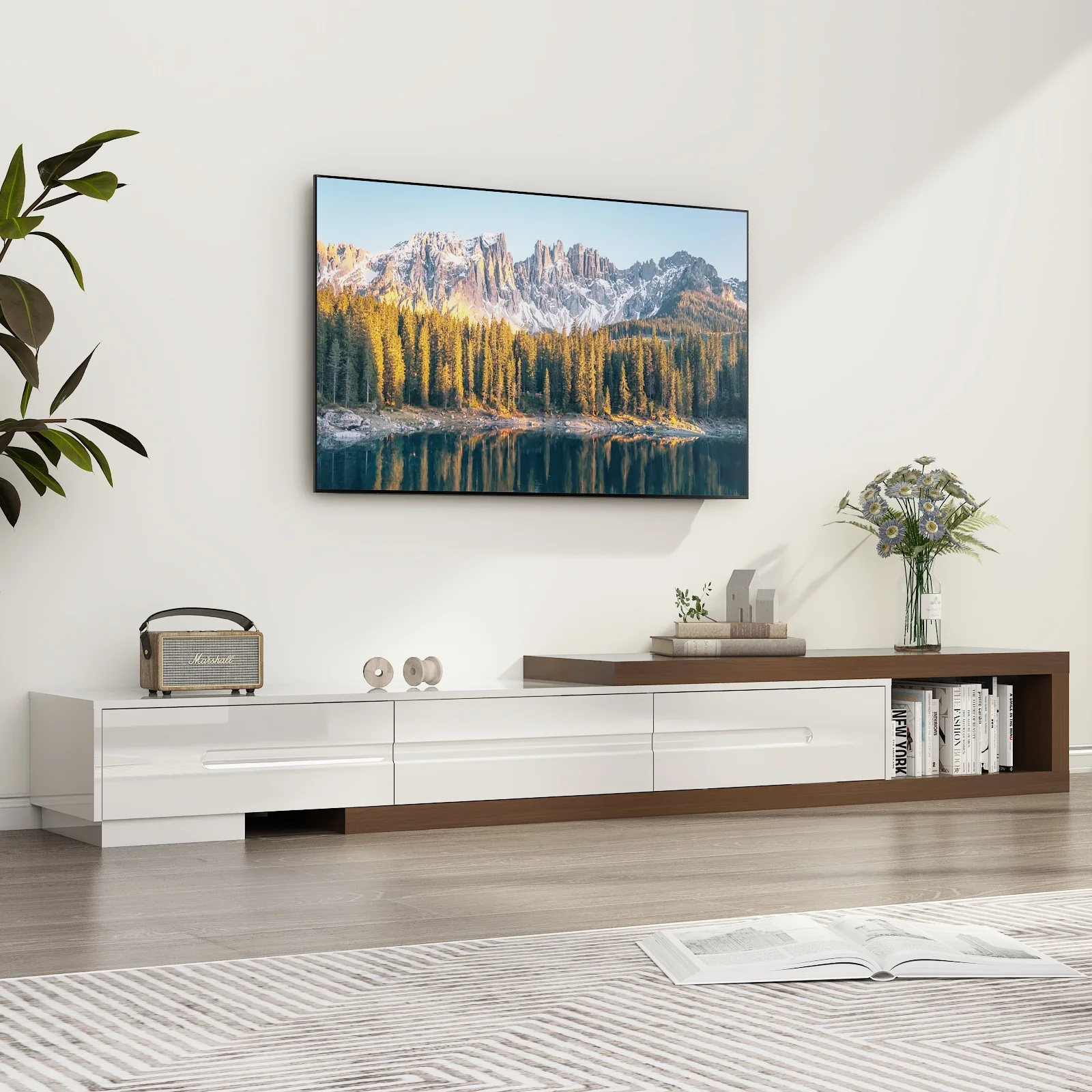
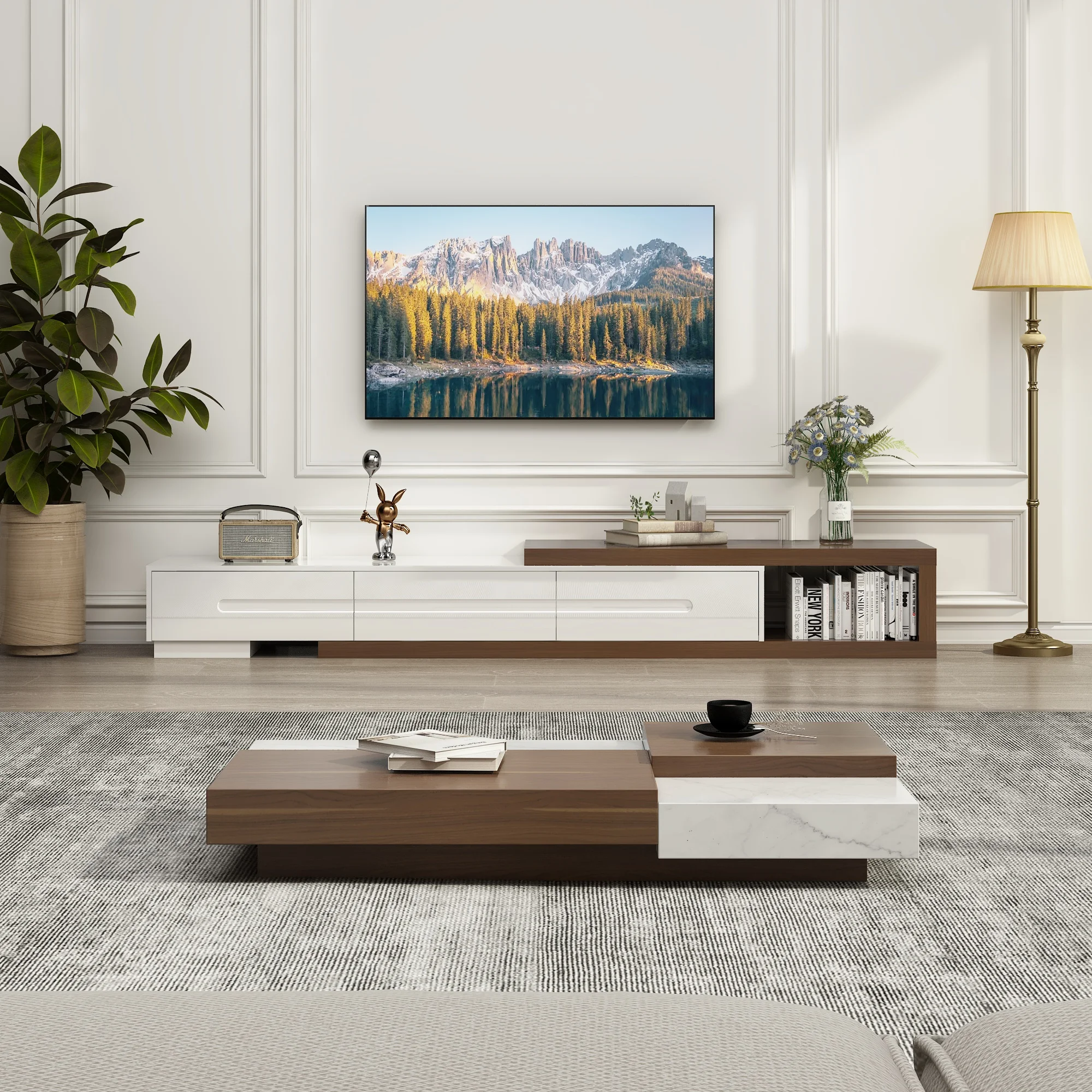
Spatial Trade-Off Analysis: Provides 70 cm of extension flexibility for large display screens, but requires an uninterrupted wall span clear of baseboard electrical heaters.
2. Kaze Low-Profile Curved Tempered Glass Console
Measuring 160.3 cm wide by 35 cm deep and 45 cm high (63.1" x 13.8" x 17.7"), the Kaze console uses curved corner profiling to eliminate sharp physical edges in narrow pass-through zones. Five open storage compartments featuring thick tempered glass shelves keep media players organized, while two closed drawers handle extra gear. Built-in adjustable RGB lighting adds subtle ambient glow without taking up extra table space.
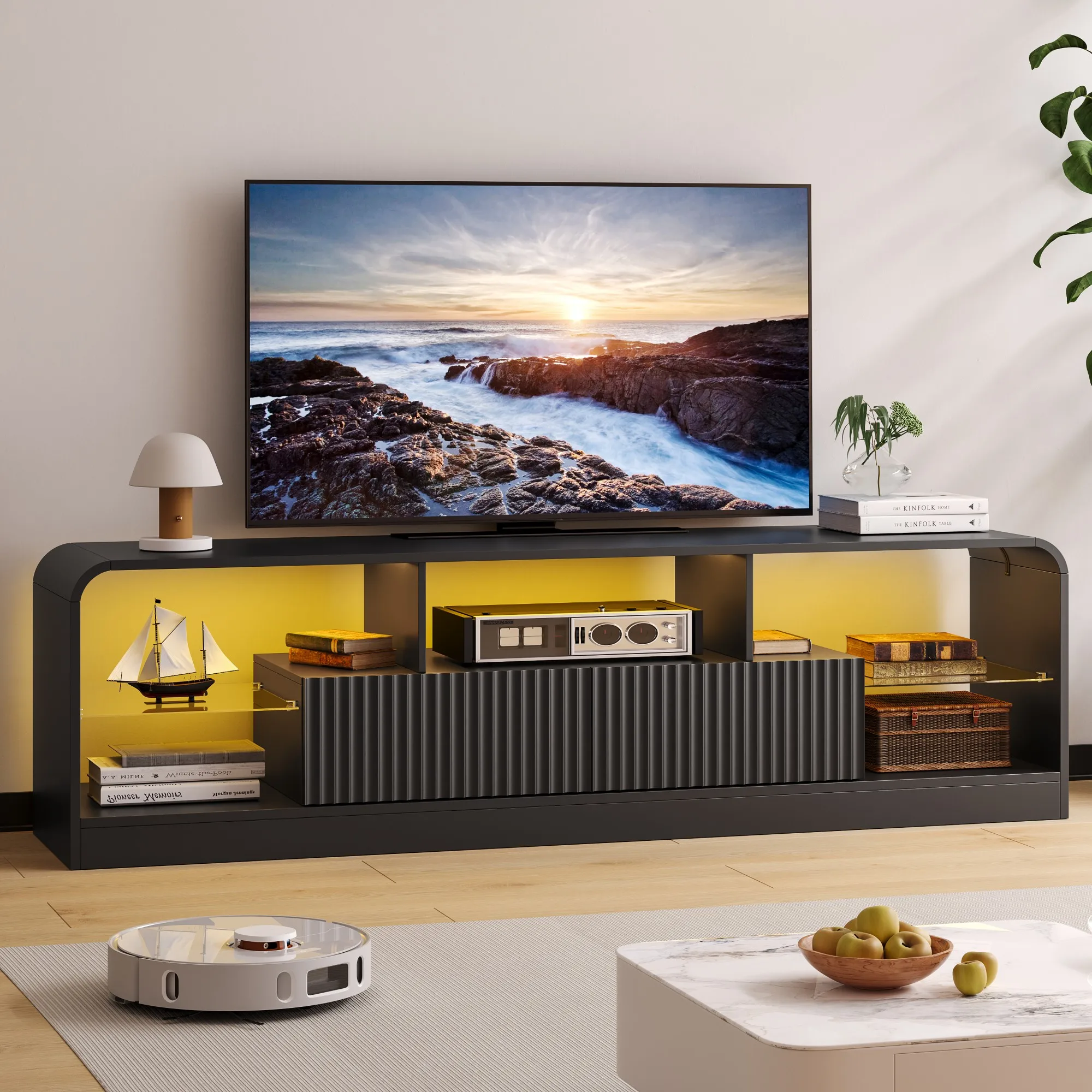
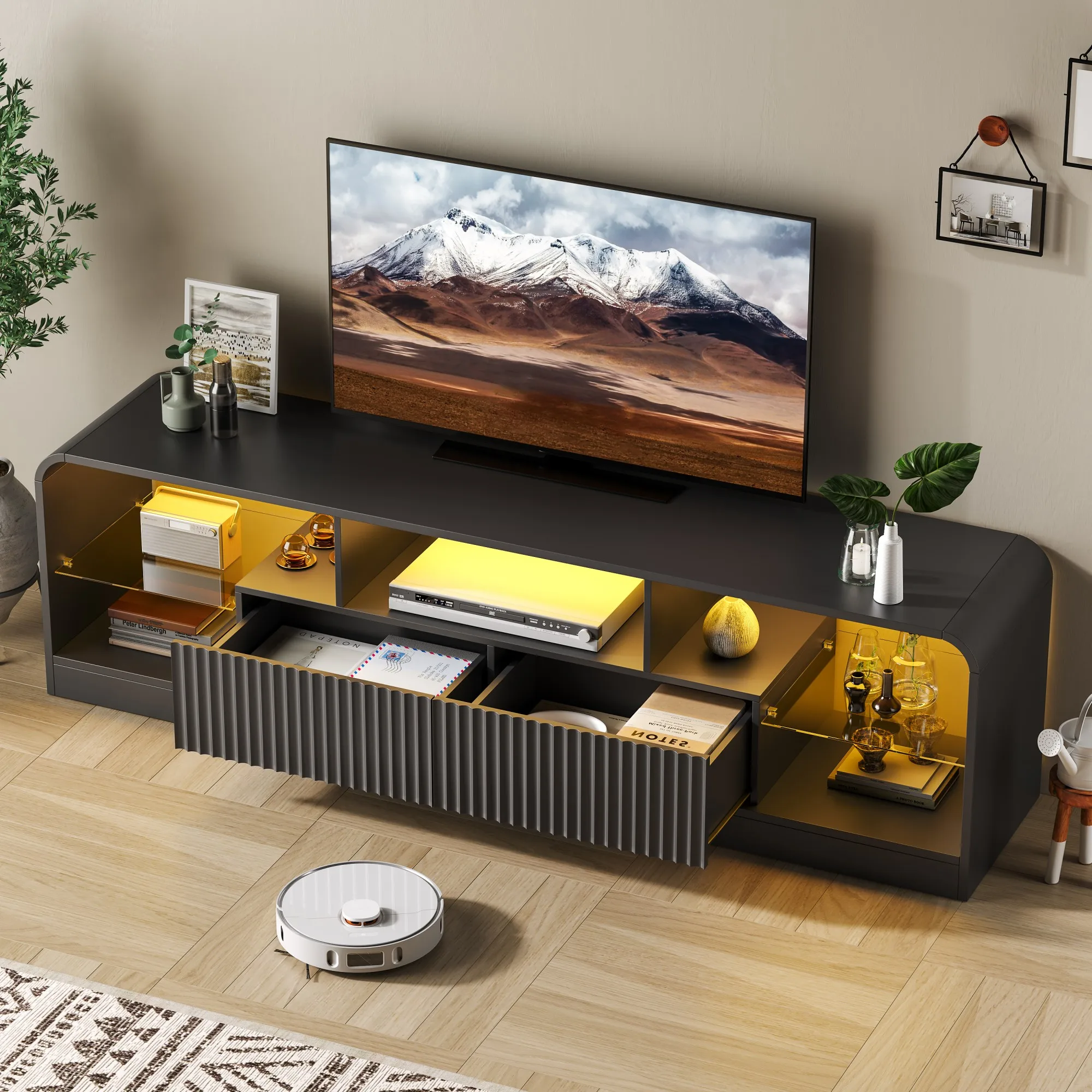
Spatial Trade-Off Analysis: Glass shelving increases visual room depth, but demands frequent micro-fiber dusting to keep surfaces looking clean.
3. Mori Tall Framed Glass Door Architectural Credenza
Standing 86.3 cm high with a 150 cm by 40 cm footprint (34" H x 59" W x 15.7" D), the Mori credenza optimizes vertical storage capacity for apartments with limited floor space. Featuring a beige finish with subtle Scandinavian framing, two full-length framed glass doors protect items from dust. Three height-adjustable interior shelves let you customize storage configurations as needed.
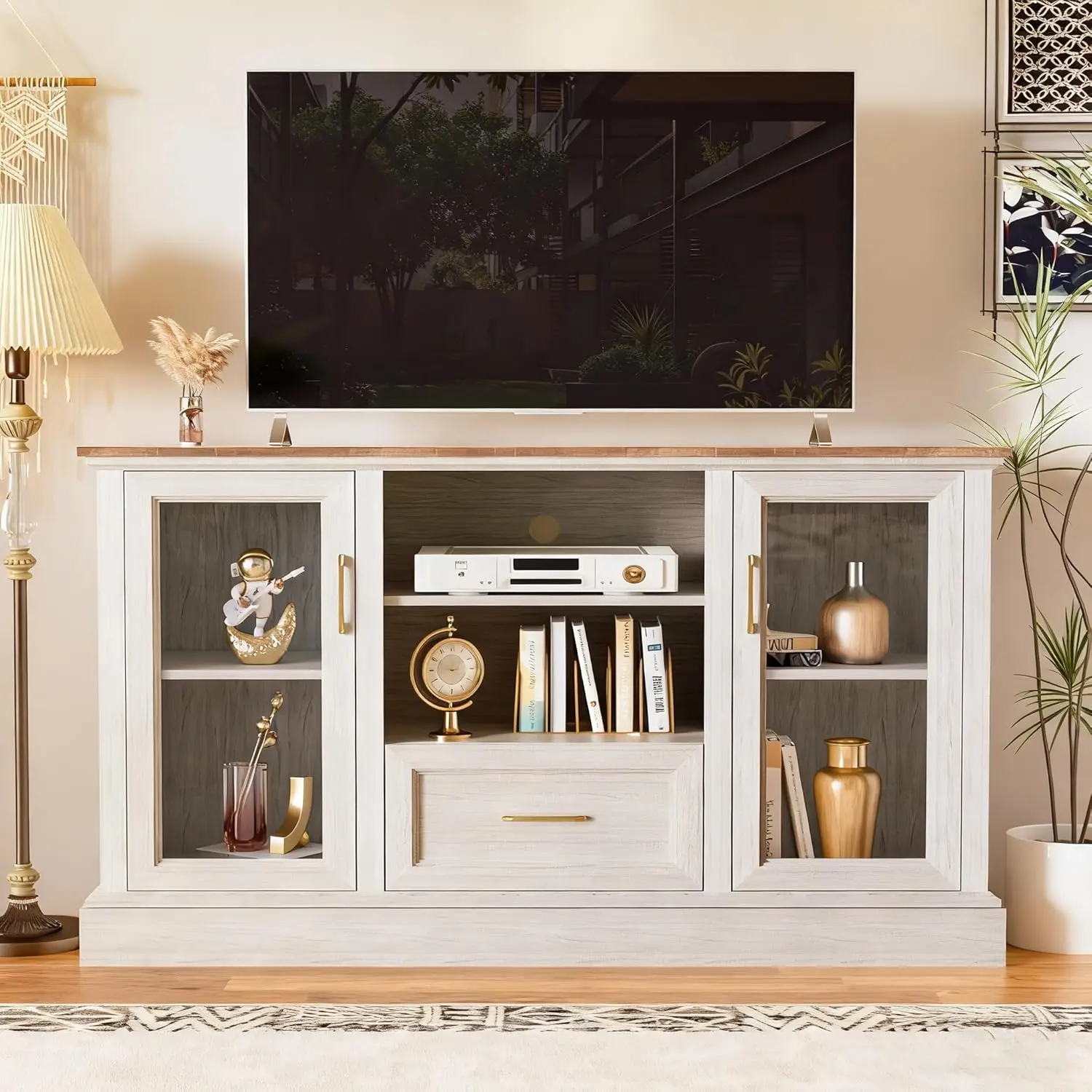
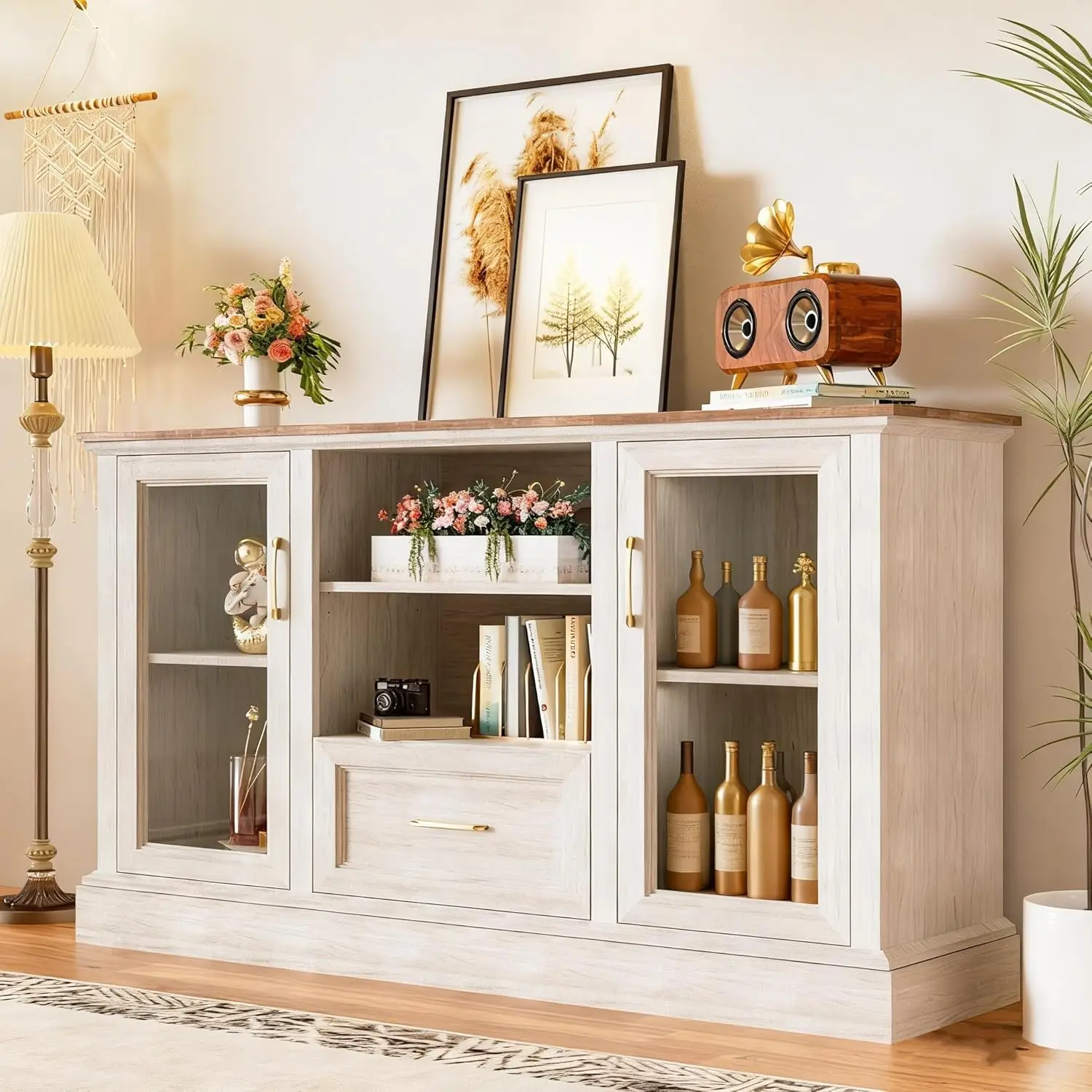
Spatial Trade-Off Analysis: Maximizes vertical cubic storage volume, but raises the TV screen height, requiring a 2.5-meter seating distance for comfortable viewing angles.
4. Nami Rustic Wood-Grain Open Storage Console
Constructed from high-density MDF supporting up to 90.7 kg (200 lbs), the Nami console measures 160 cm long by 35 cm wide and 50 cm tall (62.99" L x 13.78" W x 19.69" H). The rustic brown wood-grain surface adds warm organic texture to clean Japandi spaces. Open storage bays promote maximum airflow around heat-generating game consoles and amplifiers. Non-slip floor pads protect hardwood finishes from scratches.
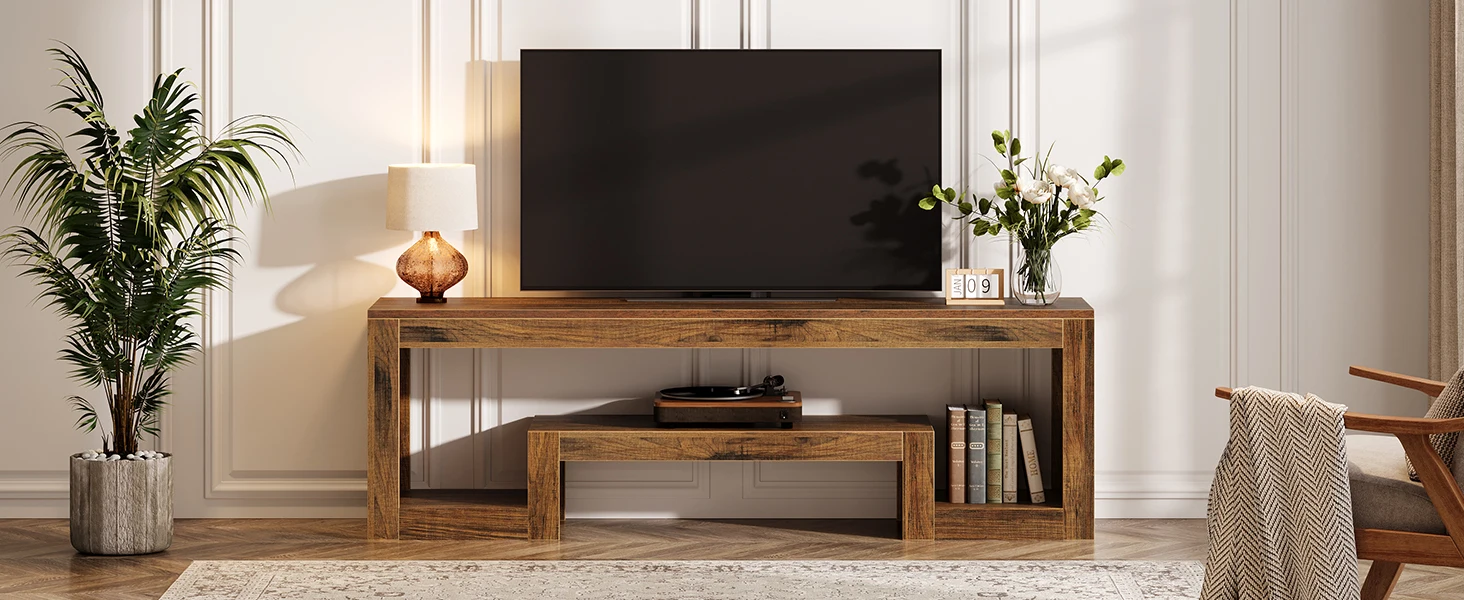
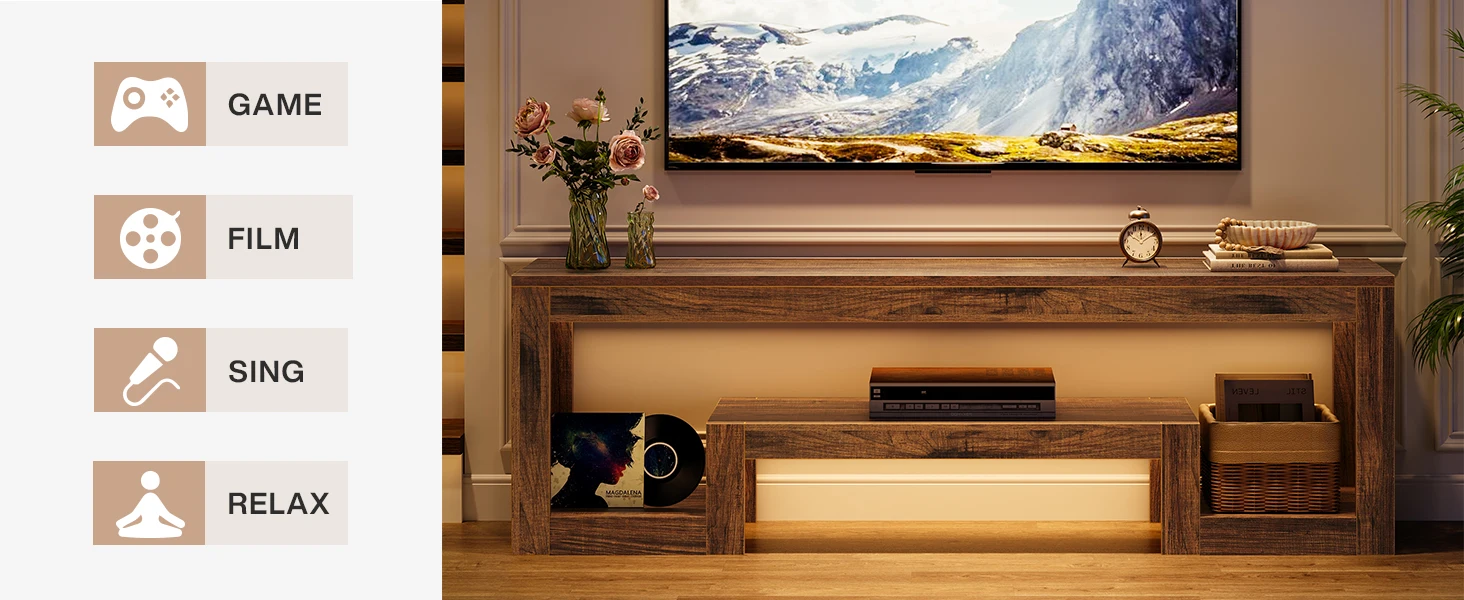
Spatial Trade-Off Analysis: Open bays allow equipment to run cool, but require disciplined cable organization to maintain a tidy appearance.
5. Hikari Mid-Century Integrated Power Hub Console
Spanning 175 cm wide (69 inches) with mid-century tapered legs, the Hikari console includes an integrated 3-outlet power hub to streamline home entertainment setups. Storage features include a velvet-lined drawer for remotes, two lockable cabinet bays, and five adjustable shelves rated for 34 kg (75 lbs) each. Six industrial-grade leveling feet adjust up to 3 cm (+1.2 inches) to keep the unit stable on uneven flooring.
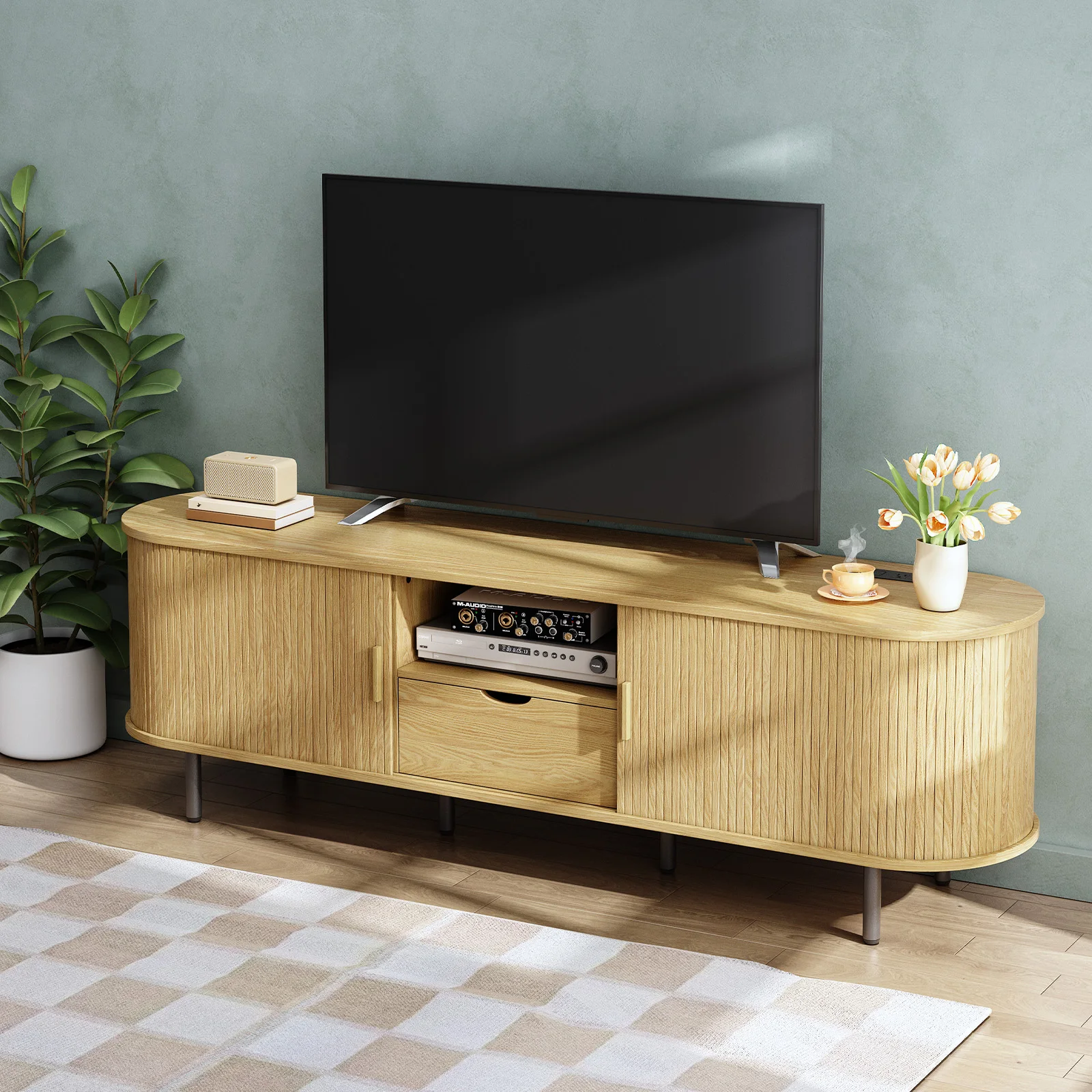
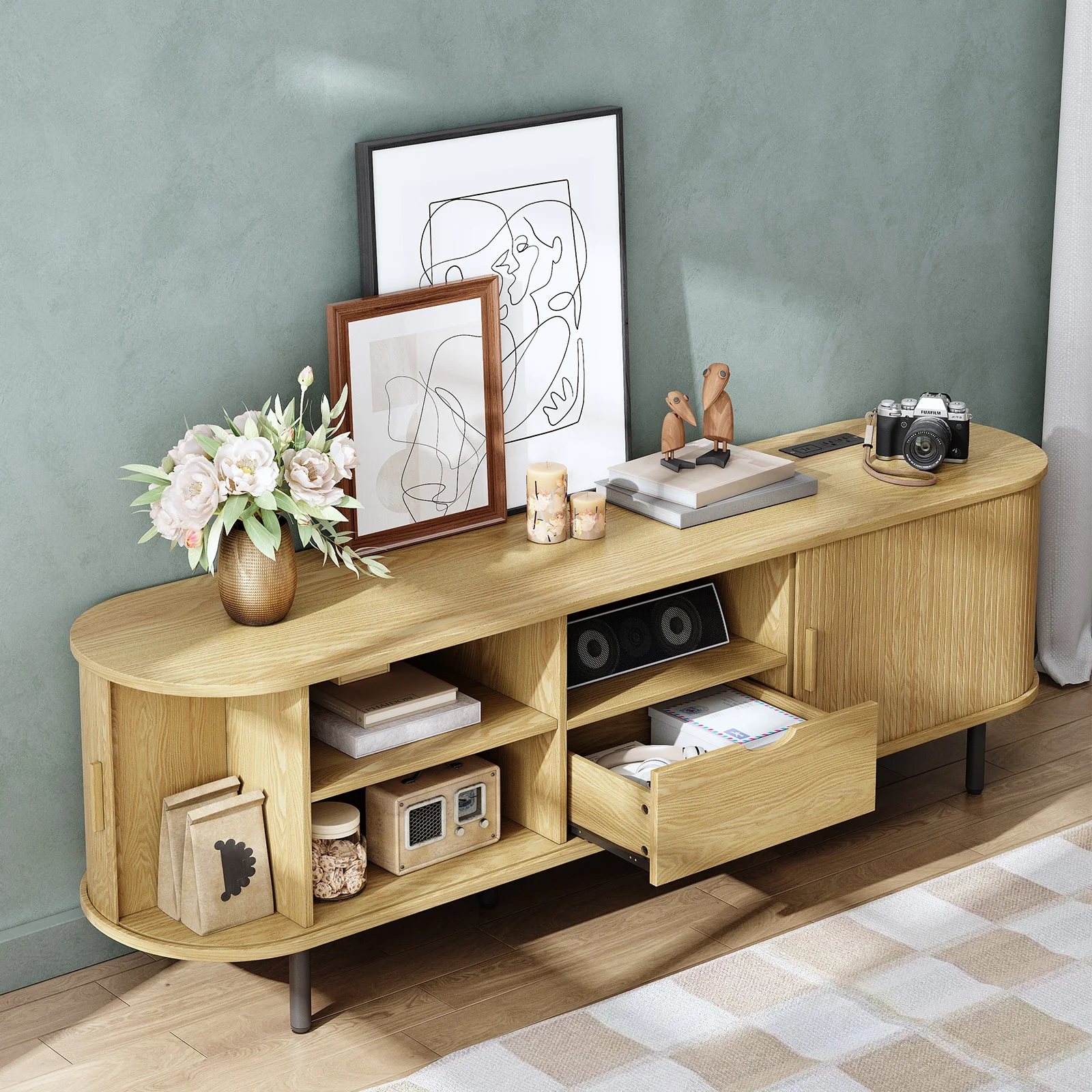
Spatial Trade-Off Analysis: Built-in power hub eliminates wall cord clutter, but requires placement directly in front of an active wall outlet.
6. Spatial Planning FAQs
How high should a Japandi TV stand be for low-profile sofa seating?
When pairing with low Japanese floor sofas or seats with an 35 to 40 cm cushion height, choose a media console between 32 cm and 45 cm (12.5 to 17.7 inches) high. This keeps the center of your TV screen aligned with eye level (~100 cm off the floor) to prevent neck strain.
What is the ideal distance between a compact media console and a coffee table?
Standard architectural guidelines recommend maintaining a clear walking path of at least 45 cm to 60 cm (17.7 to 23.6 inches) between the front edge of the console and your coffee table. This allows comfortable walking space without forcing you to turn sideways.
How do engineered wood and walnut veneers hold up against solid timber in small rooms?
High-grade engineered wood (HDF) with natural wood veneers offers higher dimensional stability than solid wood in small apartments, where indoor humidity can fluctuate rapidly. Veneered HDF resists cracking and panel warping while delivering the genuine warmth and tactile feel of real timber grain.
Can extendable TV stands be installed reversibly for custom room corners?
Yes, modular designs like the Kizuna console use unattached, floating pedestals that can be placed on either the left or right side. This lets you adapt the unit layout to fit asymmetrical room corners or awkward electrical outlet positions.
Curated Japandi Showcase Authored by Truff
Senior Interior Architect & Japandi Lifestyle Curator specializing in compact space layouts, functional material selection, and clean architectural planning.


